Blog
Vacant Atlanta Duplex: DSCR at Purchase or Bridge First?
By Jason Taken · Principal
11 minute read
Choose a financing path for a vacant Atlanta duplex. Compare market-rent DSCR with a rehab bridge, test cash needs, and plan the rental refinance exit.
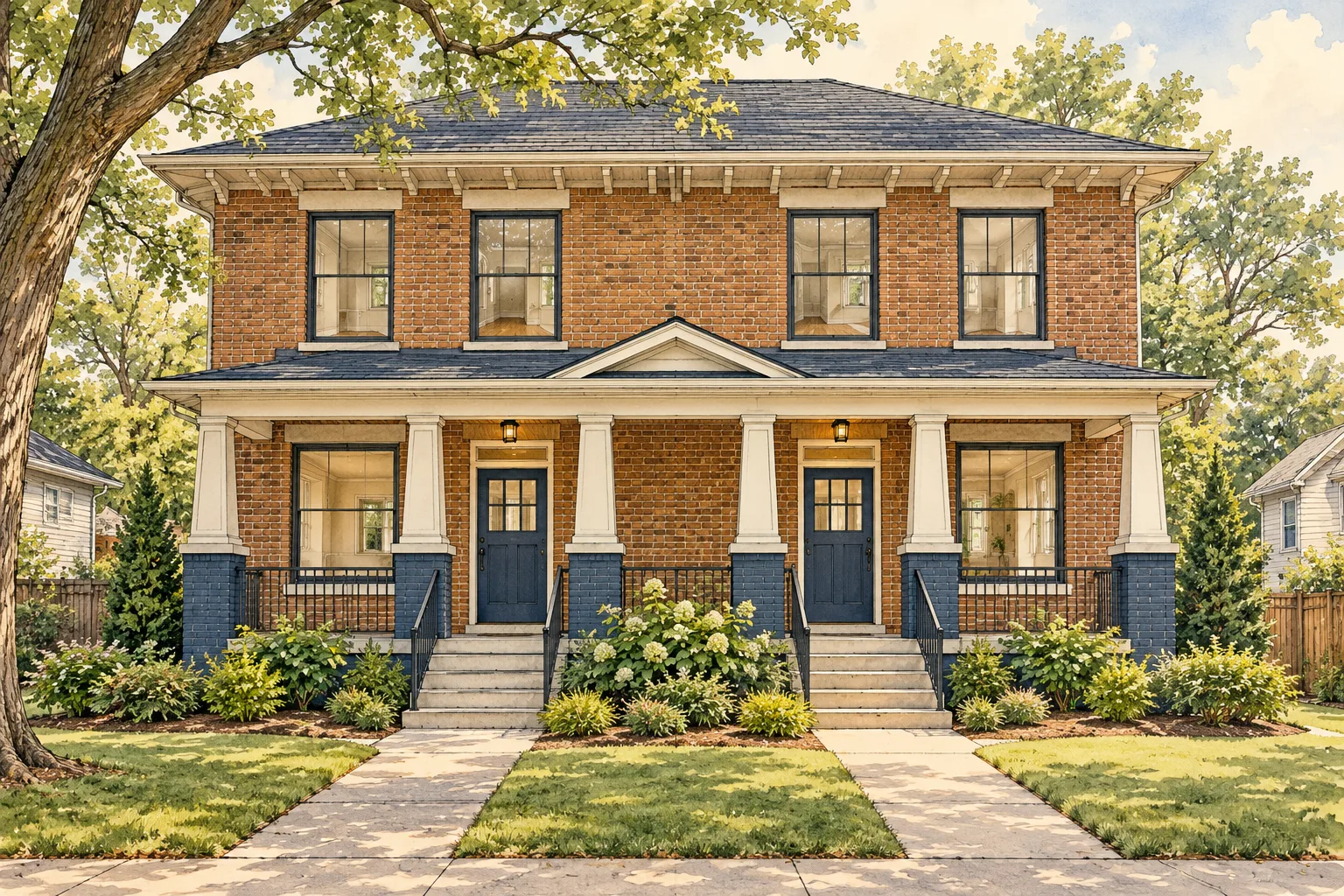
A vacant Atlanta duplex may fit a DSCR purchase loan if the lender accepts its condition and supported market rent. If repairs or lease-up must come first, a bridge loan may fit the work period. The right choice starts with the actual building and loan rules, not vacancy alone.
DSCR means debt service coverage ratio. For the residential screen used here, it compares monthly rent with principal, interest, taxes, insurance, and association dues. A vacant home has no current tenant paying that rent. The lender must decide whether its program can use supported market rent and on what terms.
This guide is for a non-owner-occupied, legal two-unit rental. It does not assume every vacant duplex qualifies. All numbers below describe an imagined purchase, not a listing or quote. Use Georgia DSCR financing for the rental program and Georgia bridge loans for a possible short-term path.
Ask why the duplex is vacant
Start with the seller’s explanation, then test it against the file. The units may be empty because leases ended before sale. They may need light repairs. They may have major damage, an unresolved use issue, or work that was never finished. Those cases can lead to very different loan decisions.
Visit both units and the shared areas. Look at the roof, foundation, wiring, plumbing, heat, cooling, access, and safety items with qualified inspectors. Get a written scope for defects. A phrase such as rent ready is too broad to support a financing plan when the lender has not reviewed the condition.
Ask for past leases, collection records, utility history, repair invoices, and any open work orders. Past rent can help explain the building, but it may not support today’s requested rent. Note when each tenant left and what work occurred afterward. A long vacancy needs an explanation beyond a fresh coat of paint.
Confirm the jurisdiction for the address. An Atlanta mailing address does not settle which city or county handles permits and use. For property within the city, start with Atlanta’s Office of Buildings. Ask the relevant office about the exact parcel and proposed work rather than applying a rule from a nearby address.
Verify that both rental units can be counted
Two kitchens and two doors do not prove a lawful duplex. Ask for the records that establish the approved use and unit count. Review those records with your local professionals and lender. A unit that cannot be accepted may change the appraisal, rent, insurance, scope, and entire purchase plan.
Do this before assigning full rent to both sides. If the seller advertises a third room or basement as another dwelling, treat that income as unproven until reviewed. Do not use projected rent to justify the price and then postpone the question of whether the space can lawfully be rented.
Also check how each unit is served. Shared water, heat, or electric costs can fall on the owner. Put those costs into the rental budget. If a meter must be split, get the scope, utility requirements, and cost before closing. The proposed loan may not fund that work the way you expect.
The Georgia landlord-tenant handbook is a useful state source for rental duties and lease questions. Use it with local rules and advice for the building. Financing approval does not replace the owner’s duty to provide a lawful, habitable rental and handle tenant matters correctly.
When can direct DSCR financing fit?
A direct purchase loan can be worth reviewing when the duplex is complete and its condition fits the lender’s program. Ask whether vacancy is allowed at closing, what rent evidence is required, and whether both units can be assessed from market rent. Get the answer for the specific file, not as a general sales statement.
The value and rent tests both matter. A buyer may have enough down payment for the advertised value percentage, yet need more cash because rent supports a smaller payment. Taxes, insurance, and dues use part of that payment capacity. A low estimate for those costs can make an early quote look stronger than the final file.
Ask what happens if the appraisal rent is lower than your estimate. Also ask whether lease signing before closing changes the required documents. A lease written at an unsupported price does not solve a weak rent conclusion. Keep evidence of comparable rentals, concessions, condition, and the proposed lease terms together.
Direct financing can avoid a second set of loan costs and a later refinance deadline. It still needs enough cash for purchase, closing, lease-up, and reserves. The absence of bridge debt does not remove the cost of a vacant month. Budget the period between ownership and actual tenant payments.
A hypothetical $320,000 duplex purchase
Assume a $320,000 price and an accepted value basis of the same amount. Use an illustrative 75% loan limit, 7.5% rate, and 30-year amortization. Assume the lender accepts $3,000 combined monthly rent and uses a 1.20 minimum DSCR. Taxes and insurance total $500 per month, with no association dues.
The value test permits $240,000. Principal and interest on that amount are about $1,678 per month. Adding $500 in taxes and insurance gives a housing payment near $2,178. The modeled rent-to-payment ratio is about 1.38. Under these assumptions, the value limit controls before the rent limit does.
Subtract the $240,000 loan from the $320,000 price. Add the sample $9,000 closing costs. Purchase cash is $89,000 before any repairs, prepaid items outside that cost input, or unspent reserves. That amount must be available even though no rent has been collected at the time of purchase.
The calculator uses the payoff field for the purchase price in this example. Owner cash already spent starts at zero. A negative net-proceeds result therefore shows cash needed for the purchase. This keeps the calculation consistent with the refinance version while making the use of each input clear.
Explore the worked example
Test a vacant duplex purchase screen
This assumes the lender accepts the stated rent and property condition. It does not establish vacancy eligibility.
Illustrative results for the starting values. All editable loan terms are assumptions.
- Modeled loan ceiling
- $240,000
- Net proceeds after payoff and costs
- -$89,000
- Cash still invested / cash needed
- $89,000
- Monthly cash flow after extra operating allowance
- $162
| Value-based limit | $240,000 |
|---|---|
| Rent-based limit | $286,035 |
| Monthly principal, interest, taxes, insurance and HOA | $2,178 |
| Rent ÷ total housing payment | 1.38× |
- Negative net proceeds mean cash is needed at closing. Negative cash still invested means modeled proceeds exceed the cash-spent input.
- For an acquisition, enter the purchase price as the payoff input, enter closing costs, and set cash already spent to zero. Use the lower lender-accepted purchase/value basis.
- The operating allowance covers vacancy, management, repairs and future capital work beyond taxes, insurance and HOA. It affects owner cash flow, not this residential rent-to-payment test.
- Seasoning, transaction classification, condition, credit, reserves and program approval can reduce proceeds. This calculator does not test those requirements.
Why a passing DSCR does not settle the rental budget
The owner needs a second cash-flow test. In the starting example, the tool sets aside $660 per month beyond taxes and insurance. That allowance represents vacancy, management, repairs, and future capital work. It leaves about $162 after the housing payment. The amount is a planning assumption, not a claim about Atlanta operating costs.
Replace that allowance with a real budget. A self-managed rental still needs repairs and vacancy money. If you plan to hire a manager later, include the likely charge now when comparing the investment with other uses of cash. Otherwise the apparent return depends on unpaid work you may not want to provide forever.
Do not treat the first month’s deposit as income available for loan payments. Track tenant deposits according to the applicable rules and lease. Separate rent, deposits, utility reimbursements, and other charges in your records. A full bank account can hide obligations that belong to tenants or must fund future bills.
Use the IRS rental property guide for the distinction between rental tax reporting items and cash spending. Depreciation, for example, is not a current check written to a contractor. Your adviser can handle tax treatment while your operating budget tracks the actual funds needed to keep the duplex running.
When does bridge financing solve a real problem?
A bridge may be useful when the property needs work that blocks a permanent loan. It may also help fund an approved rehab scope while the units are empty. The short-term loan should match a defined path from purchase to completed work and then to rent or sale. It should not simply postpone an unresolved problem.
Write down what the bridge is meant to accomplish. Examples include replacing failed systems, finishing permitted work, or bringing units into acceptable condition. List the evidence the next lender will need after completion. If no plausible permanent exit exists at supported rent, the bridge has not solved the financing problem.
Compare the full cost of that path with direct financing. Include origination charges, interest, draw costs, insurance during work, carrying expenses, and later refinance costs. Ask whether interest is charged on funds drawn or on another basis. Also identify any minimum interest, extension terms, and early payoff charges in the proposed note.
For a sale alternative, review the Atlanta flip-versus-hold example. A sale can be a separate exit, but its price and costs need support. Do not assume the duplex can be sold quickly at a profit just because the rental refinance comes up short.
Build the lease-up reserve from a calendar
List the earliest realistic date each unit can be shown, leased, occupied, and paid. These are different dates. A signed lease with a later start date does not pay this month’s interest. A free-rent concession can delay collections after move-in. Put that gap into the monthly cash schedule.
Suppose each unit takes one more month to begin paying than expected. The owner loses that month’s planned rent while still paying debt, taxes, insurance, and other costs. Calculate the extra cash directly from the proposed loans and expense budget. Do not rely on an average vacancy percentage to fund a large early cash gap.
Price leasing costs too. Cleaning, locks, small repairs, utilities, advertising, and management setup can arrive before the first rent payment. A rehab budget may not include them. Confirm which costs sit in the loan and which require owner cash. Keep reserve money available after the contractor’s final invoice is paid.
Use separate lines for each side of the duplex. One unit may rent sooner while the other needs more work. That staggered schedule may reduce the cash burden, but only if the occupied side can lawfully and safely operate during the remaining work. Have the project team assess that issue before relying on early income.
Review the permanent exit before taking the bridge
Run the future rental loan using a supported completed value and rent. Then subtract the expected bridge payoff and refinance costs. If proceeds are short, identify the owner cash that will close the gap. Do not label a future refinance cash-out unless the transaction rules and settlement math actually support that result.
Ask about seasoning and required lease history for the likely takeout program. A completed rehab does not automatically satisfy every rule about ownership period, rent evidence, or cash-out treatment. Timing affects how long the bridge must remain in place. Build the exit calendar from the lender’s actual requirements.
Stress rent first. Reduce the combined rent and keep taxes and insurance fixed. Then raise the property-cost allowance. Both changes reduce the payment available for principal and interest. In the calculator, lower rent can cause the rent limit to control before the value limit, even if the appraisal remains unchanged.
Next lower value and extend the hold. A smaller appraisal can cap the permanent loan while added bridge interest uses up reserves. These risks can occur together. Keep a clear plan for added equity, a revised sale exit, or another reviewed option. An unapproved future loan should not be the only source of repayment.
Compare the two paths at the same point in time
Do not compare the direct loan’s first payment with only the bridge loan’s first payment. Choose a date when both paths would have a finished, rented duplex. Then add all costs through that date. Include work, loan fees, interest, closing costs, and net rent actually collected. Use the same building and repair scope for both paths.
For a simple cost illustration, assume a fully drawn $240,000 bridge at 10.5% for six months. Interest alone is $12,600. A sample 2% origination charge adds $4,800. Those two items total $17,400 before closing costs, draws, property carry, or a later refinance. These are assumed terms, not a Jaken Finance Group offer.
That cost can be justified only by the work or timing the bridge makes possible. Ask what you gain from it. Perhaps the home cannot pass a permanent lender’s condition review until repairs are complete. Perhaps the purchase contract allows time to solve that issue before closing. Price each practical option rather than assuming short-term debt is required.
Now compare cash left after the final loan. If the bridge path needs more equity at refinance, add that money to total owner cash invested. If it returns cash, subtract the payout only after costs and payoff. This avoids treating a larger loan balance as profit. The owner still owes the money even when it comes back through closing.
Consider the work needed from you as well. Two loan closings mean two rounds of documents, value review, and timing risk. A direct loan may require a larger cash repair budget outside the mortgage. Neither path wins in every case. The useful choice is the one that fits the building, leaves enough reserves, and has a credible repayment plan.
Keep a dated copy of each comparison. If the rent estimate, repair bid, or loan proposal changes, update that version before making the next decision. A fresh input can change the better path without changing the purchase price. Working from one current set of numbers keeps the seller, contractor, lender, and owner from planning around different assumptions.
What should the purchase contract and submission file reflect?
Work with your real estate professionals on deadlines that allow the needed inspections and financing review. The lending plan should match the contract’s property description and intended use. If the plan depends on two legal units, acceptable condition, or a particular repair scope, resolve those facts before the deadline to act on them passes.
Give Jaken Finance Group the contract, address, photos, unit layout, scope, budget, value support, and rent evidence. State that the duplex is vacant. Include the reason, expected work period, cash available, and intended exit. An early file that explains the vacancy is more useful than a polished summary that leaves it out.
If direct DSCR looks plausible, request that review first through the rental financing form and identify the transaction as a purchase. For a rehab path, use the project request with the work and draw plan. Either route needs a property-specific decision. The best financing choice is the one whose conditions, cash needs, and exit you can actually meet.