Blog
Will Your DFW Rental Pass DSCR After Taxes and Insurance?
By Jason Taken · Principal
12 minute read
Test a DFW rental loan with realistic taxes, insurance, HOA dues, and rent. See how those costs change DSCR, the loan ceiling, cash needed, and cash flow.
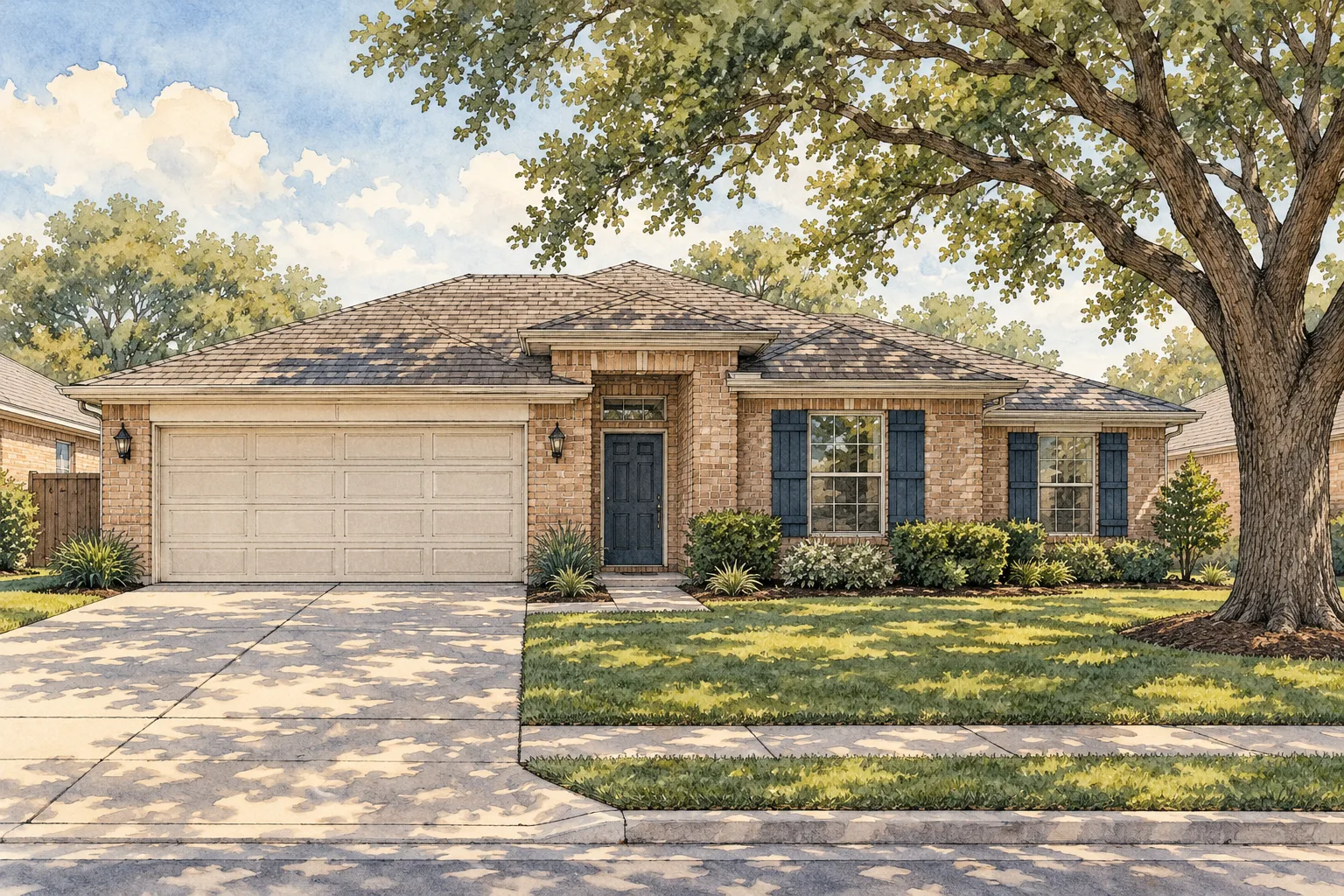
A DFW rental qualifies for a given loan amount only if its accepted rent covers the full housing payment under that program’s rules. Taxes, insurance, and HOA dues are part of that payment. A home can have enough appraised value for a larger loan while those costs leave room for much less debt.
This guide shows how to test that gap before making an offer in Dallas-Fort Worth. It focuses on non-owner-occupied homes and small residential rentals. The worked example uses assumed costs, rent, and loan terms. It does not claim to show average DFW taxes, an insurance premium, or an available quote.
Start with Jaken Finance Group’s Texas DSCR program, then build an address-specific budget. DSCR means debt service coverage ratio. In this residential example, the ratio uses gross rent and the housing payment. The owner also needs a separate cash-flow budget for costs that the loan screen does not include.
Start with the monthly payment rent can support
Divide accepted monthly rent by the assumed minimum DSCR. The result is the largest total housing payment in this screen. Then subtract monthly taxes, insurance, and HOA dues. What remains can support principal and interest. Use the proposed rate and amortization to convert that payment into a loan amount.
For example, $2,400 rent divided by a sample 1.20 ratio permits a $2,000 housing payment. If taxes, insurance, and dues total $750, only $1,250 remains for principal and interest. The $750 is not a minor closing detail. It consumes more than a third of the payment capacity in this particular example.
Calculate the value limit separately. At a sample 75% of a $300,000 accepted value, that limit is $225,000. Compare it with the rent-supported amount and use the lower figure. Do not start with $225,000 and assume the rent test will somehow adjust to fit the desired down payment.
Real programs may apply different rent evidence, ratios, leverage, reserves, or pricing. Property condition and borrower eligibility still matter. The calculator is a planning screen with editable assumptions. Its result should prompt a file review, not be treated as a qualification letter or a commitment to fund.
Verify the tax basis for the actual rental
Pull the parcel record and the current tax bill. Confirm that the property description, improvements, and taxing jurisdictions match the home you plan to buy. A mailing address can cover several taxing areas. Two nearby houses can have different bills, so a broad city average is a weak substitute for the actual record.
The Texas Comptroller’s property valuation guidance explains the role of appraisal districts and market value. A tax value is not the same as a lender’s appraisal. Nor does the prior bill fix the future cost. Use the official records as inputs and review how ownership and improvements may affect the estimate.
Check exemptions before carrying the seller’s bill into your loan model. The Comptroller’s property tax exemption guidance ties general residence homestead eligibility to principal-residence use. A rental buyer should not assume the seller’s owner-occupant relief will remain. Ask for a tax estimate consistent with the intended ownership and use.
Keep the estimate and its date with the file. If a tax professional or closing agent uses a particular basis, record it. If a new bill or notice arrives, update the model. A lender may use its own supported expense figure. Understand the difference before treating an early payment estimate as final.
Read the insurance quote beyond the premium
Request coverage for the actual rental use and current condition. Tell the insurance professional if the home is vacant, under repair, furnished, or intended for short stays. A quote for an owner-occupied home may not fit the risk. Do not choose an incorrect policy just because its monthly cost makes the loan ratio work.
The Texas Department of Insurance home insurance guide explains deductibles, coverage limits, and the difference between replacement cost and actual cash value. Those concepts help you ask questions. Your agent must still confirm the correct landlord policy and the lender’s insurance requirements for this specific rental.
Compare the cash exposure after a claim as well as the annual premium. A lower premium can come with a larger deductible or different roof coverage. That exposure belongs in the owner’s reserve plan. It does not disappear because the DSCR screen only sees the monthly premium allowance.
Ask whether flood coverage is needed for the address and loan. The Texas Department of Insurance flood guidance explains that ordinary home coverage does not cover flood damage. Review the actual landlord and flood policies with the insurer. If another premium is needed, include it in the payment estimate before setting your purchase cash target.
Add HOA dues and charges that are easy to miss
Get the current association documents and dues statement. Ask about planned increases, special assessments, transfer fees, and rental restrictions. Regular dues belong in the housing payment used here. A one-time assessment may need its own cash line. Confirm how the proposed lender treats each charge instead of assuming all costs fit one category.
A rental restriction can affect more than monthly cost. It may limit the planned use or require approval before leasing. Review that issue during due diligence. A strong rent estimate is not useful if the association does not permit the lease you intend to offer or if a required approval is still unresolved.
Separate services covered by dues from costs you still pay. If the association covers part of the exterior or insurance, read the coverage carefully with the relevant professionals. Avoid paying twice in the budget for the same service, but do not delete a cost merely because an association exists.
Keep taxes, insurance, and dues in separate worksheet rows even though the calculator combines them. That detail makes updates easier. If insurance changes, you can see exactly why the loan estimate moved. A single unexplained allowance is harder to defend and easier to reuse incorrectly on the next property.
Work through a $300,000 DFW purchase
Assume a $300,000 price, the same accepted value, and $2,400 monthly rent. Taxes, insurance, and HOA costs total $750 per month. Use a hypothetical 7.5% rate, 30-year amortization, 75% value cap, and 1.20 minimum DSCR. These assumptions are chosen to show a rent constraint, not to predict approval.
The $1,250 monthly principal-and-interest capacity supports about $178,772 of debt. That is below the $225,000 value-based ceiling. At this lower loan amount, the full housing payment is $2,000, and $2,400 rent produces the assumed 1.20 ratio. The value limit is not the controlling constraint.
Purchase cash equals the price less the new loan, plus closing costs. With $8,000 assumed costs, that is about $129,228. Repairs and unspent reserves are additional if they are not in those inputs. The buyer needs far more than a simple 25% down payment in this example because the rent test limits debt.
Set the payoff field to the purchase price and cash already spent to zero when using the tool for a new purchase. For a refinance, use the actual payoff and cash you have invested. Keeping the transaction inputs clear prevents a negative purchase result from being mistaken for a cash-out offer.
Explore the worked example
Test DFW rent against taxes and insurance
Replace the sample allowances with the tax estimate, landlord insurance quote and HOA costs for your address.
Illustrative results for the starting values. All editable loan terms are assumptions.
- Modeled loan ceiling
- $178,772
- Net proceeds after payoff and costs
- -$129,228
- Cash still invested / cash needed
- $129,228
- Monthly cash flow after extra operating allowance
- -$80
| Value-based limit | $225,000 |
|---|---|
| Rent-based limit | $178,772 |
| Monthly principal, interest, taxes, insurance and HOA | $2,000 |
| Rent ÷ total housing payment | 1.20× |
- Negative net proceeds mean cash is needed at closing. Negative cash still invested means modeled proceeds exceed the cash-spent input.
- For an acquisition, enter the purchase price as the payoff input, enter closing costs, and set cash already spent to zero. Use the lower lender-accepted purchase/value basis.
- The operating allowance covers vacancy, management, repairs and future capital work beyond taxes, insurance and HOA. It affects owner cash flow, not this residential rent-to-payment test.
- Seasoning, transaction classification, condition, credit, reserves and program approval can reduce proceeds. This calculator does not test those requirements.
Test a tax or insurance increase before choosing the price
Raise the monthly property-cost input by $100 while keeping rent and loan terms fixed. The payment available for principal and interest falls from $1,250 to $1,150. At the example’s rate and amortization, that reduces supported debt by about $14,302. A modest monthly change can therefore create a much larger closing cash need.
The effect works the other way only when the rent test still controls. A lower verified cost can support more debt, but the value cap remains. Once the value limit becomes the lower ceiling, further cost savings improve coverage and owner cash flow without increasing the modeled loan. Both limits need to stay in view.
Use a range of supported expense cases. The base case should reflect the best current evidence. A higher-cost case can test a renewal or tax change. Label that case as a stress assumption, not a forecast. This lets you see whether the purchase can absorb a plausible setback without claiming to predict the next bill.
Do not solve the gap by deleting a required cost. If the budget only works without landlord insurance, dues, or a supported tax estimate, the purchase needs a different price, more equity, or a different plan. An artificially low payment input can create a false pass while leaving the actual owner short of cash.
Use rent that can survive a document review
Begin with the signed lease when one exists, then review how the program treats it alongside market rent. Reconcile the lease with collections. Note free rent, credits, unpaid balances, and any non-rent charges. A monthly amount printed on a lease may differ from the money actually received over the year.
For a vacant rental, ask the lender which market-rent evidence it accepts. Compare homes with similar size, condition, layout, and location. An active asking rent is one data point. It is not proof that a tenant has agreed to pay that amount or that the home can be leased without a concession.
A higher rent can improve the model, but it should come from evidence. Raising the rent input until the tool produces the loan you want reverses the analysis. Decide what rent is supportable first. Then let that figure constrain the purchase budget. That order helps prevent a financing target from becoming a rent forecast.
If the property needs work before it can earn the proposed rent, identify that work and its cost. The vacant duplex financing guide explains the difference between a direct rental loan and a bridge-to-rental path. The same decision logic can help a DFW buyer, while local rules and program eligibility still need separate review.
Separate a loan pass from owner cash flow
At the starting loan amount, rent exceeds the $2,000 housing payment by $400 per month. The calculator then subtracts a separate $480 operating allowance. That leaves an $80 monthly shortfall. The assumed loan ratio passes, yet the owner must still fund part of the property’s ongoing cost under this budget.
Build that allowance from the home’s needs. Include vacancy, leasing, management, repairs, and future capital work. A new roof today does not mean every major cost is gone forever. A tenant paying on time today does not make future turnover free. The budget should reflect the hold you plan, not just the first month.
Keep principal reduction separate from spendable cash. Part of an amortizing payment reduces debt, which can build equity. That does not put cash into the checking account needed for a broken water heater. A rental can build equity while requiring monthly owner support. Decide whether that trade fits your goals and reserves.
The IRS guide to residential rental property can help your tax adviser explain expense and depreciation treatment. The tax result is a separate analysis from this cash-flow screen. Do not use a hoped-for tax benefit to cover a current cash gap unless the adviser has assessed your actual situation and timing.
Compare a lower purchase price with more equity
A lower price can reduce the amount of cash needed, but it does not always raise the loan. If rent controls, the same accepted rent and expenses may support the same debt at either price. The buyer then benefits through a smaller equity contribution. If the accepted value basis falls far enough, the value cap can become the constraint.
More equity lowers the payment on a chosen smaller loan. That may improve monthly cash flow, but it ties up more capital. Compare the expected cash left after costs with the total cash invested. A positive monthly number on a very large equity contribution may still be a weak use of funds for your goals.
Avoid treating financing as a reason to overpay. A loan approval does not establish that the purchase price is fair or that the investment meets your return target. Review comparable sales, physical condition, rent support, and the cost to maintain the home. The loan screen is one part of that decision.
Also compare keeping cash outside the deal. An owner with a smaller down payment and adequate reserves faces a different risk from one who uses every dollar to lower the mortgage. The lender’s reserve requirement is a minimum for its review, not a full personal cash plan. Keep your broader obligations in view.
Check the closing budget and the first year together
The settlement statement may include prepaid insurance, tax escrows, fees, and other amounts due at closing. Distinguish those from monthly expense allowances. A premium can be paid upfront while still being a real annual operating cost. Track the timing without accidentally charging the same year’s cost twice in the total cash-flow analysis.
Show the first year’s cash calendar month by month. Include lease start dates, any free rent, repairs, annual bills, and reserve deposits. This is especially useful when the home is empty at purchase. An annual average can hide the need to pay several bills before the first tenant payment arrives.
Ask for an updated estimate when the insurance quote or tax input changes. Review the resulting payment, DSCR, loan amount, and required cash together. A loan that remains eligible may still deliver less debt. The relevant question is whether the revised purchase budget still works for you at the actual contract price.
For an existing rental owner seeking cash instead of buying, use the Houston net cash-out guide. It follows the same rent constraint through payoff and closing deductions. The focus there is money received after refinancing, while this page focuses on how recurring costs change a purchase loan and its cash requirement.
Send a complete DFW rental scenario
Provide the contract or current payoff, address, property type, intended use, and value support. Add the lease and rent evidence, tax records, landlord insurance quote, HOA costs, and repair needs. State the cash you can contribute and the reserve you intend to keep. Identify any figures that are still estimates.
Use the financing scenario form to request a review from Jaken Finance Group. Include both the loan screen and the owner cash budget. A useful answer should show the proposed amount, full payment, closing cash, conditions, and remaining uncertainties. That gives you a clear basis for deciding whether this particular DFW rental fits your plan.