Jaken Finance Group · U.S. financing and ownership planning · Updated
Financing a used aircraft requires the borrower, the aircraft, and the transaction to fit together. A listing price and a monthly payment are not enough. Records, inspection findings, accepted value, insurance arrangements, title work, and the purchase agreement can all affect whether the acquisition proceeds and how much cash it needs.
Use this guide to assign responsibilities before closing. It is a financial preparation checklist, not an inspection procedure or an airworthiness determination. Aircraft-specific technical questions belong with qualified maintenance and operating professionals. Financing terms remain subject to the lender’s review of the actual file.
Begin with the aircraft you are actually buying
Identify the make, model, year, serial number, registration, equipment, modifications, and intended use. Confirm that the information in the listing matches the records being reviewed. If something is uncertain, label it as an open question rather than repeating it as established fact in the financing request.
Ask the financing provider which aircraft characteristics affect its review. Ask the insurance professional about the proposed pilots and operating plan. A financing discussion for one aircraft does not establish acceptance of another aircraft with a similar asking price.
Jaken Aviation’s purchase readiness workbook provides a broader way to organize those decisions. Its pre-buy and financing guide focuses on coordinating inspection work with the lending process. Use both alongside the documents specific to your transaction.
Build the acquisition budget before ordering work
Work through the numbers
Used aircraft purchase cash and payment calculator
All starting values are editable hypothetical examples, including rates and expenses. They are not market quotes or lender eligibility limits.
Modeled loan principal
$187,500
Monthly principal and interest
$1,792
Additional cash due at closing
$63,500
Down payment plus upfront transaction costs, less deposit already paid.
Additional cash to close, fund work, and retain reserves
$100,500
Interest through loan maturity
$135,033
Balloon balance at maturity
$0
Remaining principal after scheduled monthly payments; no refinancing is assumed.
Planning estimates only. Loan models use equal monthly payments and a fixed annual note rate, not a fee-inclusive APR. Enter taxes, fees, reserves, and operating costs where indicated. Actual lender terms and payment timing may differ. No tax savings or investment returns are assumed.
The calculator separates the down payment, transaction costs, deposit credit, immediate work, and retained cash. Financed fees increase modeled principal. Upfront costs are paid in cash. Include estimated applicable taxes in the transaction-cost field if you want them in this worksheet, and replace estimates with adviser-confirmed amounts before closing.
The reserve field is cash you intend to retain, not an amount automatically sent to escrow. The immediate-work field covers planned post-purchase work. It does not mean a lender has agreed to finance that work or that delivery can occur before required maintenance is completed.
A hypothetical used-aircraft budget
Consider an invented $250,000 purchase with a 25% down payment and no financed fees. Use a hypothetical 8% fixed note rate, with both amortization and maturity at 15 years. Assume a $5,000 deposit will be credited at closing.
| Cash item | Hypothetical amount |
|---|---|
| Down payment | $62,500 |
| Upfront transaction costs | $6,000 |
| Deposit already paid and credited | −$5,000 |
| Additional cash due at closing | $63,500 |
| Immediate work after purchase | $12,000 |
| Cash retained for ownership | $25,000 |
| Additional cash to allocate | $100,500 |
The modeled principal is $187,500, with a payment of approximately $1,792 per month. The $100,500 allocation is additional to the deposit already paid. Including that deposit, the buyer has allocated $105,500 around acquisition and the initial ownership reserve. It is not all closing expense.
If inspection findings add $8,000 of buyer-funded immediate work, the additional allocation rises to $108,500 under the same financing assumptions. Whether the seller pays, the price changes, or the lender revisits the proposal depends on the transaction. Update the worksheet only after the parties establish who will fund the item.
Agree on inspection scope and reporting
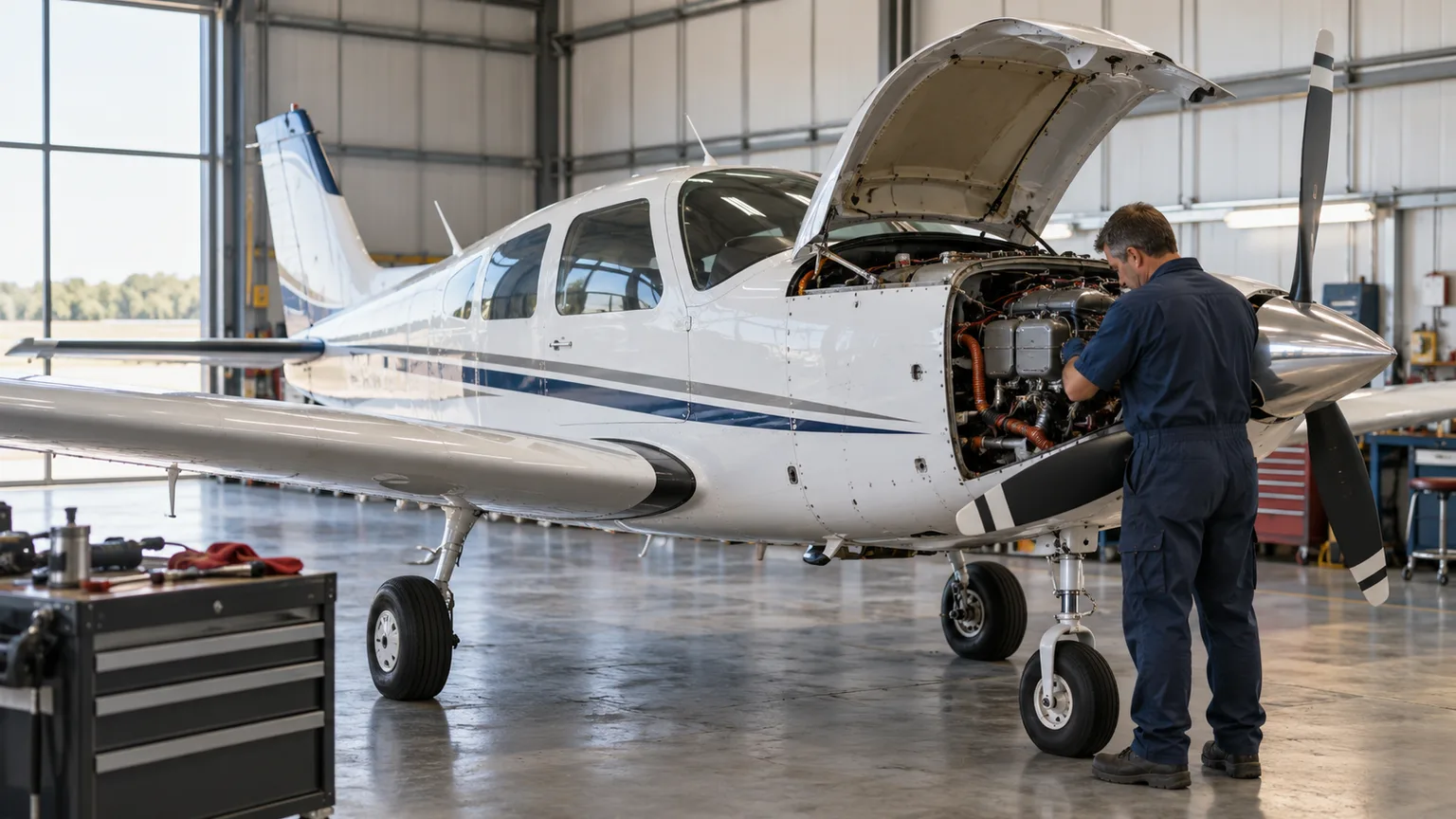
Ask the inspecting professional to describe the scope, access needed, records reviewed, expected report, exclusions, and process for authorizing additional work. Specify who receives findings and who can approve a repair. Keep the investigation separate from any maintenance authorization unless the documents explicitly combine them.
AOPA’s pre-purchase inspection guidance recommends an independent mechanic familiar with the aircraft type and distinguishes a pre-buy from an annual inspection. Confirm the proposed scope with both your adviser and the financing provider. A lender’s condition should be verified directly for your file.
A pre-buy cannot guarantee the absence of undiscovered defects or future failures. Ask what could not be inspected and how that limitation affects your decision. If the report refers to specialist follow-up, obtain that work or document why the question remains unresolved before treating the findings as cleared.
Turn findings into decisions and cash needs
Use a simple finding register rather than an unstructured list of comments. Record the item, evidence, technical interpretation, proposed action, responsible party, estimated cost, and deadline. Then identify which findings affect purchase acceptance, return to service, insurance, or lender review.
| Finding category | Question to resolve |
|---|---|
| Missing evidence | What record or professional review would resolve the gap? |
| Required work | Who determines the requirement, approves the scope, and confirms completion? |
| Near-term expenditure | When is cash needed, and who is funding it? |
| Optional improvement | Can it wait without changing the purchase or operating decision? |
| Unresolved uncertainty | What condition must be satisfied before the buyer proceeds? |
Do not assign a technical category yourself from a finance worksheet. Obtain the relevant professional conclusion. A negotiated price reduction may address some economics, but it does not by itself resolve a maintenance requirement or establish the aircraft’s suitability for operation.
Review records and planned maintenance together
Ask the maintenance adviser to identify records needed to support the aircraft’s configuration and status. Discuss missing history, major repairs, installed equipment, component status, and applicable recurring requirements. An incomplete record can create uncertainty even when an item appears satisfactory during a visual review.
Use the FAA registration reference for registration eligibility and documentation requirements. Have the professionals handling the transaction reconcile the seller, buyer, and ownership entity with the documents they are preparing. Registration review and maintenance-record review serve different purposes.
Prepare a first-year maintenance forecast from the findings. Include known work and its expected timing. Then use the ownership cost calculator to combine recurring expenses, hourly allocations, and financing. Keep a known immediate invoice out of a generic reserve assumption if doing so would conceal the cash needed soon after purchase.
Keep accepted value separate from asking price
Ask what valuation evidence the lender requires and how it will affect the proposed loan amount. The asking price is an agreement between buyer and seller; the lender’s accepted collateral value is a separate input to its decision. Do not assume the loan automatically increases because the negotiated price rises.
If the approved funding amount changes, rebuild the sources and uses. Identify buyer cash, loan proceeds, credited deposits, seller adjustments, and unpaid transaction costs. A small change in funding can matter when the buyer has already allocated reserves to immediate work or business obligations.
Discuss equipment upgrades separately from the base acquisition. Confirm whether quotes include installation, downtime, taxes, and related work. No amount entered in this calculator establishes that a lender will accept or fund an upgrade. Use written conditions and a complete project budget.
Coordinate title, insurance, and closing authority
The FAA’s clear-title guidance explains the role of recorded liens, security documents, and releases. Have the appropriate title and legal professionals determine what must be reviewed and resolved. Registration information alone is not a complete transaction review.
Confirm who is authorized to sign for every entity. Ask the closing professionals to reconcile purchase documents, financing documents, payoff arrangements, and delivery conditions. Independently verify funds instructions through the established closing process before sending money.
For insurance, distinguish a preliminary indication from the evidence required for closing. Identify coverage dates, aircraft and pilot details, lender requirements, and any conditions that remain. Make sure delivery timing and the beginning of the buyer’s responsibilities are understood by the parties arranging coverage.
Work backward from the closing conditions
Create a dependency list with an owner for each unresolved item. Financing approval may depend on evidence that is still being assembled. Inspection findings may change the purchase agreement. Insurance or title questions may require a separate decision. A calendar appointment does not resolve those dependencies.
Before committing to a funding date, ask who confirms each condition is satisfied and how changes are communicated. If a deadline cannot be met, address it through the purchase agreement and the relevant professionals. Do not use an assumed lender timeline as a substitute for the actual transaction terms.
Prepare a focused consultation
Bring the aircraft details, proposed price, intended use, ownership structure, deposit position, available cash, and the status of inspection and title work to Jaken Aviation. Include unresolved questions rather than implying the file is complete.
Review aircraft financing for business owners for the borrower and repayment framework. Compare cash versus financing if liquidity is the main decision. An existing owner considering replacement debt can use the aircraft refinance calculator. Each tool supports preparation; the transaction still needs aircraft-specific evidence and lender-approved terms.