Blog
DFW Business Warehouse: Bridge Now, SBA Later?
By Jason Taken · Principal
11 minute read
Plan a DFW owner-occupied warehouse purchase with bridge cash, work, and a separate SBA exit review. Test delay costs and a smaller refinance loan.
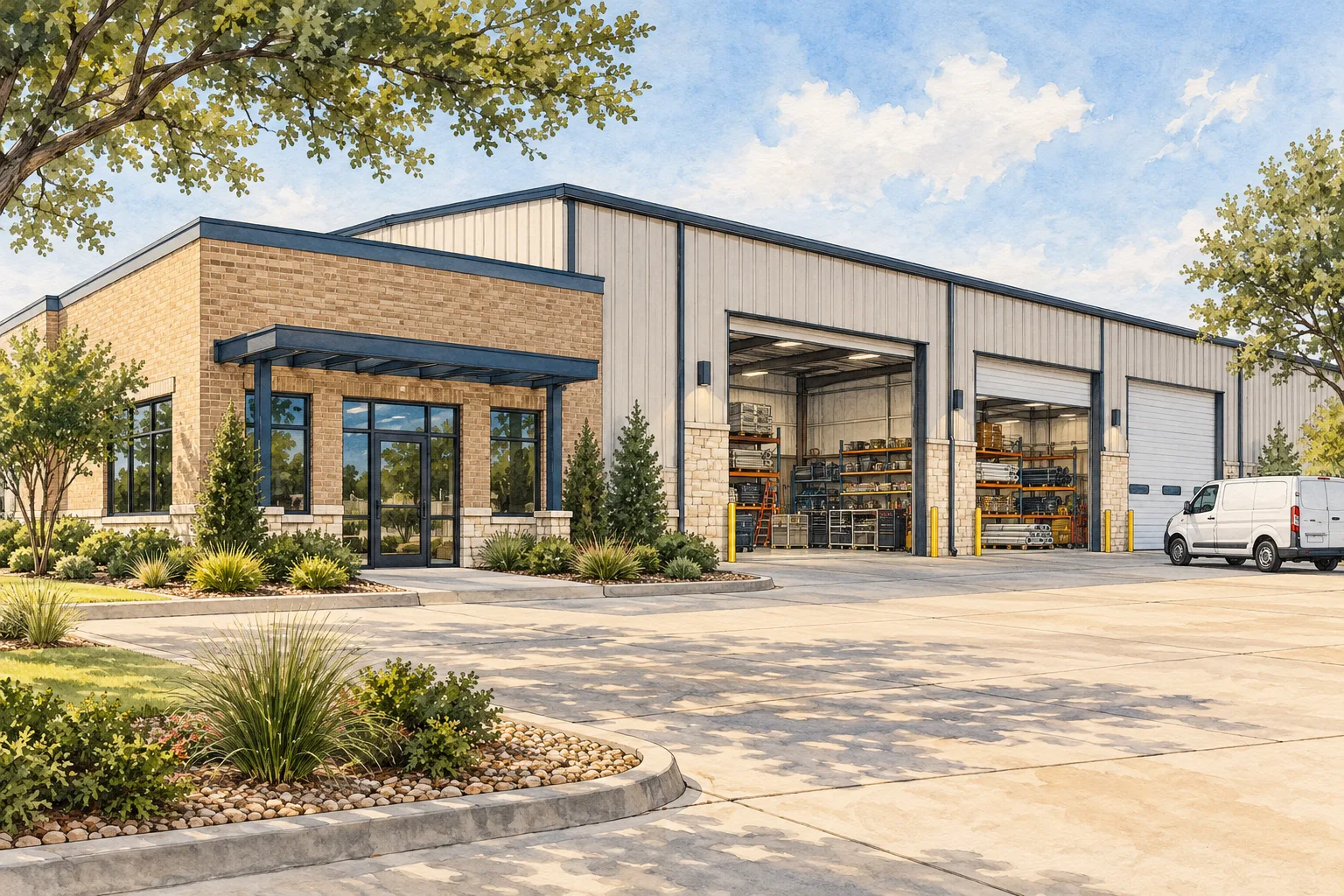
A DFW business can use a bridge to buy its warehouse when it solves a clear timing or property problem and the business can fund the move. A future SBA loan needs its own review. It does not follow automatically from the bridge. Confirm the exit plan before relying on that new loan to pay the old one.
An owner-user needs to know whether the business can pay for the building and keep running. The warehouse may have room to grow and a strong value. It may still need more cash than the business can spare. Put the purchase, work, move, debt, and later loan in one plan before choosing the bridge.
Jaken Finance Group’s owner-occupied loan guide is a starting point. This article uses a made-up DFW warehouse purchase to show cash needed before and after the move. The figures are inputs for the math. They are not current local prices, offered rates, or approved SBA proceeds. Use the actual lender’s terms for a real deal.
Start with the business problem the purchase solves
Write down why the business wants the building. It may need more docks, yard space, power, storage, or control over rent. Check each need against a feature of the actual site. A sales sheet may look good while missing a key need. Find that gap before spending money on a loan or move plan.
List the costs of staying in the old space during the move. Read the lease end date, renewal terms, notice rules, and duties to restore the space. The business may pay for two sites at once. A late opening can extend that overlap. Show which bills continue at each site and when they end.
Compare buying with leasing space that meets the same needs. Use real offers and add move costs, work, deposits, and time when the business cannot produce or sell. Buying gives control, but uses cash. The down payment and reserve will not be available to buy stock, pay staff, or fund another project at the same time.
Ask whether the business still wants this warehouse if the later loan is smaller than planned. This tests the cash need more clearly than a target loan percentage. If the deal needs every assumption to go right, change the price, work, timing, or funding. Make those choices while the contract still allows them.
Compare direct bank or SBA financing first
A direct long-term loan can avoid a second closing and a bridge deadline. Start that review early if the property is ready, records are in hand, and the seller can wait. Ask for a clear list of conditions and dates. Do not assume a bridge is needed or that it will always close faster.
The SBA 504 program is designed for eligible fixed assets. It excludes working capital and restricts refinancing to qualifying debt and circumstances. Ask the proposed lender and Certified Development Company to review the planned purchase and any later refinance before treating that program as the exit.
An SBA loan also needs a business, ownership, and credit review. Bring current owner details, books, and the planned use of funds to the lender. An old approval for a different deal does not settle this one. The lender must apply the rules in effect when it reviews this request and its actual facts.
Use a bridge to solve a clear issue, such as work needed before a long-term loan can close. Say what will change, when, and how you will prove it. If the plan has no such step, a short loan may leave the same problem in place. It then adds a deadline to repay it.
Confirm owner occupancy with a floor plan
For acquisition or renovation of an existing SBA-financed building, 13 CFR 120.131 generally requires at least 51% borrower occupancy and use. New construction has a 60% initial-use rule and additional leasing and expansion conditions. Have the lender apply the full rule to the property and any related operating-company structure.
Use measured rentable area rather than an informal estimate. Mark space used by the operating business, space leased to others, and areas intended for future use. Explain shared areas and any unusual layout. The lender should confirm the treatment of the floor plan before the owner relies on an occupancy percentage.
Keep actual use aligned with the file. A plan that calls an area business storage while it is leased to another tenant needs to be corrected. Provide leases, occupancy dates, and the move schedule. A proposed future use may be treated differently from space that the business occupies when the loan closes.
If the property will sit in a separate real estate entity, show who owns both entities and how the lease works. Ask counsel and the lender to review that arrangement together. Related-party rent is part of the structure, but it does not create extra cash in the combined business that was not there before.
Worked example: a business buys a $2 million warehouse
Assume the business buys an existing warehouse for $2,000,000 and plans $200,000 of work. A hypothetical bridge provides $1,500,000 at 10.5% interest only for nine months. The example assumes the full balance is outstanding for the whole period, with $60,000 of upfront fees and $5,000 per month of noninterest property carry.
Monthly bridge interest is $13,125. Over nine months, interest totals $118,125 and other carry totals $45,000. Add the purchase, work, fees, interest, and carry to reach $2,423,125 of total modeled uses. Subtract the $1,500,000 bridge and the owner needs $923,125 through that period.
This budget includes more than the $500,000 purchase equity. It also funds the work and cost of holding the property during the transition. It excludes business working capital, the move, any old-lease overlap, and revenue changes. Those belong in the business plan and may raise the actual cash requirement materially.
Assume a separate permanent loan of $1,750,000 and $45,000 of exit costs. After the $1,500,000 bridge payoff, the exit returns $205,000. The owner then has $718,125 of unrecovered cash in this simplified funding plan. That figure is neither taxable profit nor an appraisal-based estimate of equity.
Explore the worked example
Test the warehouse bridge-to-permanent budget
Change the expected permanent loan to expose the refinancing gap before buying.
Illustrative results for the starting values. All editable loan terms are assumptions.
- Owner cash through planned bridge period
- $923,125
- Refinance cash returned / needed
- $205,000
- Monthly bridge interest
- $13,125
- Extra three months of interest and property carry
- $54,375
| Total planned bridge interest | $118,125 |
|---|---|
| Cash still invested after assumed refinance | $718,125 |
- This budget assumes a fully drawn, interest-only bridge and interest paid monthly. It does not deduct operating-business revenue or compare owning with rent.
- The refinance input is an assumption, not an SBA loan estimate. Eligibility, occupancy, eligible debt, use of proceeds, business repayment capacity and lender approval must be assessed separately.
- Additional reserves, extension fees, equipment, working capital and approval delays can increase cash needs. Review direct permanent financing before choosing a bridge.
Change the inputs to test a proposal you are considering. The tool tracks bridge funding and exit cash; it does not decide SBA eligibility or calculate a blended SBA payment. An actual permanent structure can have several pieces with different terms. Use each lender’s written payment and cost schedule when testing ongoing business debt service.
Stress a smaller exit and a longer hold
Reduce the assumed permanent loan to $1,400,000 while keeping the same bridge payoff and exit costs. The refinance now needs $145,000 of added owner cash. A property can gain value and still have a funding gap if the lender approves less debt than the borrower expected or excludes part of the requested use.
Test a three-month delay as a separate case. At the modeled bridge balance and rate, three months add $39,375 of interest and $15,000 of other carry. That is $54,375 before extension charges, extra work, or business losses. Add those costs only if they apply, using the actual contract and revised budget.
The two cases can happen together. A delay may consume the reserve that was supposed to cover a smaller refinance. Build a combined downside case and show the source of the extra funds. If the only source is an unapproved future loan, the cash plan still has an open issue.
Set an early review date before the bridge approaches maturity. At that date, update lender conditions, property progress, business results, and cash on hand. Decide whether the plan remains feasible. A scheduled review gives the owner time to respond while there are still choices, rather than waiting until a payoff is due.
Review the warehouse as a place to operate
Check truck movement, loading doors, dock heights, clear height, column spacing, parking, and access. Match the building to the actual equipment and goods the business handles. Confirm service capacity with the right professionals and utility providers. A general statement that a building has industrial power does not prove it can support the planned load.
Price the roof, HVAC, pavement, doors, fire systems, and any needed changes. Identify work that must happen before operations begin and work that can be phased later. A phased budget should still include the later expense and its funding source. Deferring a task does not make its cost disappear.
Review prior uses and environmental diligence with the lender and qualified professionals. EPA’s All Appropriate Inquiries guidance explains an established environmental inquiry framework. The appropriate scope and any follow-up depend on the property. Do not assume a clean appearance or current light use resolves questions about prior activity.
Inspect title, surveys, easements, access rights, and any limits on outdoor storage. The business may depend on space or access that does not belong to the seller. A paved area beside the building is not proof of a legal right to use it. Resolve these questions before paying for improvements based on that assumption.
Check Dallas or Fort Worth use and occupancy requirements
Confirm which city governs the address and which use is proposed. A Dallas mailing address or a DFW broker description is not enough to establish the permit authority. Send the actual address, existing approval records, and planned use to the relevant office. Keep its response with the property and loan records.
Dallas provides certificate of occupancy guidance. Fort Worth publishes its own certificate of occupancy information. Use the correct local process to confirm the proposed business use and the steps needed before opening. A prior occupant’s approval should be reviewed rather than assumed to cover the next operation.
Ask the design team to identify permit and inspection dependencies in the work schedule. A final inspection can depend on earlier work by several trades. Allow time for corrections and document closeout. The date on a contractor’s estimate is useful, but it does not replace the agency’s required steps or inspection results.
Keep approval costs and timing visible to the lenders. If the permanent loan depends on lawful occupancy or completed work, provide the required evidence promptly. A finished-looking building may still have an open file. That gap can delay the refinance while the bridge continues to accrue interest.
Keep equipment, inventory, and working capital separate
Create separate lists for land and building, permanent work, equipment, inventory, and operating cash. Identify which financing source pays each item and when funds become available. This prevents the purchase budget from quietly absorbing money the business needs to serve customers while it moves.
Equipment may have deposits, staged payments, delivery charges, installation, and training. A separate equipment lender may require a lien or other conditions. Disclose those terms to the real estate lender and confirm that the documents work together. Do not promise the same collateral or invoice to two lenders without a permitted structure.
Build a cash calendar around the timing of receipts and payments. Customers may pay after delivery while wages and suppliers must be paid sooner. A warehouse move can widen that gap. Even a profitable business can run short of cash if it uses its working reserve to finish the property purchase.
Compare total debt service after all loans close. Include existing business loans, equipment debt, the proposed property debt, and any owner obligations relevant to the lender’s review. Show how the business performs under a weaker sales or margin case. Property value supports collateral; recurring business cash supports repayment.
Prepare the permanent lender’s file early
Ask for the required financial periods, tax returns, debt schedules, ownership records, and property documents before the bridge closes. Note which items must be refreshed later. Keep records of how bridge funds are used, including invoices and payment evidence. Good records help a later lender review the debt and eligible costs.
Obtain a written list of open exit conditions. Some will relate to the borrower, others to the property or the use of funds. Assign an owner and due date to each. A list with clear evidence is more useful than a verbal statement that the file should qualify once enough time has passed.
Review the bridge agreement itself. Confirm maturity, extension terms, prepayment rules, draw procedures, collateral, guarantees, and default provisions. If the planned exit date changes, calculate the actual cost under those documents. A simplified calculator cannot capture every lender fee or contract condition, so use it alongside the written terms.
Avoid counting on rising values to fix a weak file. A new appraisal may differ from the purchase estimate, and business results can change. Run the exit with a lower approved amount and current operations. The owner should understand the required cash and fallback choices before taking on a short maturity.
Distinguish a business warehouse from an investment property
If the buyer mainly intends to lease the space to unrelated tenants, start with industrial and warehouse property loans. That review focuses on the property’s supported income, leases, condition, and exit. Calling an investment warehouse owner-occupied does not change how the space is actually used.
A multi-tenant property may instead need the approach in the DFW small-bay industrial bridge guide. That model tracks vacancy, tenant work, reserves, and property cash flow. A warehouse occupied by the buyer’s business needs a separate view of operating results and the business’s ability to carry debt.
Mixed cases deserve a clear explanation. Show the business-occupied area, tenant area, rent receipts, related parties, and combined cash obligations. Ask the lender which product fits those facts. Choosing the right structure early can save time and avoid a late change after deposits, reports, and legal work have already been paid for.
Submit a warehouse purchase plan for review
Provide the address, purchase contract, business financials, debt schedule, ownership chart, and floor plan. Add work bids, use and occupancy records, available cash, environmental diligence, and the move schedule. Show the proposed permanent exit and a combined smaller-loan, longer-hold case with an identified source for the gap.
Review SBA 504 financing and SBA loan options alongside the owner-occupied bridge path. Use the commercial loan request to ask Jaken Finance Group for a file-specific review. The aim is a property and financing plan the business can carry through the move, opening, and long-term hold.