Four-tenant neighborhood retail center
Multi-Tenant NNN Refinance Funding Example
Review leases → underwrite NOI → refinance
Refinance a 12,000-square-foot retail center occupied by four tenants. The starting rent roll totals $304,000 of annual base rent. Reimbursements offset eligible property costs, while vacancy, management, unrecovered expenses and capital/leasing reserves remain visible.
By Jaken Finance Group ·
Edit this funding example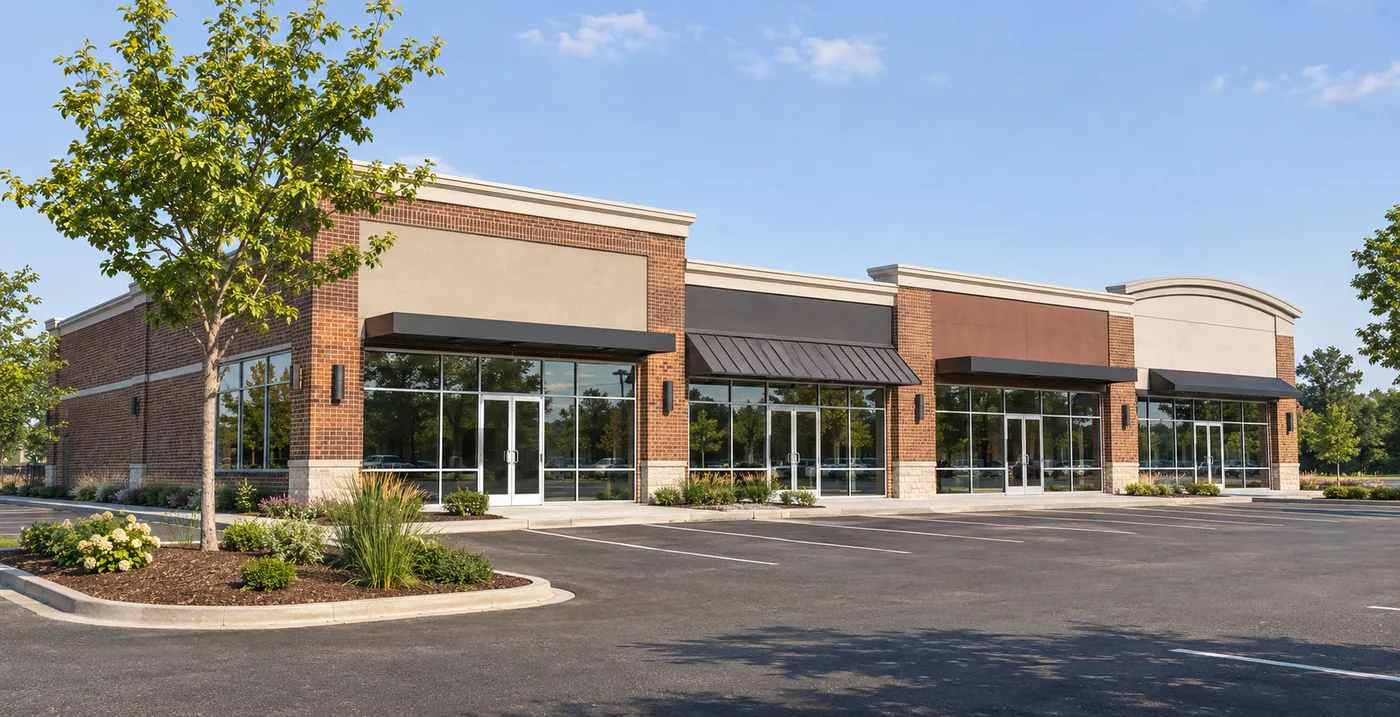
How this funding example works
The starting calculation follows the assumptions described above. Change inputs in the calculator to explore your own numbers. All rates, leverage, rents, cap rates and fees are planning assumptions; they do not establish an offer, appraisal or loan eligibility.
Start with the leases, not the NNN label
The four starting leases represent separate rent obligations, not one guaranteed stream. Review the actual lease, amendments, estoppel, arrears and expiration schedule for each tenant. Contractual rent, collectability and the tenant’s responsibility for expenses are separate questions. The inputs are annual dollars per rentable square foot, not monthly rent per foot.
The example applies the vacancy allowance to both base rent and scheduled reimbursements, while retaining the full reimbursable expense budget. That exposes the landlord’s share of costs when space is vacant or a tenant does not reimburse as expected. Do not add reimbursements to income without also including the corresponding expenses.
Make the example your own
Edit the deal. See the cash change.
Change any assumption to update the loan sizing, cash requirement and exit. Starting values are planning assumptions; actual terms require property and borrower review.
Starting example shown below. Inputs update automatically when JavaScript is available.
- Modeled refinance loan
- $2,344,306
- Net cash at refinance / cash needed if negative
- $589,420
- Monthly owner cash flow after reserves
- $4,142
- Underwritten DSCR
- 1.25×
| Total rentable square feet | 12,000 |
|---|---|
| Tenant 1: base rent | $112,000 |
| Tenant 2: base rent | $72,000 |
| Tenant 3: base rent | $65,000 |
| Tenant 4: base rent | $55,000 |
| Scheduled base rent | $304,000 |
| Vacancy / credit loss on base rent | $15,200 |
| Collected tenant reimbursements after vacancy | $68,400 |
| Collected base rent | $288,800 |
|---|---|
| Collected reimbursements | $68,400 |
| Full reimbursable property expenses | $72,000 |
| Management on collected base rent | $8,664 |
| Unrecovered owner operating expenses | $6,000 |
| NOI before financing and capital reserves | $270,536 |
| Replacement reserve | $6,000 |
| Tenant improvement reserve | $10,000 |
| Leasing commission reserve | $6,000 |
| Cash flow used for debt coverage | $248,536 |
| Annual new debt service | $198,829 |
| Annual owner cash flow after reserves | $49,707 |
| Income-based value assumption | $3,864,800 |
|---|---|
| Value-based loan ceiling | $2,705,360 |
| DSCR-based loan ceiling | $2,344,306 |
| Existing loan payoff | $1,650,000 |
| Existing loan prepayment charge | $33,000 |
| New loan origination fee | $46,886 |
| Other refinance closing costs | $15,000 |
| Initial escrow / lender reserve funding | $10,000 |
| Net cash at refinance / cash needed if negative | $589,420 |
| Months to refinance closing | 2 |
| Existing debt payments during closing period | $24,000 |
| Property cash flow during closing period, after reserves and existing debt | $17,423 |
Results round to whole dollars; calculations retain unrounded amounts. Retained liquidity is not a spent project cost. Initial escrow funding reduces cash available at closing and remains an asset, separate from fees. Negative cash remaining in the deal means refinance proceeds exceed cash spent; those proceeds are borrowed money. Income taxes, tax benefits and ownership distributions are excluded. The entered amortization is separate from loan maturity and the fixed-rate period.
Keep owner responsibilities in the pro forma
Management and unrecovered operating costs reduce NOI. Replacement, tenant improvement and leasing commission reserves are shown below NOI, then deducted for the example’s coverage test. A NNN structure does not automatically eliminate roof, structure, downtime, renewal concessions or leasing costs; the actual lease defines those obligations.
Value is operating NOI divided by the entered cap rate. Permanent debt is constrained by both that value and income after the listed reserves. This example uses an amortizing payment even though some actual structures may have different amortization, maturity or interest-only features.
Separate the refinance closing from ongoing operations
The refinance uses the lower of the entered value-based ceiling and the coverage-based ceiling. Origination is calculated on the new loan, then other closing costs and any old-loan prepayment charge are deducted. A negative closing result is a cash requirement. Released equity is borrowed money, not project profit.
The existing loan’s prepayment charge is based on the entered principal payoff and percentage. A real loan may instead have yield maintenance, defeasance, a step-down or another calculation. Replace the input with the actual payoff economics rather than assuming a simple percentage applies.
Property cash flow during the closing period is listed separately after existing debt payments and reserves. It is not deducted again from refinance proceeds or treated as a new loan fee. The result assumes the entered rent roll continues through closing; tenant rollover or a major capital project needs a separate timing analysis.
What to verify for a real property
- Lease expiry concentration and tenant credit can change the loan size even when historical NOI is strong.
- Reimbursements must match lease provisions and actual recoverable expenses.
- The payoff statement can include accrued interest, legal charges and prepayment costs beyond the entered principal. Add those to closing costs when applicable.
Use the published program parameters as the starting program reference. The OCC commercial real estate lending handbook provides general background on development and income-property lending risks; it does not set Jaken Finance Group’s terms.
Related financing and planning tools
Bring the address, budget, current operating records and intended exit to the review. Request financing for your property.
Explore another funding example
Buy → renovate → sell
Fix & flip
Explore the funding example
Buy → rehab → rent → refinance → repeat
BRRRR: rehab + refinance
Explore the funding example
Purchase → lease → hold
DSCR rental purchase
Explore the funding example
Acquire land → build → lease → refinance
5-unit build + refinance
Explore the funding example
Acquire land → build → lease → refinance