Updated
Cost segregation identifies components of an investment property that may qualify for shorter depreciation periods. For investors, the useful question is whether moving deductions forward improves the deal’s after-tax outcome after study costs, loss limitations and eventual sale taxes. A large deduction is not the same as cash available today.
Start here to organize your records, explore an estimate and prepare questions for your CPA. Jaken Finance Group arranges financing; Maven provides its cost segregation services separately.
Download the free CPA preparation guide
Download the cost segregation CPA preparation guide (PDF). No email is required. It includes a document checklist, a property facts worksheet and questions to ask your CPA and study provider. Print it before requesting a proposal.
Prepare for a cost segregation conversation
Check the records and questions you have ready. This organizer does not decide whether you qualify or estimate your deductions. Your choices stay on this page and are not submitted or saved.
Start with purchase records and your CPA’s review.
Keep four different numbers separate
- Property cost: the starting records for determining basis, with land and other adjustments reviewed by your CPA.
- Depreciation deduction: an expense calculation for tax purposes, based on eligible assets and the applicable rules.
- Currently usable tax benefit: the effect after loss limitations, your tax situation and relevant state treatment.
- Operating cash flow: rent collected less property expenses and debt payments. A projected deduction does not pay the mortgage.
What the calculator can help you explore
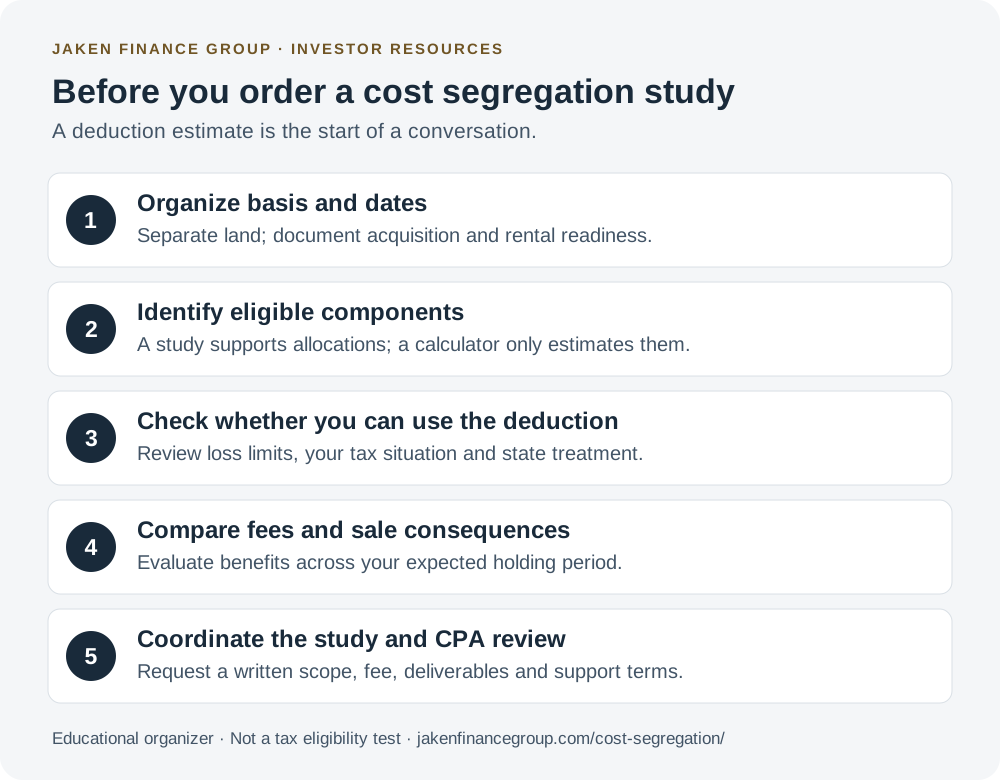
Maven’s tool lets you explore potential depreciation using property assumptions. Before entering numbers, ask your CPA to review your basis excluding land, the acquisition and placed-in-service dates, and the recovery period appropriate to your property. See the IRS depreciation guide for the underlying framework.
Use the estimate to start a discussion about a study’s scope and fee. It is not an engineering report. Do not assume an allocation percentage will apply to your building, that an illustrated deduction is fully usable this year, or that the estimate captures state taxes and sale consequences.
Questions to settle before ordering a study
Can I use the loss? Ask your CPA how passive activity and at-risk rules affect your circumstances. A deduction may be suspended rather than reduce this year’s tax bill. The IRS passive activity guide explains the relevant limitations.
Which dates and assets qualify? Bonus depreciation depends on the actual property and applicable acquisition rules. IRS Notice 2026-11 addresses changes following the restoration of 100% bonus depreciation for qualifying property acquired and placed in service after January 19, 2025. The building’s entire price does not become an immediate deduction.
What happens when I sell? Your CPA should model the holding period and asset-level sale consequences. The IRS asset disposition guide explains recapture and other disposition rules. A study should be evaluated over your planned ownership period.
What am I purchasing? Request a written scope, methodology, deliverables, information requirements, fee, timing and support terms from the study provider. Review the IRS audit techniques guide index with your advisor; it includes the cost segregation examination guide. An audit guide is not IRS approval of a particular provider or study.
Coordinate the study with financing
Underwrite the rental’s rent, expenses, reserves and debt service before adding an estimated tax benefit. Use the DSCR calculator for coverage and the BRRRR calculator for your capital and refinance assumptions. A refinance appraisal does not, by itself, reset the property’s depreciable basis. Review that distinction in IRS Publication 527.
For timing and bonus depreciation details, read our bonus depreciation and cost segregation guide. For financing, explore DSCR investment property loans or the investor resource library.
General educational information, not individualized tax advice. Reviewed November 3, 2026. Confirm the rules for your tax year and circumstances with your CPA.