Zoning is the hidden line item on every Illinois real estate investment. It decides how many doors you may legally rent, whether you may open a storefront on the ground floor, how tall you may build, and whether your buyer’s lender will accept the rent roll on a refinance. In Chicago, that layer is dense: Title 17 of the Municipal Code, ward-level politics, transit overlays, landmark districts, and a 2026 citywide ADU expansion all sit on top of a standard 25-foot by 125-foot lot.
This guide explains Illinois enabling law, Chicago base districts and bulk math, overlays investors actually hit, collar-county and downstate differences, and how loan programs align with legal use. It complements the Chicago fix and flip permits guide, coach house and ADU financing guide, and two-flat and three-flat financing guide. Educational information only — not legal, tax, or investment advice.
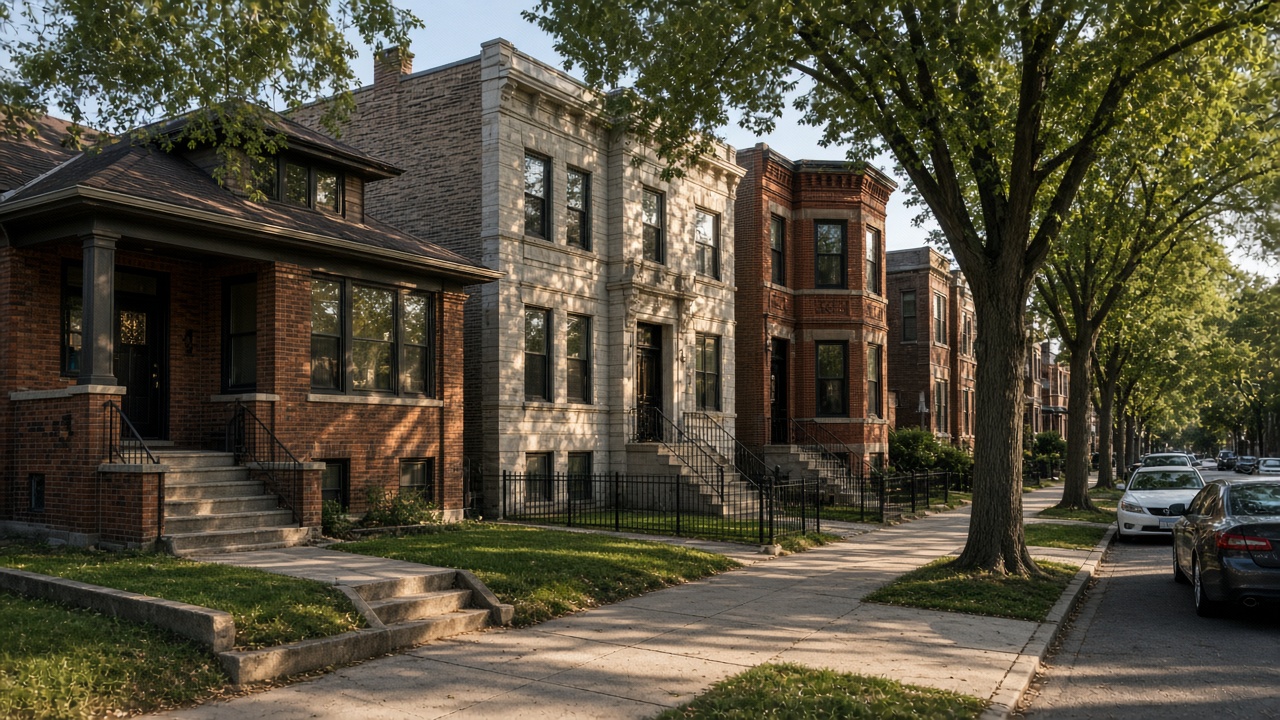
How zoning works in Illinois — state law vs. local code
Illinois does not run a statewide zoning map for cities. Instead, the Illinois Municipal Code grants zoning power to municipalities under Division 13 — Zoning (65 ILCS 5/11-13-1 et seq.). Counties receive parallel authority for unincorporated land under the Counties Code (55 ILCS 5/5-12001 et seq.). Every ordinance must serve public health, safety, and welfare, include a map, and provide a board of appeals or administrative relief path.
Home rule municipalities — including Chicago, Evanston, Oak Park, Naperville, Schaumburg, Aurora, and Joliet — exercise broad land-use authority under Article VII, Section 6 of the Illinois Constitution. They can adopt standards stricter than state minimums unless state law expressly preempts them. Non-home-rule towns operate within statutory caps and often adopt county models with local tweaks.
For investors, the split matters in three places:
- Annexation and extraterritorial review. When a suburb grows, unincorporated acreage may fall within a municipality’s 1.5-mile planning and subdivision review radius under
65 ILCS 5/11-12-5, coordinated with the Plat Act (765 ILCS 205/). A Will or Kane County tract “outside city limits” can still need city consent before lots record. - Judicial review standards. Illinois courts evaluate zoning decisions under reasonableness and consistency with a comprehensive plan — the factors discussed in cases such as La Salle National Bank v. County of Cook. That does not speed up your entitlement, but it explains why identical facts can win a variation in one ward and lose in another.
- Who signs the final map. In Chicago, the City Council amends the zoning map. In unincorporated McHenry County, the Unified Development Ordinance and county committees control platting. Your diligence checklist follows the PIN address, not your LLC’s mailing address.
State hubs for financing context: hard money lenders Illinois, fix and flip loans Illinois, DSCR loans Illinois, commercial lending Illinois, and bridge loans Illinois.
Decoding Chicago Title 17 — districts investors touch every week
Chicago’s Zoning Ordinance — Title 17 organizes the city into base districts (letter prefixes) and suffix numbers that control bulk. Pull the district on the interactive zoning map before you trust a listing’s “legal four-unit” claim. Administered uses and bulk tables live in Chapter 17-2 (residential), 17-3 (business and commercial), and 17-4 (downtown, manufacturing, and special districts).
Residential R districts (Chapter 17-2)
| Prefix | Typical building stock | Investor note |
|---|---|---|
| RS-1, RS-2, RS-3 | Detached single-family | Highest minimum lot area per unit; legacy two-flats may be legal nonconforming only |
| RT-3.5, RT-4, RT-4A | Two-flats, townhouses, small multifamily | Workhorse zones for Chicago two-flat financing |
| RM-4.5 through RM-6.5 | Three-flats, courtyards, mid-rise | Higher unit counts; watch parking, rear yard open space, and ARO triggers on large additions |
RS-3 downzoning in Logan Square, Avondale, and Pilsen traps buyers who model three units on a map that now allows only one detached home — unless a grandfathered use or ADU path applies.
Business B and commercial C districts (Chapter 17-3)
| Family | Ground floor default | Common investor play |
|---|---|---|
| B1 | Local shopping | Small retail and service; residential often requires special use |
| B2 | Neighborhood mixed use | Residential by right on upper floors; ground floor can mix uses per table |
| B3 | Community shopping | Larger format retail; verify residential permissions |
| C1, C2, C3 | General and regional commercial | Mixed-use storefront financing — confirm permitted uses |
Dash suffixes (-1, -1.5, -2, -3, -5) change floor area ratio (FAR), height, and minimum lot area per dwelling unit (MLA). A B3-2 lot near transit can carry more buildable square footage than an RT-4 lot of the same dimensions — if the use table allows your unit mix.
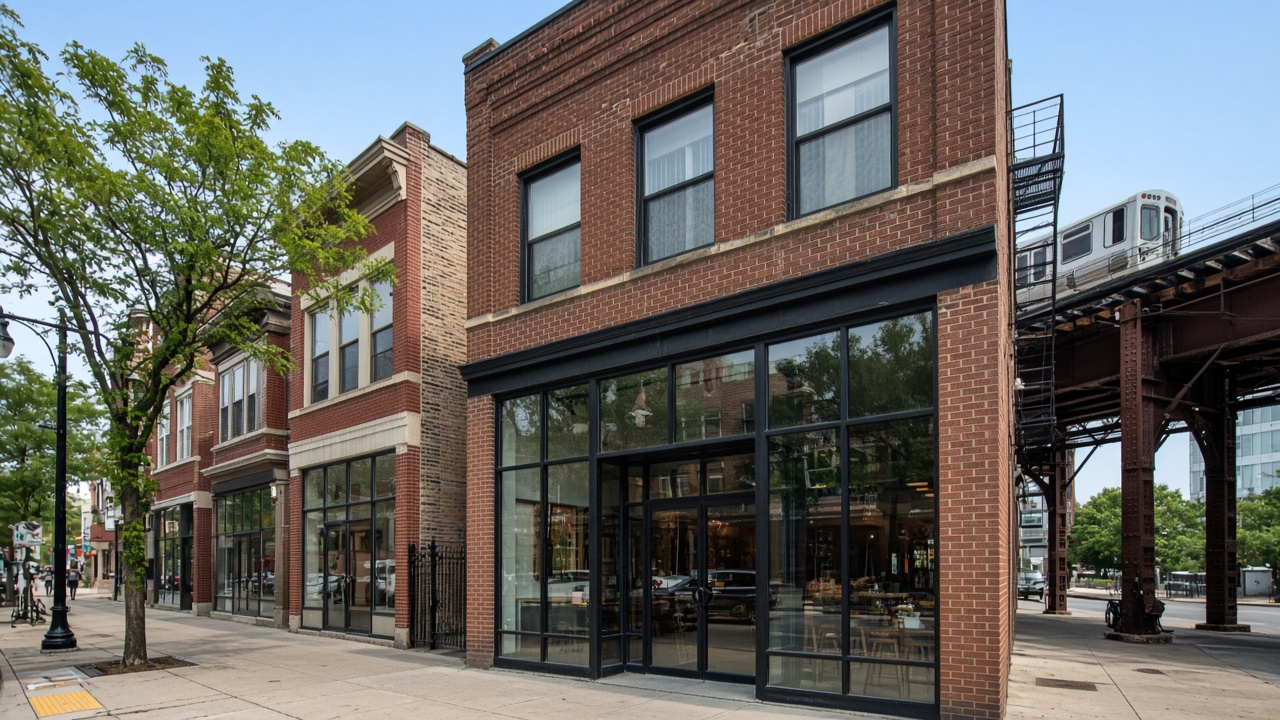
Downtown D, manufacturing M, PMD, and planned development PD
D districts govern the Loop and central area with form-based standards unlike neighborhood R zones. M1, M2, and M3 manufacturing districts and Planned Manufacturing Districts (PMD) protect industrial corridors — residential conversion is generally not a by-right play. PD (planned development) sites substitute project-specific plans for base tables; large assemblages often require Plan Commission review.
Buying “cheap industrial” in a PMD for loft conversion without a entitlement path is a land banking mistake, not a flip. For warehouse and industrial holds, see industrial warehouse loans Chicago and commercial lending Chicago.
The math of a Chicago lot — FAR, MLA, setbacks, and height
Most Chicago neighborhood lots measure 25 feet wide by 125 feet deep (3,125 square feet). Three code metrics usually bind before you talk about construction pricing:
- FAR — maximum above-grade floor area = lot area × FAR. Example: RT-4 at 1.2 FAR → 3,750 sq ft buildable (all floors combined, subject to exceptions in the bulk tables).
- MLA — minimum lot area per dwelling unit caps unit count. Example: RT-4 at 1,000 sq ft per unit → three units maximum on a 3,125 sq ft lot (3,125 ÷ 1,000 = 3.125, floored to three). RS-3 at 2,500 sq ft per unit → one detached unit on the same lot unless a nonconforming multifamily use already exists.
- Setbacks and yards — front yard build-to lines, 16% combined side yard width on many districts, and rear yard depth (often 28%–30% of lot depth) limit footprint even when FAR headroom remains.
Rear yard open space rules and accessory structures (garages, sheds, coach houses) consume area in the rear 50% of the lot under ADU rules. Alley width and easements can further shrink buildable envelope.
Worked example: same 25 × 125 lot, three districts
Illustration only — verify bulk tables for the exact district suffix on your PIN.
| Metric | RS-3 (as-of-right SFR) | RT-4 | B2-3 (mixed corridor) |
|---|---|---|---|
| Max units by MLA | 1 | 3 | Varies — often 2–4 residential if use table allows |
| Max buildable (FAR example) | ~1,875 sq ft at 0.6 FAR | ~3,750 sq ft at 1.2 FAR | ~5,000+ sq ft at higher FAR tiers |
| Typical strategy | Teardown SFR or legal nonconforming two-flat hold | Two-flat rehab, BRRRR | Storefront + apartments — bridge then DSCR |
Financing sketch: A $320,000 acquisition plus $180,000 rehab on an RT-4 two-flat ($500,000 all-in, $650,000 ARV) might borrow up to 100% LTC on a qualified fix and flip loan Chicago at 8.99%–13.5% interest-only during the rehab. Stabilized rent $4,200/mo might support a DSCR loan at 5.75%–10.5% after lease-up — if the zoning certificate confirms two legal units, not three.
On the same lot zoned RS-3, a marketed “three-unit” may underwrite as one or two legal units only. Your ARV and DSCR exit must drop the illegal unit’s rent.
Legal nonconforming uses, garden units, and zoning certificates
Chapter 17-15 governs nonconforming uses and structures. A legal nonconforming two-flat in RS-3 existed lawfully before the map change. It may continue if occupancy and maintenance rules are satisfied — but abandonment (commonly 12 consecutive months of vacancy for certain use categories) or destruction beyond repair thresholds can terminate the nonconforming right. Investors who buy vacant RS-3 two-flats planning to “restore three units” sometimes discover they may only rebuild one detached home unless they win a map amendment.
Illegal units — unpermitted basement or attic apartments without ADU pre-certification — are not the same as legal nonconforming status. They fail many buyer inspections, block FHA and conventional resale, and poison DSCR refinances.
Certificate of Zoning Compliance (CZC)
Chicago requires a Certificate of Zoning Compliance on transfers of 1–5 unit residential properties. The Department of Planning and Development (DPD) certifies the lawful number of dwelling units and compliance with current zoning for the stated use. Pair the CZC with:
- Cook County Assessor property class (for example Class 2-11 two-flat vs 2-02 single-family)
- Department of Buildings permit and violation history
- Water service and lead service line disclosures where applicable
Appraisers and DSCR underwriters count legal units. See DSCR loans Chicago multi-family for how rent rolls must match certificates.
Worked example: Humboldt Park “three-unit” in RS-3
Illustration.
- List price: $385,000 for a brick building marketed as three units
- Zoning: RS-3; CZC certifies two legal dwelling units; garden unit has no permit
- Seller pro forma rent: $4,650/mo (three × $1,550)
- Bankable rent: $3,100/mo (two legal units only)
At 75% LTV on $420,000 appraised value (two-unit comp support), loan $315,000 at 8.25% → PITIA roughly $2,450/mo depending on taxes. Coverage on $3,100 rent may near 1.05–1.15 — thin. Adding the garden unit via the ADU ordinance with full permits might restore $1,400/mo legal rent, but budget $90,000–$130,000 conversion cost and six months of hard money carry before you count it in a refi.
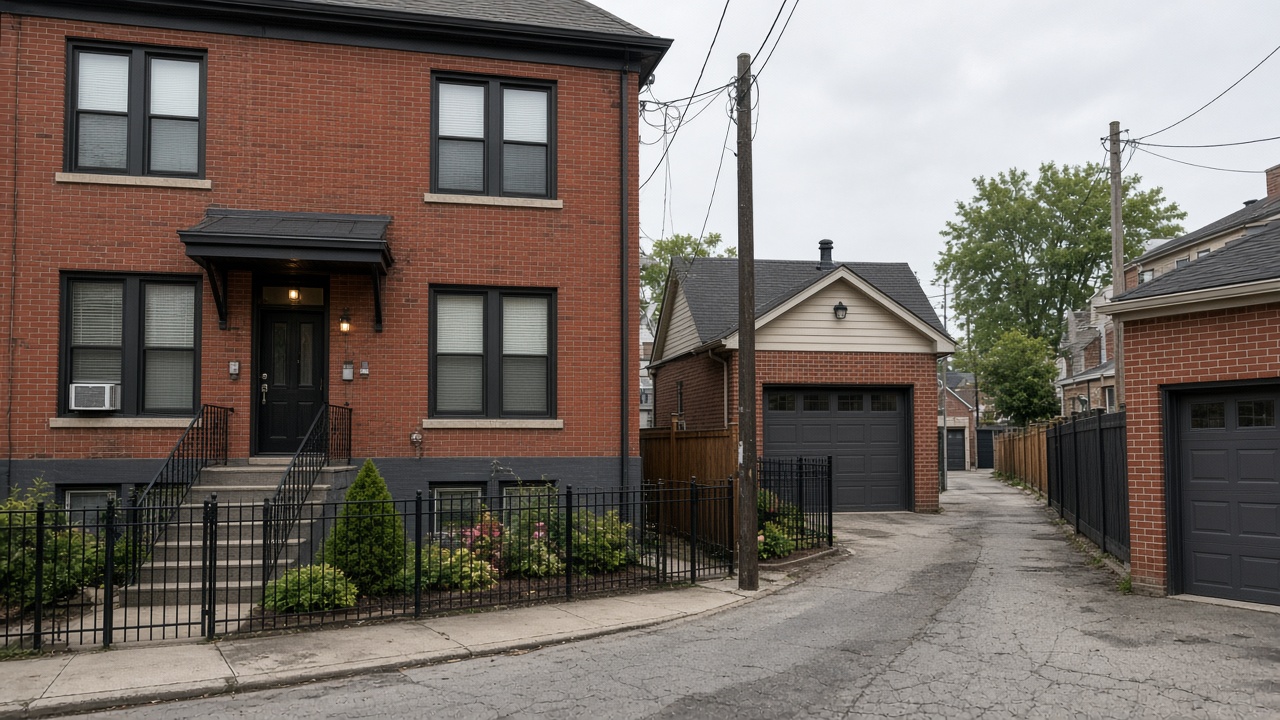
Overlays and 2026 policy shifts that change pro formas
Citywide ADU ordinance (permanent program)
Chicago’s Additional Dwelling Unit program allows coach houses and interior conversion units on eligible parcels. Key investor rules:
- One ADU type per property — coach house or conversion, not both
- Coach house height generally capped at 22 feet, sited in the rear 50% of the lot
- Conversion units require the principal building to be at least 20 years old
- Owner-occupancy when adding an ADU to buildings with two or fewer units — three-flats and larger are exempt
- No short-term rentals under 31 days in ADUs — underwrite long-term rent only (STR ordinance guide)
- When adding two or more ADUs, 50% of new units (rounded down) must meet affordable rent requirements at 60% AMI for 30 years
Finance builds through new construction loans Chicago or fix and flip at 8.99%–13.5%, then DSCR at 5.75%–10.5% when leased.
Connected Communities / equitable transit-oriented development (eTOD)
Ordinance 17-10-0102-B and the Connected Communities initiative reduce parking mandates and adjust bulk standards within 2,640 feet of CTA and Metra rail stations and along high-frequency bus corridors. Projects near investment property financing Chicago hubs like Logan Square, Rogers Park, or Hyde Park should check eTOD maps for MLA reductions and FAR bonuses tied to affordability commitments.
Affordable Requirements Ordinance (ARO)
Municipal code 2-44-080 requires on-site affordable units or in-lieu fees on many map amendments that increase residential density and on some new construction above 10 units in a single building or on one zoning lot. Investors splitting projects into by-right nine-unit phases or staying within existing RM bulk without a rezoning avoid a different cost stack than a 12-unit new construction with ARO.
Demolition surcharges, TOPA pilots, and landmarks
The 606 Trail and Pilsen overlay districts impose $60,000 demolition surcharges on detached houses and two-flats (or $20,000 per dwelling unit on larger buildings) before the Department of Buildings issues demolition permits — model that on teardown flips in Wicker Park and Pilsen. Woodlawn and other areas have seen tenant opportunity to purchase pilots that extend marketing timelines.
Chicago Landmark and National Register districts add review by the Historic Preservation Division. Facade changes, window replacements, and additions need staff or commission approval — weeks to months beyond standard plan review. See permits and building code guide for DOB tracks.
Changing the rules — adjustments, variations, and map amendments
When by-right bulk does not fit, Chicago offers a ladder of relief through DPD Zoning Administration:
| Tool | Typical use | Calendar | Fee snapshot |
|---|---|---|---|
| Administrative adjustment (17-13-1000) | Minor yard or lot area relief up to 10% | Weeks | $500 filing |
| ZBA variation (17-13-1100) | Rear yard reductions, height, parking | 90–150 days with notices | Varies by scope |
| Special use (17-13-0900) | Uses not allowed as-of-right (some residential on commercial floors) | Similar to variation | Hearing required |
| Map amendment (17-13-0300) | Change base district (rezoning) | 6–18+ months | Aldermanic process |
Type 1 map amendments bind a site plan with maximum FAR, height, and unit count — often the price of aldermanic support. Type 2 standard amendments change the map without project-specific caps but still require Committee on Zoning, Landmarks and Building Standards review and City Council vote.
Lenders rarely credit speculative rezoning at acquisition. Use bridge loans Chicago (8.99%–13.5%, 12–24 months) or vacant land financing (50%–65% land leverage) while entitlement runs — then refinance into vertical or rental debt when the map and permits match your pro forma.
Worked example: six-month RS-3 to RT-4 map amendment carry
Illustration.
- Land contract: $260,000 in RS-3 with a nonconforming two-flat you plan to legalize as three units after rezoning to RT-4
- Bridge loan: 70% of as-is value → $182,000 at 11% interest-only → ~$1,668/mo
- Entitlement budget: $45,000 (attorney, planner, community outreach, surveys)
- Six months carry: interest ~$10,008 plus taxes and insurance ~$4,200 → ~$14,200 before vertical spend
Compare to buying an RT-4 two-flat at $295,000 with three-unit potential by right — higher basis, but no map risk. The rezoning path only wins if the rezoned basis plus carry beats the by-right alternative and the ward votes yes.
Beyond Chicago — collar counties, suburbs, and downstate
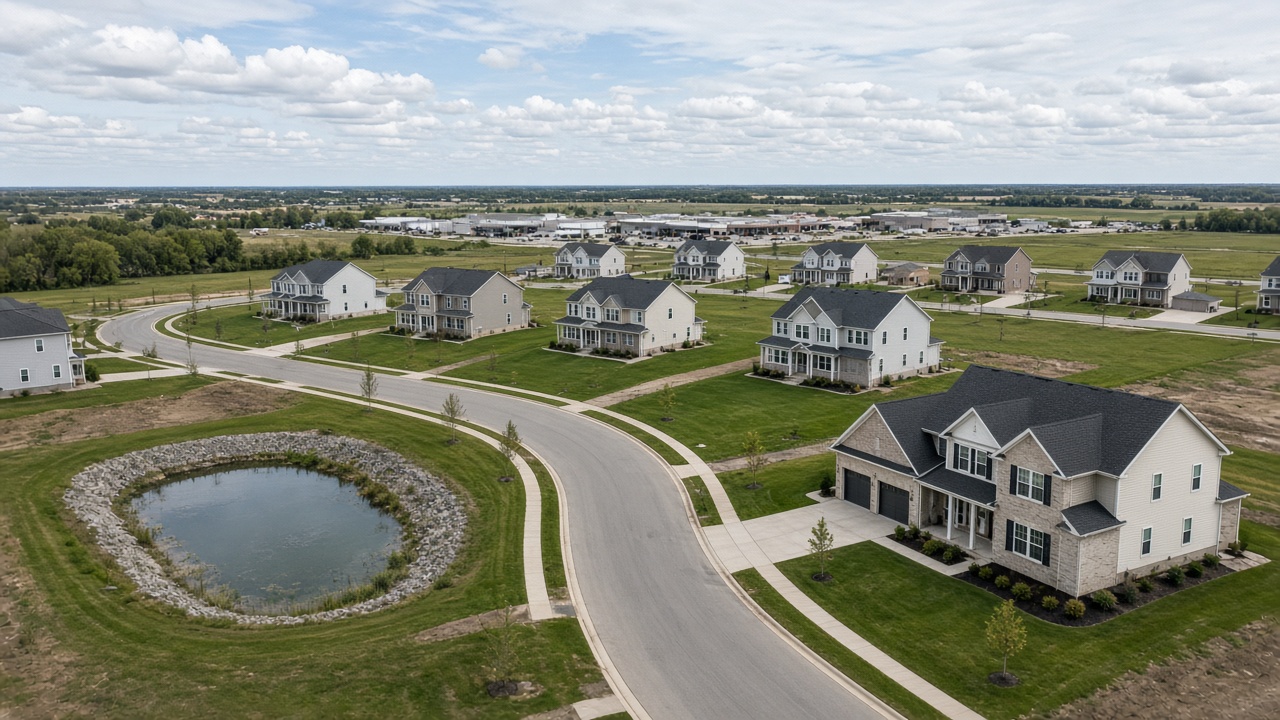
Suburban Cook and home-rule enclaves
Unincorporated Cook County follows the Cook County zoning ordinance. Municipalities such as Evanston, Oak Park, Skokie, Berwyn, and Cicero impose point-of-sale inspections, rental registries, and certificate of occupancy rules stricter than Chicago’s on some product types. A legal three-unit in Chicago may not be replicable across the border without a new bulk study.
DuPage, Will, Kane, Lake, and McHenry
Collar counties combine county UDOs with municipal annexation agreements under 65 ILCS 5/11-15.1-1. Will County’s revised transportation impact fee moved the single-family fee to $9,374 under the Road Improvement Impact Fee Law — DuPage eliminated its county transportation impact fee in 2023. Budget school and park land-cash per lot on annexations in Plainfield, Joliet, and Oswego.
Small-plat and finished-lot investors should read the Will, Kane, and McHenry small-plat financing guide and spec home construction loans Illinois. County pages: DuPage hard money, Will hard money, Kane hard money.
Downstate and Metro East
Rockford, Metro East, Edwardsville DSCR, and Carbondale markets use municipal codes tied to university enrollment, floodplain, and manufactured housing rules — not Chicago’s RS/RT alphabet. The Southern Illinois investor guide covers downstate thesis differences.
Pre-offer zoning diligence checklist
Run this sequence before you sign an LOI on any Illinois investment property:
- Base district and map suffix — Chicago zoning map or county GIS for collar/downstate parcels
- Overlay layers — eTOD, ADU-Allowed RS Area, landmark, flood, PMD
- Permitted use table — Title 17 chapter for your intended use (rental, mixed-use, industrial)
- Bulk worksheet — FAR, MLA, height, setbacks on a scaled sketch
- Legal unit count — CZC path, assessor class, leases, and physical layout
- Permit and violation search — Chicago DOB Hansen portal or suburban equivalent
- Nonconforming status — vacancy history, prior fires, partial demolition
- Entitlement calendar — if you need variation, special use, or map amendment
- Tax and transfer costs — Cook County property tax guide and transfer tax guide
- Lender alignment — share the package early on investment property financing Chicago or state product pages
| Zoning situation | Typical Jaken Finance Group program lane | Rate band (qualified business-purpose files) |
|---|---|---|
| By-right rehab or flip | Fix and flip Chicago | 8.99%–13.5% IO |
| Ground-up or coach house | New construction Chicago | 8.99%–13.5% draws |
| Entitlement in flight | Bridge loans Chicago / vacant land | 8.99%–13.5% / land 50%–65% |
| Stabilized legal units | DSCR loans Chicago | 5.75%–10.5% |
| Mixed-use or 5+ units | Commercial lending Chicago | Quoted per file |
We underwrite non-owner-occupied investment property nationwide. Zoning diligence remains your responsibility — we size loans to documented legal use and realistic exits.
Special districts that kill “obvious” value-add plans
Planned Manufacturing Districts and M zones
Chicago protects industrial corridors through M1, M2, and M3 districts and Planned Manufacturing District (PMD) overlays. Residential use is generally not permitted as-of-right. Investors who buy cheap brick industrial buildings expecting loft or live-work conversion without a map change or special use path often sit on illiquid collateral. Environmental Phase I and vapor encroachment issues stack on top of zoning denial risk.
If your thesis is last-mile warehouse or small flex, confirm truck access, loading berths, and fence height rules before you apply for commercial lending Illinois. Do not assume a residential appraiser will value a PMD loft comp grid the way they value Logan Square two-flats.
Planned developments (PD) and large assemblages
PD districts replace base bulk tables with a site-specific plan approved by the Plan Commission and City Council. PDs appear on the Near North Side, riverfront parcels, and former institutional campuses. Read the binding plan — not just the map color. FAR bonuses, open space dedications, and affordable unit counts may be locked in the PD ordinance for that PIN.
Assemblages that exceed 10,000 square feet of zoning lot area or propose large new residential buildings often trigger planned development review even when the underlying letter district looks permissive. Budget legal and design fees before you tie up multiple parcels.
Lakefront and Lake Michigan protection
The Lake Michigan and Chicago Lakefront Protection Ordinance limits development east of Lake Shore Drive and along designated lakefront zones. Height, setback, and public access requirements differ from inland RT or RM rules. Lakefront condos and mid-rise infill near Edgewater and Rogers Park need lakefront review in addition to base zoning — add months, not days, to entitlement.
Room rentals, PadSplit, and zoning occupancy
Shared housing and room-rental models must comply with zoning occupancy, building code, RLTO, and SDRO rules — not every two-flat may legally operate as a rooming house. PadSplit financing Chicago deals fail when the use table does not allow the proposed occupancy density or when the Certificate of Occupancy lists fewer units than doors on the lease. Zoning sets the ceiling; the building code sets the floor. Match both before you model per-room rent on a DSCR loan Illinois.
Collar county zoning mechanics investors miss
Annexation agreements spell out density, land-cash for parks and schools, and off-site road improvements before a tract inside village limits receives building permits. A Will County seller’s “eight-lot plat approved” story means little if the final plat has not recorded — see subdivision entitlement diligence.
Stormwater ordinances differ sharply from Chicago’s combined sewer reality. DuPage’s countywide stormwater and flood plain rules, Lake County’s watershed development standards, and municipal detention requirements can erase a buildable pad on a plat you thought was finished. Walk the wet corners before you price land in McHenry County DSCR corridors.
Impact fees are not uniform. Will’s $9,374 single-family transportation fee at building permit contrasts with DuPage’s elimination of its county transportation impact fee — the same house prototype can carry $9,000+ more soft cost in Joliet than in Naperville. Model fees from the municipality’s published schedule, not from a Chicago flip template.
How zoning interacts with property tax class
The Cook County Assessor assigns property classes based on use and unit count. A mismatch — assessor shows Class 2-11 two-flat, CZC shows one legal unit — signals diligence failure. Appeals do not create legal units; they only adjust assessment. Investors who buy on assessor unit count without a CZC have financed fantasy rent.
After legalizing an ADU, reassessment may move the property into a higher effective rate bracket when the next triennial cycle hits. Underwrite post-completion taxes on coach house holds, not the seller’s bill.
When to hire zoning counsel vs. when GIS is enough
GIS and the American Legal Publishing code library are enough for first-pass screening on standard RT-4 and RM-5 acquisitions. Hire Illinois land-use counsel when you see map amendment language in the PSA, landmark orange on the map, PMD lettering, nonconforming use affidavits, or two competing unit counts between seller, assessor, and tenant leases.
Counsel can request zoning verification letters and administrative adjustment pre-meetings with DPD staff. That spend is cheaper than six months of 11% bridge interest on a rezoning that stalls in committee.
Zoning traps on commercial conversions, daycares, and restaurants
Investors buying vacant neighborhood retail along Milwaukee, Western, Ashland, or 79th Street often model high-yield service uses without checking the Chapter 17-3 use table and Chapter 17-9 special use standards. Three conversion plays trigger routine delays:
- Daycare centers and early learning facilities. Many
B1,B3, andC1lots allow daycare by right or by special use depending on district and adjacency, but the state license from the Illinois Department of Children and Family Services (DCFS) requires dedicated outdoor play area, drop-off circulation, and ground-floor egress that a 25-foot-wide masonry storefront cannot always supply without acquiring the adjacent lot. Before modeling a childcare lease, pair your zoning check with our daycare financing Chicago guide. - Restaurants, taverns, and packaged liquor. General restaurant uses fit most
BandCdistricts, yet tavern licenses, late-hour operations, and outdoor patios interact with both zoning special uses and precinct-level liquor moratoriums or Public Place of Amusement (PPA) restrictions. A building in a dry precinct or moratorium ward cannot monetize bar revenue regardless of baseB3-2zoning. Review our restaurant financing Chicago guide before underwriting food-and-beverage tenant improvement budgets. - Medical, dental, and personal service suites. Ground-floor medical clinics in certain shopping districts must respect street-frontage transparency and pedestrian-oriented retail rules on designated Pedestrian Streets (
Poverlay,17-3-0500). Stripping out display glass or setting parking between the building and the sidewalk violatesP-street build-to rules. Compare facility layout requirements on medical and dental office financing Chicago.
Self-storage, car washes, and automotive uses in the metro
Automotive and storage uses face the tightest zoning filters in both Chicago and the collar suburbs:
- Self-storage facilities. Chicago restricts new self-storage in many commercial and even certain
PMDsub-areas to preserve industrial manufacturing jobs and active retail corridors. Converting a multistory warehouse to climate-controlled storage frequently requires a Special Use before the Zoning Board of Appeals or a Planned Development amendment if bulk thresholds are crossed. See self-storage loans Chicago for how entitlement conditions gate bridge draws. - Gas stations, car washes, and drive-through facilities. Under
17-9-0100, drive-through lanes, car washes, and fuel canopies carry strict queuing, stacking-space, curb-cut, and residential buffer rules — and almost always require ZBA Special Use approval in Chicago or a Special Use Permit (SUP) before a suburban Village Board in Oak Lawn, Orland Park, or Schaumburg. Read our gas station and car wash financing guide before tying up corner parcels.
How appraisal and title teams verify zoning before closing
When your file enters underwriting at Jaken Finance Group, zoning is not a box checked by verbal assurance. Two third-party reports test your assumptions before loan docs are drawn:
- The appraisal zoning grid. Every commercial and residential investor appraisal includes a specific zoning section listing the exact zoning classification, whether the current or proposed use is Legal, Legal Nonconforming (Grandfathered), or Illegal, and whether the structure can be rebuilt to its current footprint and unit count in the event of a 100% casualty loss. If a three-flat sits in
RS-3and cannot be rebuilt as three units after a fire without a map amendment, conventional and DSCR lenders may require a zoning endorsement or ordinance and law insurance coverage before funding. - ALTA 3.0, 3.1, and 3.2 Zoning Endorsements. On larger commercial, mixed-use, and development loans (commercial lending Chicago), title companies issue ALTA zoning endorsements only when backed by an attorney opinion letter, a municipal zoning verification letter, or a PZR/Zoner report together with an ALTA/NSPS Land Title Survey. An ALTA 3.0 covers vacant land; ALTA 3.1 covers existing completed improvements (confirming permitted use and compliance with bulk, setbacks, and parking); and ALTA 3.2 covers parcels under construction according to approved plans. Order the survey and municipal zoning letter on day one of due diligence so title sign-off does not miss your closing date.
Related guides and neighborhood context
- RLTO and landlord rules: Chicago RLTO compliance guide
- House hacking and owner-occupancy ADUs: House hacking Chicago
- Condo deconversion: Condo deconversion financing Chicago
- TIF and small-business incentives: TIF, SBIF, and NOF stacking guide
- Class 6b industrial incentives: Cook County Class 6b/7/8 guide
- Neighborhood basis: Bridgeport, South Shore, Humboldt Park
When overlays, certificates, and loan math disagree, the city’s certified legal use wins — adjust price, scope, or exit before you close.