Jaken Finance Group · Updated
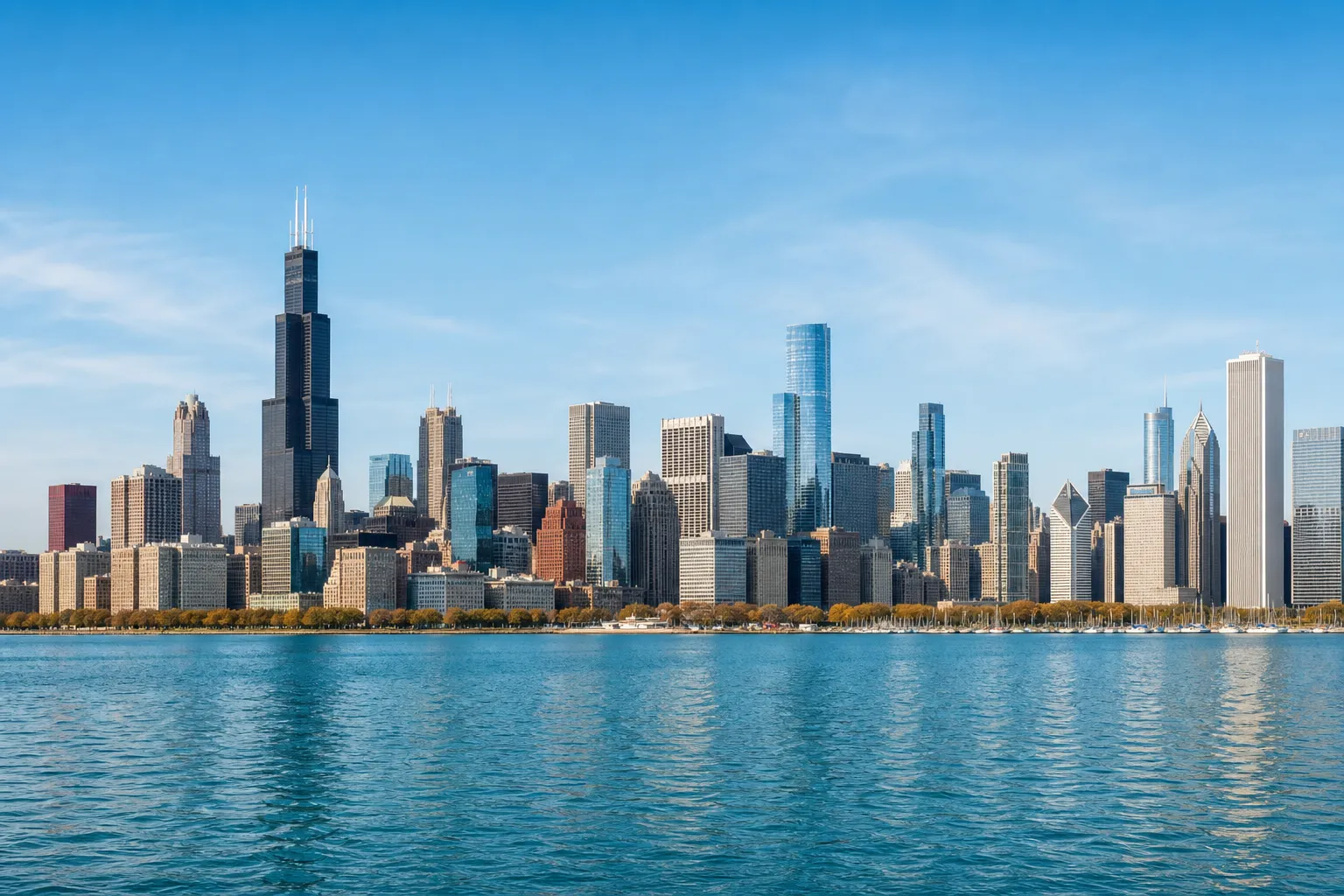
Fix and flip loans in Chicago can finance the purchase and renovation of a non-owner-occupied investment property for resale. The financing has to fit the building: a Portage Park bungalow, an Avondale two-flat and a Bridgeport three-flat can require different scopes, contractor schedules and buyer assumptions.
Jaken Finance Group reviews the purchase, documented rehab budget, after-repair value (ARV), available cash and exit together. An attractive sale price does not prove a profit until you account for interest, points, property expenses and selling costs. Submit your Chicago flip with the address and those numbers for an initial review.
Chicago fix-and-flip loan terms
Published program ranges as of August 2026, checked September 6, 2026:
| Feature | Jaken Finance Group program |
|---|---|
| Rate | 8.99%–13.5% interest-only |
| Loan-to-cost | Up to 100% LTC on qualified files |
| ARV limit | Up to 75% ARV; fund the lower of the LTC and ARV limits |
| Term | 6–12 months |
| Closing | 7–10 business days after borrower conditions are satisfied |
| Eligible use | Non-owner-occupied residential investment property |
| Rehab funding | Approved scope funded through a rehab holdback and draws |
Maximum leverage is conditional. The 100% LTC program explains how the cost and value limits interact. Qualified luxury flip files have a separate program: Up to 100% LTC on qualified files up to $2.5M, with 12–18 months terms. Discuss a larger or longer project before assuming it fits the standard program.
Credit-flexible underwriting with no minimum FICO on select programs. Approval is collateral-first — driven by ARV, LTC, scope, liquidity, and exit strategy. We may pull credit to review trends, but FICO is not the primary approval driver. No appraisal required on select bridge and fix-and-flip programs for experienced sponsors with documented ARV comps. Standard programs use third-party valuation.See the Illinois rate report for published rate context and Chicago hard money page for the acquisition-bridge comparison. The same program rate range does not imply identical fees, terms or leverage for every property.
Worked example: illustrative Portage Park bungalow flip
The following numbers are hypothetical teaching assumptions, not a completed loan, property valuation or current Portage Park market benchmark. Assume a $342,000 purchase, $78,000 rehab and a $498,000 ARV, with a six-month hold.
| Financing calculation | Amount |
|---|---|
| Purchase plus rehab | $420,000 |
| Maximum cost-based request at an assumed 100% LTC | $420,000 |
| 75% of hypothetical $498,000 ARV | $373,500 |
| Loan after the ARV limit | $373,500 |
| Rehab holdback | $78,000 |
| Initial acquisition advance | $295,500 |
| Borrower purchase equity before fees | $46,500 |
| Actual LTC: $373,500 ÷ $420,000 | 88.93% |
Here the ARV limit reduces the loan below total cost. An alternative described as “90% purchase plus all rehab” would request $307,800 + $78,000 = $385,800. That exceeds the $373,500 ARV cap by $12,300 and cannot fit under the stated assumptions.
Now assume 10.75% interest on the full commitment, two origination points paid in cash, a sale at $492,000, $39,000 in combined selling costs and credits, and $8,000 for other acquisition and holding costs. Those are hypothetical budget inputs, not Jaken Finance Group’s fee schedule or a Chicago tax estimate.
| Illustrative project economics | Amount |
|---|---|
| Sale price | $492,000 |
| Purchase and rehab | −$420,000 |
| Six months of interest: $373,500 × 10.75% × 6 ÷ 12 | −$20,075.63 |
| Two points: $373,500 × 2% | −$7,470 |
| Selling costs and credits assumption | −$39,000 |
| Other acquisition and holding costs assumption | −$8,000 |
| Illustrative profit before income tax | −$2,545.63 |
The $72,000 difference between the sale and purchase-plus-rehab cost becomes a loss after the modeled expenses. Loan approval and a profitable flip are separate questions. Break-even under these fixed cost assumptions is $494,545.63; if selling charges vary with price, recalculate them at the new price. Run your own numbers in the fix-and-flip calculator.
Cash required before the first draw
For the same example, purchase equity of $46,500 plus $7,470 of points is $53,970 before other closing charges. Earnest money already paid reduces the remaining equity wire, not the total investment. Add the actual title estimate, insurance, valuation, processing and other quoted costs.
Six months of budgeted interest adds $20,075.63 to the project’s cash needs. This interest is already included in the profit calculation; do not subtract it again when estimating profit. If reserves are collected at closing, identify which expenses they cover before also budgeting the same payments from operating cash.
The $78,000 holdback is not day-one cash. A contractor may require a deposit or payment for completed work before the lender releases a draw. Agree on the first milestone, expected reimbursement process and the available cash to reach it. A loan that covers the approved renovation can still leave a short-term cash gap.
First-time Chicago flippers: what to submit
First-time sponsors can be considered; maximum leverage is not a starting assumption. Show how you will manage the work and carry the property if the schedule slips. Submit:
- The purchase contract or proposed acquisition price and current-condition photos.
- An itemized contractor bid separating masonry, roof, electrical, plumbing, heat and interior finishes.
- Comparable sold properties matching legal unit count, size, condition and location.
- A construction schedule with permit, inspection and listing milestones.
- Evidence of available cash for equity, fees, carry, contingency and rehab float.
- Entity documents and the proposed insurance coverage.
Experienced sponsors can add prior acquisition and exit statements, finished-project details and an active-project schedule. Prior success helps establish execution ability, but every new property’s scope and value still need support. See how to get a fix-and-flip loan and the beginner guide.
Draws that match a Chicago renovation
Agree on the draw schedule before closing. A typical process is to complete an approved milestone, submit the requested photos and invoices, provide inspection access, and receive funds after approval. The timing and charges depend on the agreement and a complete request; do not promise your contractor a same-day wire without confirmation.
| Stage | Questions to resolve with the contractor and loan team |
|---|---|
| Demolition and structural work | What must be complete before draw one, and who funds the initial work? |
| Roof, masonry and weather protection | Can exterior work proceed in the planned season, and what happens if it is delayed? |
| Electrical, plumbing and heating | Which permits and city inspections are needed before work is covered? |
| Kitchens, baths and finishes | Are materials, labor and inspected completion represented clearly in the scope? |
| Final work | What remains for final inspection, lien documentation and listing readiness? |
A lender draw inspection verifies the work for financing purposes. It does not replace a municipal inspection or authorize a change in use. Use Chicago’s permit application status service to track the actual application and review the building permit and inspection records for the property.
Get written approval for material scope changes and reconcile every draw against the remaining holdback. Confirm whether interest applies to committed or disbursed funds, the inspection fee, how re-inspections work and the person handling your requests. The draw-process guide walks through the documents and sequence.
Rates, points, early payoff and extensions
Compare the full fee sheet on the same loan amount and realistic hold period. One point is 1% of the loan amount. The points and fees guide covers the published typical 0–3 point range, third-party expenses and the tradeoff between points and interest.
Ask whether the note has minimum interest or a prepayment charge. A six-month term does not tell you what an early sale costs. Request the payoff procedure and confirm how interest is calculated through the expected payoff date.
For a delay, review extension conditions before maturity. An extension is subject to approval, fees and the loan documents. At 10.75% on the example’s $373,500 commitment, one additional month adds $3,345.94 in interest, before property expenses or extension charges. Use a delayed-sale scenario alongside your expected finish date.
Local due diligence and resale planning
Chicago brick buildings can combine separate apartments with shared utilities and common structural elements. In Bridgeport, Avondale and Humboldt Park, document the legal unit count, tenant access, heating arrangement, porches and masonry rather than applying a single rehab allowance per apartment.
For a Pilsen property with ground-floor commercial use, obtain a mixed-use review before underwriting it as residential. For a bungalow, verify that your planned layout and marketed room count are supported; do not build the resale estimate around an unapproved additional unit.
Review taxes through the Cook County Property Tax Portal. Check which seller exemptions and assumptions belong in your investor budget. Ask the closing team for a transaction-specific estimate of transfer charges, title and other costs at both acquisition and resale. City transfer-tax rules are published in Chicago Municipal Code Chapter 3-33; a blanket percentage of sale price is not a complete settlement estimate.
The planned buyer also matters. An owner-occupant may need mortgage approval and an appraisal; a landlord will examine legal use, leases, utilities and net income. Their financing requirements are separate from your rehab loan. Your own residential investment loan remains non-owner-occupied only throughout your ownership under this program.
If holding is a credible alternative, review a Chicago DSCR exit before acquisition. A rent estimate alone does not establish a refinance amount. Confirm the property’s projected debt coverage, expenses, valuation, seasoning requirements and cash needed to pay off the rehab loan.
Further Chicago project resources
Match the next question to the part of your deal that needs review:
| Project question | Detailed Chicago guide |
|---|---|
| Will the association and the resale buyer’s lender accept this condo? | Condo flip financing and HOA review |
| Which contractor documents support the next payment? | Sworn statements, lien waivers and rehab draws |
| Can unresolved water charges delay the purchase or resale? | Full Payment Certificates and closing preparation |
| Will an FHA buyer qualify to purchase the finished three-flat? | Three- and four-unit FHA resale planning |
| Can I manage or perform the renovation myself? | Own-contractor licensing and loan approval |
| How should a lead service line enter the rehab budget? | Service-line checks and replacement funding |
Use the Chicago permit guide and two-flat financing guide when assembling the scope. Review the transfer-tax guide with your settlement estimate, and the BRRRR guide when evaluating a hold.
The Chicago fix-and-flip education portal organizes financing and project-planning topics. For a bungalow renovation, use the Northwest Side bungalow spread guide to identify costs and resale assumptions to verify for your address.
For a smaller renovation with a defined financing gap, compare Chicago bridge loans. Ground-up projects belong in new construction financing. Our Illinois fix-and-flip page covers statewide work, including projects in Waukegan.
Send the address, purchase, rehab, ARV and intended hold period. Start your Chicago flip review or call (833) 264-7776. Rates, terms and conditions depend on qualification and may change; closing timelines start after borrower conditions are satisfied.