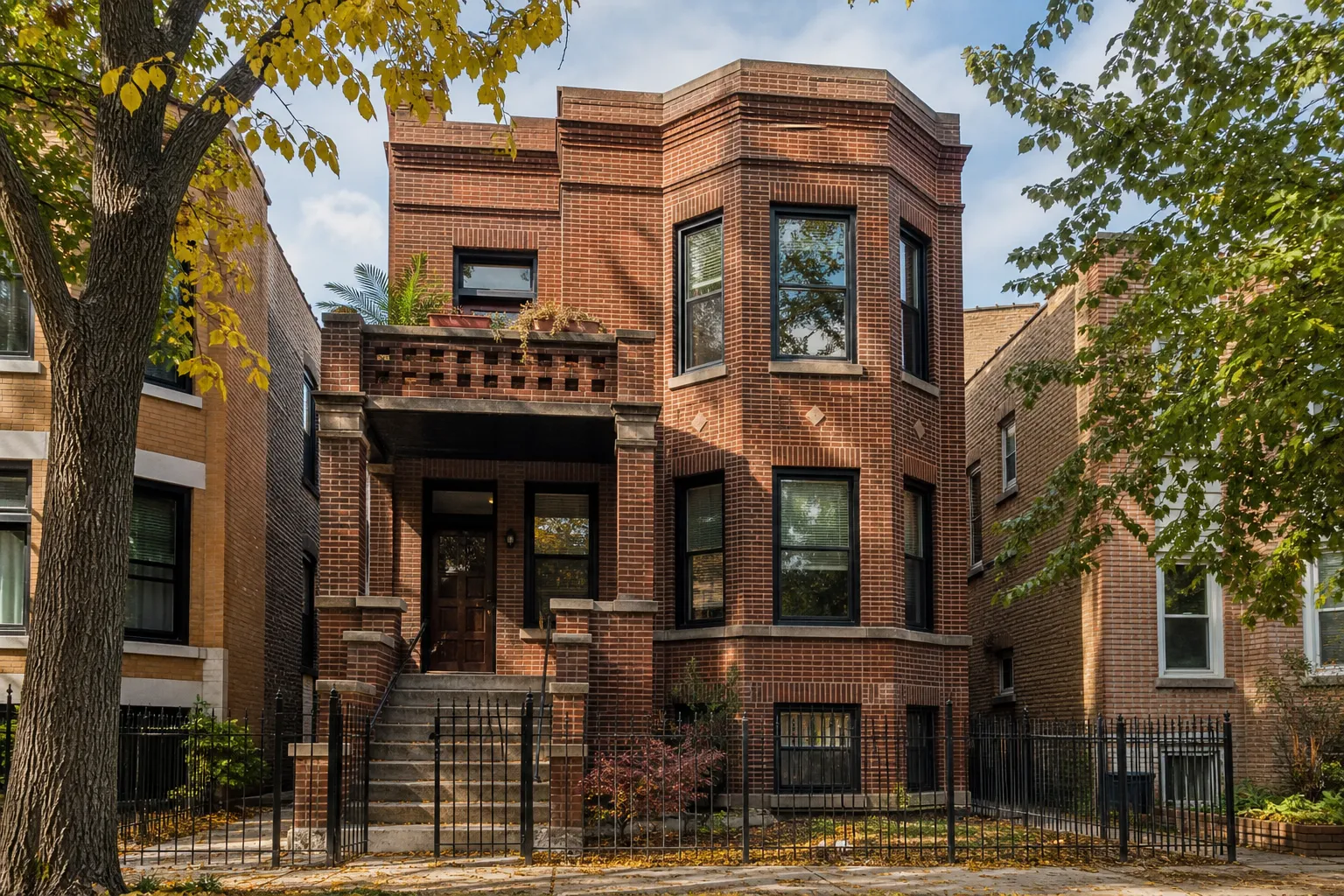
Pilsen is where Chicago’s mural-covered brick meets one of the city’s most layered investment stories. The Lower West Side community — anchored by 18th Street, Ashland to the east, and the Sanitary and Ship Canal to the south — carries deep Mexican and Latinx cultural heritage, a nationally recognized arts scene, and a real estate market caught between long-term residents and incoming capital. Hard money loans in Pilsen serve investors who can move quickly on two-flats and small mixed-use buildings without pretending that a community bank will finance a gut rehab on a property with open building violations.
Unlike homogenized Sun Belt markets, Pilsen deals require cultural fluency alongside spreadsheet discipline. Sellers may be multi-generational owners. Tenants may be protected under Chicago’s Residential Landlord Tenant Ordinance. Buyers range from neighborhood-rooted landlords to North Side operators chasing Orange Line access to the Loop. Speed and certainty — the two things asset-based lending provides — matter when you are competing against someone who already knows the block’s history.
The Pilsen investor profile
Pilsen attracts a different sponsor mix than Logan Square or Lincoln Park:
- Neighborhood-rooted investors with family ties to the Lower West Side, often buying their second or third two-flat on the same grid.
- Arts-adjacent operators converting vintage commercial space near 18th Street while holding residential units upstairs — careful about zoning and Aldermanic ward priorities.
- Transit-oriented landlords targeting commuters who want Pink Line access at 18th or Damen without paying Near West Side rents.
- Value-add flippers buying distressed brick two-flats east of Ashland, rehabbing for resale to young professionals priced out of West Loop.
The common thread is patience with process combined with urgency on acquisition. Pilsen investors understand that community scrutiny around gentrification is not abstract — it affects permit timelines, tenant relations, and how you market a finished unit. The best operators budget for legal counsel familiar with RLTO and communicate rehab scope to neighbors before dumpsters arrive.
What Pilsen properties look like in 2026
Pilsen inventory skews toward late 19th- and early 20th-century brick two-flats, many with original floor plans, shared basements, and deferred mechanical systems. Three-flats exist but two-flats dominate investor activity.
| Property type | 2026 buy range | Typical rehab | Post-rehab rent (both units) |
|---|---|---|---|
| Two-flat (heavy) | $280K–$380K | $85K–$145K | $2,600–$3,400/mo |
| Two-flat (cosmetic+) | $320K–$420K | $55K–$95K | $2,800–$3,600/mo |
| Mixed-use (storefront + 2 units) | $400K–$550K | $100K–$180K | Residential + commercial |
Gentrification tension shows up in pricing dispersion. A renovated two-flat near Harrison Park may trade above $450K, while a similar footprint three blocks west with deferred maintenance still lists at $290K–$340K — the spread where BRRRR and flip margins live. Rehab costs in Pilsen track citywide Chicago numbers: $75K–$150K for a full two-flat gut including electrical, plumbing, kitchens, baths, and masonry touch-ups, with higher budgets when you are dealing with bowed lintels or basement water intrusion common in canal-adjacent blocks.
Financing Pilsen deals with hard money
Community banks often pause when they see a Pilsen address combined with a non-owner-occupant buyer and a rehab scope over $80K. Chicago hard money lenders underwrite the asset: purchase price, after-repair value, rent comps, and your exit — not whether you have a W-2 from a Loop employer.
Jaken Finance Group offers Pilsen investors:
- 90% LTC on qualified acquisitions
- 100% rehab holdback with draws aligned to contractor milestones and inspection milestones
- Interest-only terms of 12–18 months at 9.5%–13.5% depending on leverage and track record
- 7–10 day closes when diligence is complete — critical for off-market deals sourced through local brokers on 18th Street
Flip exits route through our fix and flip loans in Chicago guidelines — model resale to both owner-occupant duplex buyers and investor landlords. Hold exits typically pivot to DSCR loans in Chicago once both units are leased at market rates and any open violations are closed.
Worked example: 18th Street corridor two-flat flip
A sponsor with two prior Cook County rehabs found a $305,000 two-flat on a residential side street south of 18th — one unit vacant, one occupied with a month-to-month tenant willing to relocate with proper notice and relocation assistance per RLTO expectations.
Rehab budget: $112,000 — knob-and-tube remediation, new electrical panels, full kitchen and bath on both units, refinished hardwood, exterior lintel repair, new water heater and boiler All-in cost: $417,000 Hard money structure: 88% LTC — $268,400 acquisition funding, $112,000 rehab holdback Hold period: 7 months including permit delays on electrical rough-in Sale price: $439,000 to an owner-occupant buyer house-hacking the larger unit Net outcome: Mid-five-figure profit after interest carry (~10.5%), transfer taxes, and commissions
The deal succeeded because the investor priced rehab to the block — quartz counters and subway tile, not a West Loop luxury finish — and cleared a open DOB violation on the rear porch before listing. Pilsen buyers at this price point compare your finished product to other renovated two-flats within a half-mile, not to new construction in the South Loop.
Pilsen-specific diligence
Before you waive inspection on a Pilsen two-flat, run a violations search through Chicago’s 311 system and confirm status of any prior 60-day notices. Check flood history on blocks near the canal. Verify that any commercial use on mixed-use properties matches current zoning — Pilsen’s 4th Ward has seen active scrutiny on conversions. If you plan to hold as rental, read our RLTO compliance resources; Pilsen tenants know their rights, and so should you.
Gentrification tension also means realistic rent projections. Underwrite to current leased comps on similar blocks, not to the highest Zillow estimate on a newly renovated unit that sat vacant for 60 days.
Frequently asked questions
Are Pilsen two-flats still viable for BRRRR in 2026?
Yes, especially on the western and southern edges of the neighborhood where acquisition basis remains $280K–$350K for heavy-rehab candidates. Stabilized gross rents of $2,700–$3,200/mo on a well-finished two-flat support DSCR refi at 70–75% LTV when your all-in cost stays below $420K.
How does gentrification affect Pilsen lending decisions?
We underwrite numbers, not headlines. That said, we expect Pilsen sponsors to have realistic rent comps, RLTO compliance plans, and contingency for longer tenant transitions. Deals that assume 20% rent growth in 12 months get scrutinized harder than deals anchored to current leased data.
Can hard money finance a Pilsen property with an occupied tenant?
Yes — with proper legal notice and a rehab plan that sequences work to minimize disruption. Factor tenant relocation costs and extended timelines into your budget; they are borrower costs, not lender holdbacks.
Running numbers on a Pilsen two-flat? Get matched to the right loan program or call (833) 264-7776 for a same-day proof of funds when the file is complete.
Pilsen — block-ceiling finish file gates (2026)
Pilsen files fail when West Loop finish budgets meet $290K–$340K basis blocks, or when RLTO relocation on occupied units is unbudgeted. Price rehab to the block — not South Loop luxury tile.
- All-in: $417K on $305K buy + $112K rehab — O-O flip at $439K
- Lintels / masonry: Canal-adjacent blocks need structural line in draw one
- Dual exit: Flip to house-hacker or BRRRR under $420K all-in for DSCR
- Community: Gentrification pricing dispersion — walk comps on same street
Bridge 8.99%–13.5% IO · Chicago rankings · (833) 264-7776.
Underwriting anchor: A sponsor with two prior Cook County rehabs found a $305,000 two-flat on a residential side street south of 18th — one unit vacant, one occupied with a month-to-month tenant willing to relocate with proper notice and relocation assistance per RLTO expectations. — RLTO and communicate rehab scope to neighbors before dumpsters arrive on Pilsen Chicago before IO term (parcel-specific comps only).