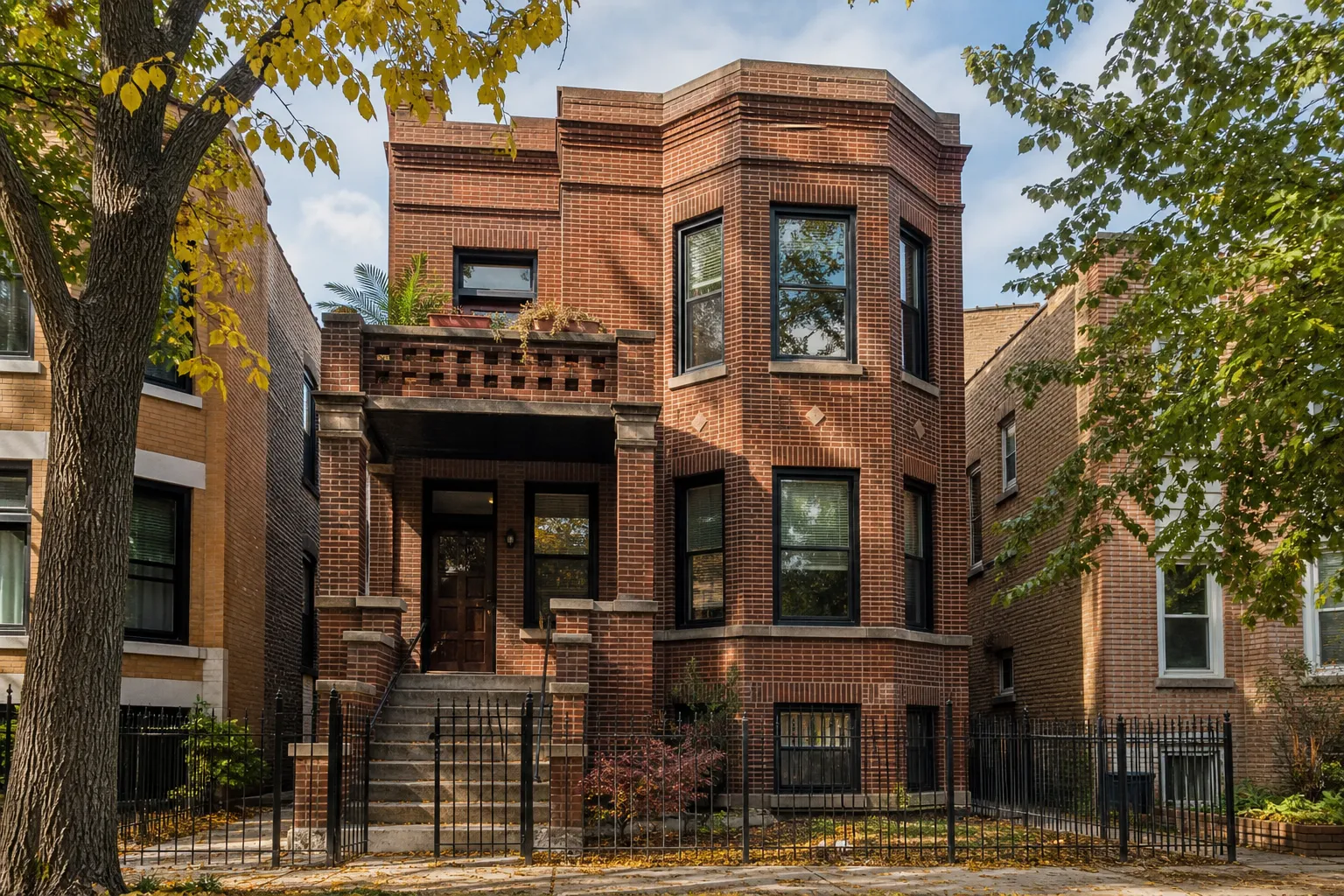
South Shore is Chicago’s lakefront south — a stretch of Jackson Park, the Obama Presidential Center’s gravitational pull, and blocks of larger vintage apartment buildings that predate the two-flat era dominating Bridgeport and Avondale. Hard money loans in South Shore serve investors who see past headline crime statistics to the underlying assets: solid masonry construction, Metra Electric access downtown, University of Chicago and Hyde Park employment anchors, and lake views that no amount of Northwest Side gentrification can replicate.
The neighborhood spans roughly 67th to 79th Street between Stony Island Avenue and Lake Michigan, with South Shore Drive’s co-ops and mid-rises commanding a different investor conversation than the three-flats and courtyard six-flats on interior streets. Hard money loans in South Shore fund acquisitions that conventional lenders avoid — buildings with deferred capital needs, partial occupancy, and rehab scopes that exceed $150K before the first tenant sees a renovated kitchen.
Who invests in South Shore — and what they target
South Shore draws patient, capital-heavy sponsors distinct from North Side flip operators:
- Lakefront hold investors buying vintage 6–24 unit buildings with long-term DSCR exit plans, accepting 12–18 month repositioning timelines.
- Hyde Park spillover landlords priced out of Kenwood and Oakland who want University of Chicago and hospital employee tenants on 12-month leases.
- Jackson Park adjacency players betting on continued infrastructure investment and green-space-driven demand south of the Midway.
- Value-add operators on smaller three-flats and two-flats near 71st and Jeffery — lower basis than the lakefront, similar brick bones.
South Shore investors typically carry deeper reserves than Logan Square flippers. A six-flat reposition can burn $250K in rehab before gross rents double — and hard money carry at 10%+ adds $4K–$8K per month depending on leverage. This is not a market for thinly capitalized first deals unless you are starting with a modest two-flat.
Property types and 2026 South Shore numbers
South Shore’s stock is more vertically scaled than most Chicago investor neighborhoods:
| Asset type | 2026 acquisition range | Rehab range | Stabilized gross rent |
|---|---|---|---|
| Two-flat (interior streets) | $190K–$280K | $65K–$110K | $2,000–$2,700/mo |
| Three-flat (heavy) | $240K– $350K | $100K–$160K | $3,600–$4,800/mo |
| 6-flat courtyard | $450K–$750K | $180K–$350K | $7,500–$11,000/mo |
| Lakefront co-op (all-cash norms) | Varies | N/A for hard money | N/A |
Larger vintage buildings — pre-1920 six-flats with central boilers, shared laundry, and original floor plans — define South Shore’s opportunity set. Interior-street two-flats exist and trade at $200K–$270K for heavy-rehab candidates, but the neighborhood’s institutional investor attention concentrates on multifamily repositioning where basis per door stays below $80K–$120K all-in.
Rehab on a six-flat commonly includes boiler plant replacement, roof, tuckpointing, unit-by-unit kitchen and bath upgrades, common hallway restoration, and security improvements. Budget $25K–$45K per unit on a heavy reposition — numbers that dwarf Bridgeport two-flat scopes but scale against gross rent increases from $900/mo unrenovated to $1,400–$1,650/mo finished.
Hard money for South Shore scale and speed
Community banks hesitate on South Shore addresses — not always for sound asset reasons, but because their compliance departments flag south-lakefront ZIPs regardless of your deal math. Hard money lenders in Chicago evaluate the property, scope, and exit.
Jaken Finance Group structures South Shore files with:
- Up to 90% LTC on qualified acquisitions — leverage scales with sponsor experience on multifamily repositioning
- 100% rehab holdback with phased draws across unit completions
- 12–24 month interest-only terms on larger projects — six-flat rehabs rarely finish in six months
- Rates typically 9.5%–13.5% depending on loan size, LTC, and track record
- 7–14 day closes on residential multifamily; larger commercial-residential mixes may require extended diligence
Flip-oriented work on two-flats and three-flats maps to fix and flip loans in Chicago. Stabilized holds — especially six-flats and larger — exit into DSCR loans in Chicago once occupancy and income support permanent debt at 70–75% LTV.
Worked example: Jeffery Boulevard three-flat near Jackson Park
A sponsor with prior south-side experience acquired a $278,000 three-flat on a residential block between 71st and 72nd — one unit occupied at below-market rent, two vacant, parapet and gutter failure visible from the street.
Rehab scope: $142,000 — roof and parapet rebuild, new gutters and downspouts, boiler replacement, full gut on two units, cosmetic refresh on occupied unit after tenant transition with RLTO-compliant relocation assistance, electrical panel upgrades, hardwood refinish Total project cost: $420,000 Financing: 88% LTC — $244,640 on acquisition, $142,000 rehab holdback at 10.75% interest-only Timeline: 10-day close; 8-month rehab including tenant transition and winter roof work Stabilized rents: 3BR $1,650/mo, 2BR $1,450/mo, 2BR $1,400/mo — $4,500/mo gross Refi exit: Appraised at $525,000; DSCR refi at 72% LTV = $378,000 — returning acquisition equity and a portion of rehab capital for a second south-side acquisition
The investor chose this three-flat over a lakefront co-op because hard money fits fee-simple multifamily with clear rent comps on Jeffery corridor renovated units — not because South Shore lacks upside. Jackson Park proximity and Metra Electric access at 75th Street supported the rent growth thesis without requiring speculative 20% annual increases.
South Shore diligence that protects your basis
Lakefront blocks face wind and moisture exposure — roof and parapet condition is not cosmetic. Larger buildings require Phase I environmental review when prior commercial use or boiler fuel storage is in play. Check for CHA voucher acceptance if you plan Section 8 tenants — South Shore has active voucher demand that can stabilize occupancy but adds inspection timelines.
Crime statistics vary block by block; walk the street at different hours and comp only renovated units within a quarter-mile. University of Chicago proximity does not automatically lift rents on 79th Street — comp the specific micro-market.
Frequently asked questions
Does hard money finance South Shore six-flat repositioning?
Yes, for experienced sponsors with documented multifamily track records, realistic scopes, and liquidity to carry 12–18 months of interest-only payments. Six-flats above $600K acquisition with $250K+ rehab receive deeper diligence — send us the rent roll, violations report, and contractor bid before you offer.
How does the Obama Presidential Center affect South Shore lending?
We do not lend on speculation — we lend on current rent rolls and defensible ARV. That said, Jackson Park infrastructure investment supports long-term demand narratives that make South Shore hold strategies attractive. Underwrite to today’s comps, not 2030 hypotheticals.
Are South Shore two-flats viable for a first investment?
A modest interior-street two-flat at $220K–$260K can work for a first deal with strong contractor support and six months of carry reserves. A six-flat reposition is not a first-project vehicle unless you have multifamily experience elsewhere.
Evaluating a South Shore multifamily acquisition? Get matched to the right financing program or call (833) 264-7776 — we fund south-lakefront deals on asset math, not zip-code stereotypes.
South Shore — multifamily reposition file gates (2026)
South Shore files fail when Logan Square two-flat playbooks apply to six-flat courtyards, or when $250K+ rehab runs without 12–18 month carry reserves. Interior-street two-flats differ from Lakefront co-op math entirely.
- Three-flat example: $278K buy + $142K rehab = $420K all-in — $4,500/mo gross
- Six-flat: $25K–$45K/unit rehab — per-door basis under $80K–$120K all-in target
- RLTO: Relocation assistance on occupied units — budget before demo
- Experience: Six-flat reposition requires multifamily track record
Bridge 8.99%–13.5% IO · Chicago rankings · (833) 264-7776.
Underwriting anchor: A sponsor with prior south-side experience acquired a $278,000 three-flat on a residential block between 71st and 72nd — one unit occupied at below-market rent, two vacant, parapet and gutter failure visible from the street. — wind and moisture exposure** — roof and parapet condition is not cosmetic on South Shore Chicago before IO term (parcel-specific comps only).