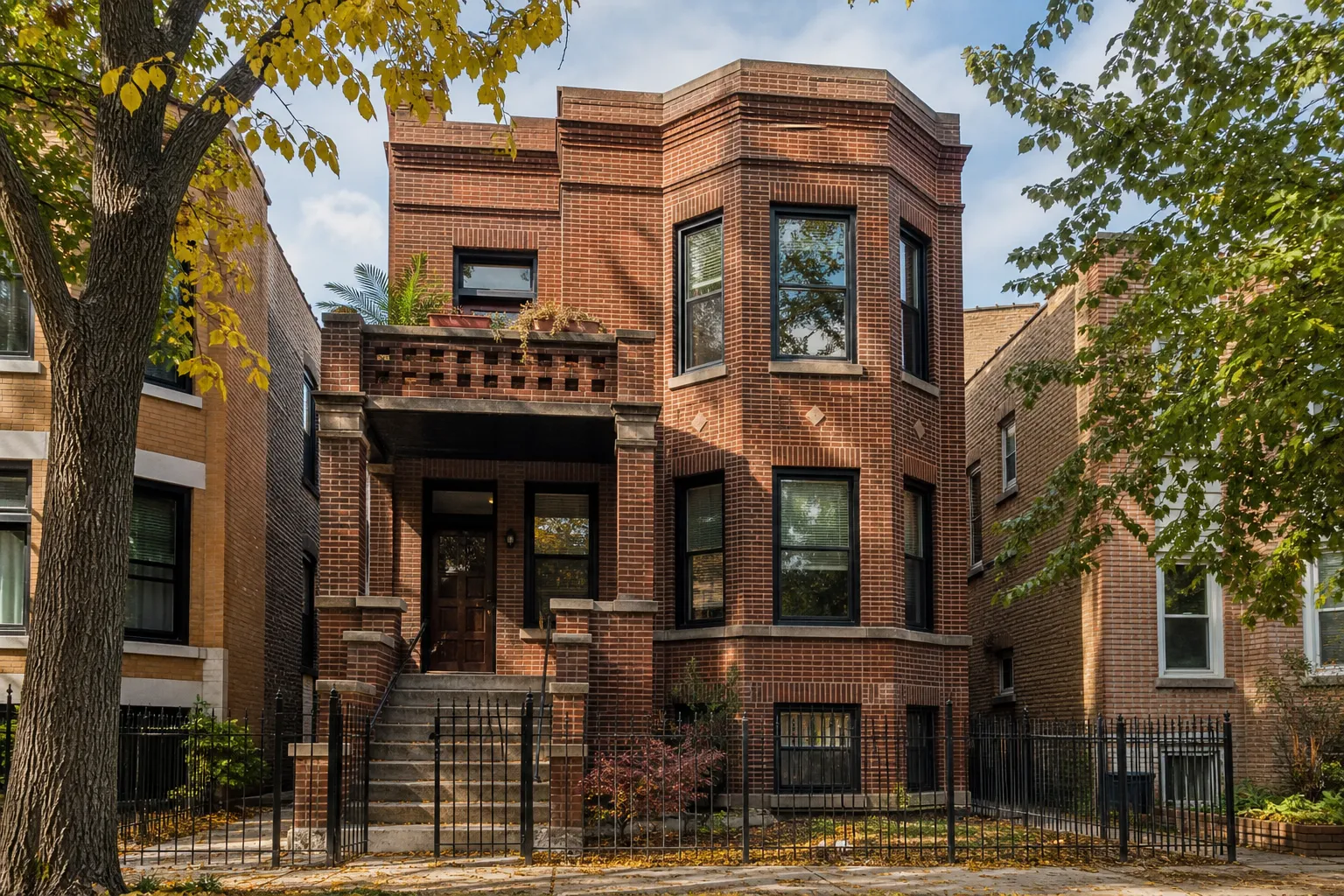
Logan Square finished its transformation from a sleepy Polish and Latino crossroads into one of Chicago’s most competitive investor corridors — and the deals still look like Chicago, not Nashville. Brick three-flats on tree-lined side streets off Milwaukee Avenue, vintage greystones with deferred tuckpointing, and the occasional mixed-use corner with ground-floor retail that has not been touched since the Clinton administration. Hard money loans in Logan Square exist because sellers on these blocks rarely wait for a credit union to approve a 30-year note on a building with knob-and-tube wiring and a shared boiler from 1972.
The neighborhood sits in the 60647 ZIP, bounded roughly by the Metra tracks to the west, Diversey to the north, and the Bloomingdale Trail (606) to the south. Milwaukee Avenue is the spine — coffee shops, taquerias, vintage boutiques, and a steady stream of buyers who want walkable urban life without Lincoln Park prices. That demand supports both fix-and-flip exits to owner-occupant duplex buyers and BRRRR holds where stabilized rents justify a DSCR refinance after rehab.
Who invests in Logan Square — and why
The typical Logan Square sponsor is not a first-time wholesaler from a YouTube course. It is a Cook County operator who already closed in Avondale or Humboldt Park and understands that Logan Square basis is higher but the rent and resale ceiling is higher too. Common profiles:
- Experienced flippers targeting three-flats between Kedzie and California, selling to house-hackers who want two units and a yard.
- BRRRR investors buying distressed two-flats west of the 606 trail, rehabbing both units, and refinancing into long-term rental debt once leases are signed.
- Hybrid operators who flip one project per year in Logan while holding a portfolio of stabilized units in cheaper adjacent neighborhoods.
Logan Square investors tend to have established general contractor relationships — often bilingual crews who know Chicago’s Department of Buildings inspectors — and enough liquidity to carry six months of interest-only payments if winter slows masonry work.
Property types and 2026 price bands
Logan Square inventory is dominated by prewar brick multifamily, not single-family bungalows:
| Asset | Typical acquisition (2026) | Rehab range | Stabilized gross rent |
|---|---|---|---|
| Two-flat (heavy rehab) | $340K–$420K | $90K–$140K | $3,200–$4,100/mo |
| Three-flat (full gut) | $380K–$500K | $140K–$200K | $5,400–$6,800/mo |
| Mixed-use (retail + 2 apts) | $450K–$650K | $120K–$250K | Varies by commercial lease |
The $350K–$500K buy range that defines Logan Square in 2026 reflects a market where unrenovated three-flats still trade, but competition from cash buyers and iBuyers on lighter cosmetic deals pushes serious value-add investors toward heavier rehabs. Expect $100K–$180K in hard costs when you are replacing electrical panels, opening kitchens, addressing parapet walls, and bringing plumbing up to code on a three-unit stack.
How hard money fits the Logan Square playbook
Traditional lenders underwrite borrower W-2 income and require the property to be habitable. Logan Square acquisitions frequently fail both tests — which is exactly when hard money lenders in Chicago become the competitive advantage. Jaken Finance Group structures asset-based loans with:
- Up to 86% loan-to-cost on Logan Square, Chicago acquisition when comps and scope are file-complete
- 100% of documented rehab released on inspection milestones — front-load mechanical on this submarket
- 12–18 month interest-only terms typically 9.8%–12.5% depending on experience and leverage
- 9–13 business day closes when appraisal, title, and scope align
That speed matters when a listing agent on Fullerton Avenue says “best and final by Thursday.” Your proof-of-funds letter needs to come from a lender who will actually wire — not one who discovers the shared chimney flue needs relining during week five of underwriting.
For resale-focused projects, pair acquisition financing with our fix and flip loans in Chicago program. For hold strategies, plan your exit into DSCR loans in Chicago once the units are leased and the certificate of occupancy is clear.
Worked example: Kedzie Avenue three-flat BRRRR
An investor identified an off-market three-flat on a residential block east of Kedzie — two units vacant, one occupied month-to-month at below-market rent. The seller wanted a 14-day close.
Acquisition: $412,000 Rehab scope: $158,000 — new electrical service and subpanels, two full kitchen/bath gut rehabs, one cosmetic refresh, parapet tuckpointing, refinished hardwood throughout Total project cost: $570,000 Financing structure: 90% LTC — $370,800 on purchase, $158,000 rehab holdback Timeline: Cleared in 8 business days; six-month rehab with winter contingency Stabilized rents: Unit 1 (3BR) $2,050/mo, Unit 2 (2BR) $1,750/mo, Unit 3 (2BR) $1,850/mo — $5,650/mo gross Refi exit: DSCR at 75% LTV on $725,000 appraised value — roughly $543,750 in permanent debt, returning acquisition equity plus partial rehab capital for the next Logan Square deal
The investor kept the occupied unit’s tenant through rehab with RLTO-compliant notice and used interest-only carry (~10.75%) during construction. The deal worked because rent comps on renovated three-flats within four blocks supported the refi — not because the purchase price was a steal.
Logan Square risks we underwrite upfront
Milwaukee Avenue’s popularity creates specific diligence items: verify zoning for any commercial use, confirm no pending landmark restrictions on greystones, and search Department of Buildings violations before you waive inspection. Logan Square also sits in a gentrified zone where over-improving for the block is a real margin killer — a $200K rehab on a $380K acquisition needs to match what duplex buyers and landlords actually pay on that specific street, not what a Lincoln Park three-flat sold for last spring.
Seasonality matters too. January tuckpointing and roof work in Chicago cost more and take longer. Build 30–45 days of weather contingency into your hold period.
Frequently asked questions
Is Logan Square too expensive for a first Chicago flip?
It can be. First-time flippers often do better in Avondale or Bridgeport where basis is lower. Logan Square rewards operators who already have a GC, permit experience, and reserves for six months of carry. If you are starting out, we will still review the deal — but the margin for error is thinner at $450K all-in than at $300K.
Can I house-hack a Logan Square two-flat with hard money?
Hard money is structured for non-owner-occupied investment strategy. If you plan to live in one unit, tell us during pre-qualification — the loan structure and exit may differ from a pure investment hold or flip.
Do Logan Square three-flats qualify for DSCR refinance after rehab?
Yes, when the units are leased at market rents and the property passes appraisal. Many Logan Square BRRRR exits use DSCR financing at 70–75% LTV once the certificate of occupancy and leases are in place — often within 12 months of acquisition.
Logan Square — three-flat MEP file gates (2026)
Logan Square files fail when Lincoln Park comps price Milwaukee Ave three-flat ARV, or when shared chimney / party wall scope is absent from draw one. Over-improving for the block is the primary margin killer.
- Acquisition: $412K three-flat — $570K all-in BRRRR with $5,650/mo gross
- MEP: Knob-and-tube and shared boiler — panel and engineer in week one
- Seasonality: 30–45 days winter contingency on tuckpointing and roof
- Dual exit: DSCR at 75% LTV on $725K appraised or O-O duplex sale
Bridge 8.99%–13.5% IO · Chicago rankings · (833) 264-7776.
Analyzing a Logan Square two-flat or three-flat? Find the right loan for your deal or call (833) 264-7776 to get a proof-of-funds letter before your next Milwaukee Avenue offer.
Underwriting anchor: An investor identified an off-market three-flat on a residential block east of Kedzie — two units vacant, one occupied month-to-month at below-market rent. The seller wanted a 14-day close. — knob-and-tube wiring and a shared boiler from 1972 on Logan Square Chicago before IO term (parcel-specific comps only).