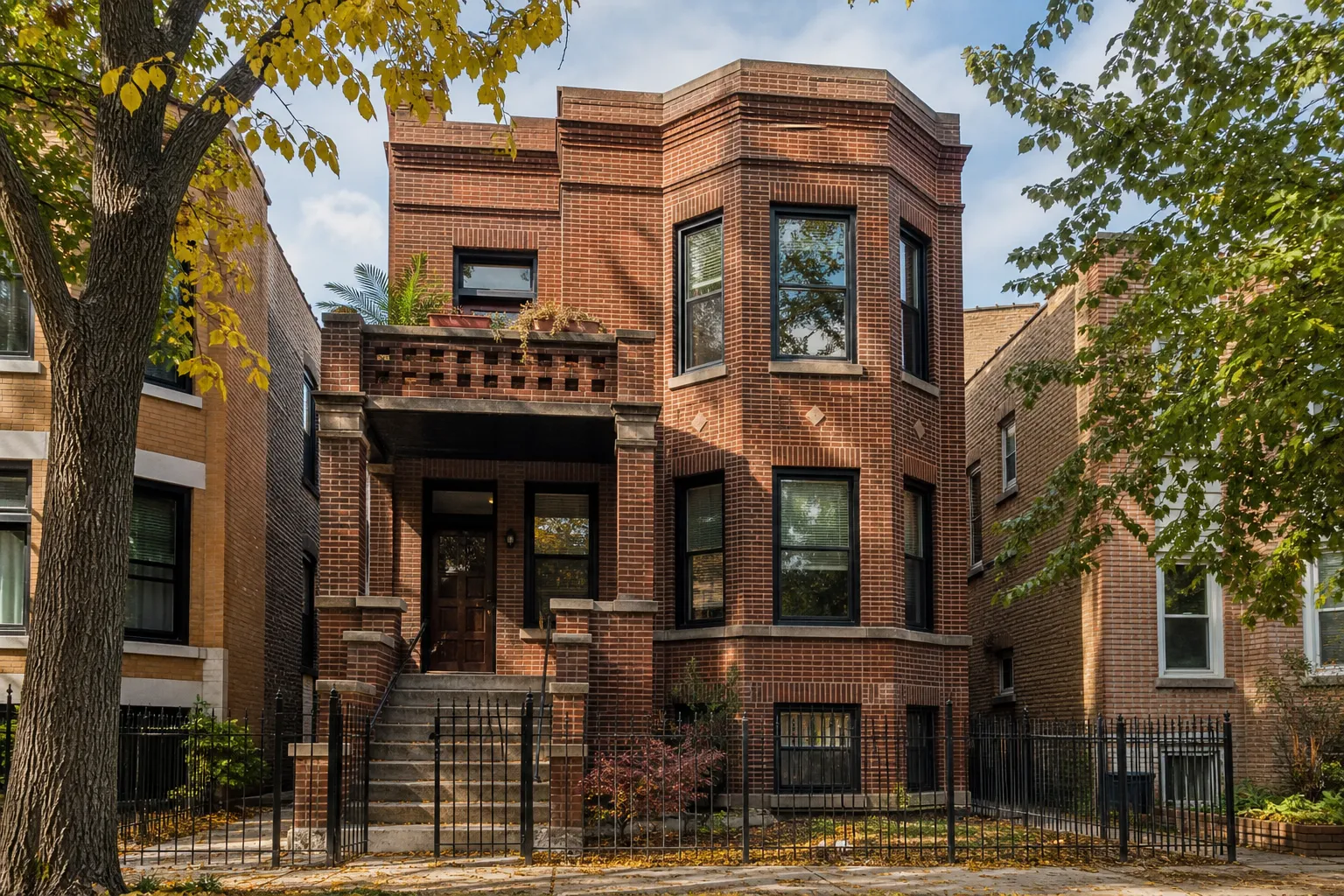
Fort Wayne is not a smaller Indianapolis — it is a different risk-return curve. Northeast Indiana investors trade Marion County appreciation headlines for sub-$180K ARV duplex and SFR plays where renovated stock rents $1,100–$1,450 and gross caps still reach 8%–10%.
Hard money lenders in Fort Wayne fund what Allen County banks avoid: vacant sides of duplexes, estate sales with 10-day close requirements, and $35K–$55K mechanical scopes on 1960s ranch stock in Waynedale, Northside, and near Purdue Fort Wayne employment corridors.
Fort Wayne investor market read (2026)
Fort Wayne’s home value is about $250,000, up ~2.6% year over year (Fort Wayne market data, 2026) — northeast Indiana cash-flow basis below Indianapolis, with steady Allen County demand. The sub-$200K duplex and 1960s ranch stock rewards a clean mechanical scope and a DSCR exit on real rents, not appreciation.
Allen County listings and prices (Sept 2026)
| Allen County | Sept 2025 | Sept 2026 |
|---|---|---|
| Median listing price | $308,750 | $309,675 (FRED) |
| Active listings | 965 | 859 (FRED) |
| Median days on market | 44 | 43 (FRED) |
| Listing price per sq ft | $161 | $163 (FRED) |
Fewer than 900 homes were listed countywide in September, and the typical one sold in about six weeks. Values are still rising. FHFA’s all-transactions index for the Fort Wayne metro gained about 4.3% from Q2 2025 to Q2 2026 (FRED).
The city keeps growing, too. Fort Wayne had an estimated 275,203 residents in July 2025, up about 4.3% from its 2020 base of 263,918 (Census Vintage 2025). Allen County’s 2020–2024 homeownership rate was 73.2% (FRED), so roughly one household in four rents. Census SAIPE puts 2024 median household income at $70,889 (FRED).
What that means for a flip: tight supply supports a 45- to 60-day resale plan on sub-$200K product. But county medians sit well above investor stock. Never borrow the $309K countywide figure as an ARV.
Northeast Indiana investor profile
Fort Wayne volume is cash-flow first:
- Duplex conversions — buy $88K–$125K, rehab $38K–$52K, ARV $165K–$195K
- SFR cosmetic — buy $105K–$140K, rehab $28K–$42K, resale $175K–$210K to owner-occupants
- BRRRR hold — stabilize and DSCR refi when Indianapolis-style velocity is unnecessary
Operators who apply Marion County ARV comps to Allen County listings misprice every deal.
Programs in the Fort Wayne metro
| Program | Use case |
|---|---|
| Hard money | Speed + condition — bridge to sale or hold |
| Fix and flip | Sub-$250K finished product to first-time buyers |
| DSCR | Permanent debt after duplex lease-up |
Compare Indianapolis metro for Near Eastside BRRRR · Statewide Indiana hard money.
Loan terms (2026)
| Parameter | Range |
|---|---|
| Rates | 8.99%–13.5% IO |
| Leverage | Up to 100% LTC on qualified files; never above 75% of ARV |
| Close | 7–10 business days |
| Term | 6–12 months (flip) or 12–24 months (bridge) |
Worked example: Waynedale duplex flip
Buy: $102,000 duplex — both sides tenant-in-place below market. Rehab: $44,000 — separate utilities verification, kitchens, baths, exterior. Total: $146,000 Hard money: 87% LTC = $127,020 Timeline: Close 8 business days; 5-month rehab and resale. Sale: $189,000 — 8% selling costs ($15,120), $9,800 carry → net ~$18,000 spread.
Same project in Fountain Square might chase $215K ARV with $54K rehab — higher absolute profit, higher basis risk. Fort Wayne rewards predictable DOM on sub-$200K listings.
Worked example: Northside SFR BRRRR
Buy: $128,000 3/2 — HVAC end of life. Rehab: $36,000 systems + cosmetic. Rent: $1,385/mo stabilized. Appraisal: $198,000. DSCR at 72% LTV → DSCR ~1.22 with Indiana landlord-friendly expenses.
Allen County vs. Marion County
| Fort Wayne | Indianapolis | |
|---|---|---|
| Duplex buy | $88K–$125K | $118K–$145K |
| Rent/side | $1,100–$1,350 | $1,250–$1,550 |
| Buyer pool | Owner-occupant + small landlord | BRRRR + institutional landlord |
| Appreciation | Moderate | Stronger Near Eastside |
Diligence on northeast Indiana stock
- Septic vs. sewer — older Northside pockets
- Foundation — clay soils; budget structural engineer on 1940s stock
- Insurance — lower than coastal; still model $90–$120/mo on $180K dwelling
- Property taxes — Allen County assessor data; verify post-sale reassessment
Ivy Tech and manufacturing employment
General Motors supply chain, Lutheran Health, and Ivy Tech create renters who stay 2–3 years — favorable for DSCR on $1,200–$1,400 2-bed units. Fort Wayne does not have Indianapolis Near Eastside appreciation velocity — it has predictable lease renewal.
New Haven and Leo-Cedarville adjacency
Allen County line communities offer $115K–$155K buys with $32K–$45K rehabs — even higher cap rates than Fort Wayne proper. Comp discipline stays ZIP-specific; Leo ARV does not support Waynedale comps on appraisal.
Winter rehab advantage
Northeast Indiana winters are harsh but basement mechanicals are accessible — unlike Chicago masonry freeze delays. Still budget HVAC lead times in January; hard money term must cover heat-first sequencing for year-round flip resale.
When Fort Wayne beats Indianapolis
- Sponsor wants higher yield-on-cost per dollar of risk
- First-time flip with sub-$200K ARV and clear owner-occupant buyer
- Portfolio cash-flow stacking without Marion County competition on every duplex
When you need Near Eastside revitalization velocity and Hamilton County turnkey — Indianapolis hub.
Neighborhood spokes
Allen County auction and bank-owned inventory
Fort Wayne HUD and auction channels reward hard money proof of funds — conventional buyers cannot remove inspection contingencies fast enough. Underwrite $8K–$12K contingency on unseen mechanicals; ARV comp set must reflect post-rehab condition only.
Duplex illegal unit conversion
Allen County duplexes sometimes carry unpermitted basement units — title and code diligence before draw schedule. Legalization cost belongs in scope before hard money close, not after first draw denial.
Aboite and Waynedale submarket economics
Aboite and Waynedale southwest Allen County offer $125K–$165K SFR and duplex basis — 20%–30% below Dupont Road corridor stock with similar $1,275–$1,450/mo per-side rents on renovated units. Indiana property taxes on $155K assessed duplex run $2,100–$2,600/yr — lower than Marion County equivalents at identical gross rent.
Worked carry: $138K Waynedale duplex + $44K rehab, 90% LTC → $164K balance at 10.75% IO for 6 months = ~$8,800 interest. Stabilize $2,650/mo gross; $218K appraisal → Indiana DSCR at 74% LTV → DSCR ~1.26 vs. $14K net flip at $225K resale.
See Northside Fort Wayne spoke, Evansville southwest IN for regional basis comparison, and fix and flip Indiana for resale lane parameters.
Indiana’s 2% tax cap on Fort Wayne rentals
Indiana caps property tax bills as a share of gross assessed value. The limits are 1% for homesteads, 2% for other residential property, and 3% for other real property, per the Department of Local Government Finance. Voter-approved school and building referendum charges sit outside the cap.
Your rental lands in the 2% class. The seller living in the house was likely billed in the 1% class. That gap matters on a hold.
Illustration: the Northside BRRRR appraises at $198,000. If the assessed value lands near that figure, the cap allows up to $3,960 a year (about $330 a month), plus any referendum charges. The seller’s homestead cap on the same value would have been $1,980. Actual bills are often lower than the cap, so pull the Allen County tax bill rather than assuming the ceiling. Then run the result through the DSCR calculator.
Due dates and penalties. Indiana’s 2026 installments were due May 11 and November 10. A payment within 30 days of the due date carries a 5% penalty, rising to 10% after that (DLGF). A fall acquisition often lands right on the November bill. Confirm the title company prorates it, and keep it out of your rehab draw math.
Exit buyers at 7.28% rates
Most Fort Wayne flips sell to owner-occupants who finance. Freddie Mac’s 30-year average was 7.28% for the week of October 1, 2026, versus 6.50% in early September 2025 (FRED).
Illustration: a buyer puts 5% down on the $189,000 Waynedale duplex and borrows $179,550. Principal and interest is about $1,229 a month at 7.28%, versus about $1,135 at 6.50%. The roughly $94 difference is small next to a $1,385 market rent on a renovated 3/2. In this price band, owning still competes with renting, which keeps first-time buyers active. That is a real advantage over higher-basis metros.
Two listing habits help here. Disclose the new mechanicals and roof age in the listing, because payment-sensitive buyers fear surprise repairs more than dated finishes. And price just under a round number, such as $189,000 instead of $192,000, so the home appears in more filtered searches.
If the spread is thin, compare the hold path in Indiana hard money vs DSCR: when to switch. Recent resale margins by corridor are in Fort Wayne fix-and-flip spreads.
City housing studies for downtown and East Central buys
The City of Fort Wayne published a 2025 Housing Market Potential study by Zimmerman/Volk Associates. It covers two zones: Downtown and the East Central neighborhood. It estimates target households, the housing mix they prefer, and supportable rent and price ranges for new units.
The city also released a 2025 Migration and Movership Analysis. It tracks moves into each census tract from elsewhere in the city, the county, the state, and other states.
Use both before you underwrite an East Central rental or a downtown-edge flip. They show which buyers and renters the city expects, and at what price points. If your ARV sits far above the study’s ranges, have a stronger comp story ready for the appraiser.
FAQ
Do you fund Warsaw and Auburn deals?
Northeast Indiana within Allen County and adjacent counties — scope on pre-qual.
100% rehab?
Available on qualified files with experienced sponsor and documented scope.
Seasoning for DSCR?
Plan Indiana DSCR with executed leases — select no-seasoning programs available.
Northeast Indiana portfolio math
Five $195K ARV doors at $1,325 rent each outperform one $380K Indianapolis Near Eastside duplex on cash-on-cash — Fort Wayne hard money enables parallel acquisitions when DSCR extracts equity every 9–12 months. Rate and LTC terms match Marion County; patience on appreciation differs.
Grabill and New Haven micro-markets suit first-time sponsors — sub-$170K ARV, clear owner-occupant buyer, 45-day flip timeline realistic with $35K cosmetic scope.
Pre-Qualify for Fort Wayne Hard Money · Evansville southwest IN · (833) 264-7776
Fort Wayne — Allen County comp radius (2026)
Fort Wayne files fail when Marion County Indianapolis ARV prices Allen County duplex basis — sub-$180K ARV plays rent $1,100–$1,450/mo with 8%–10% gross caps on percentage, not Indy appreciation.
Waynedale / Northside duplex: verify utilities and legal two-unit before draw. Bridge 8.99%–13.5% IO · Waynedale spoke · Indiana DSCR · (833) 264-7776.
Underwriting anchor: Buy: $102,000 duplex — both sides tenant-in-place below market. — refresh sold comps, tax reassessment, and insurance on this parcel before IO term.