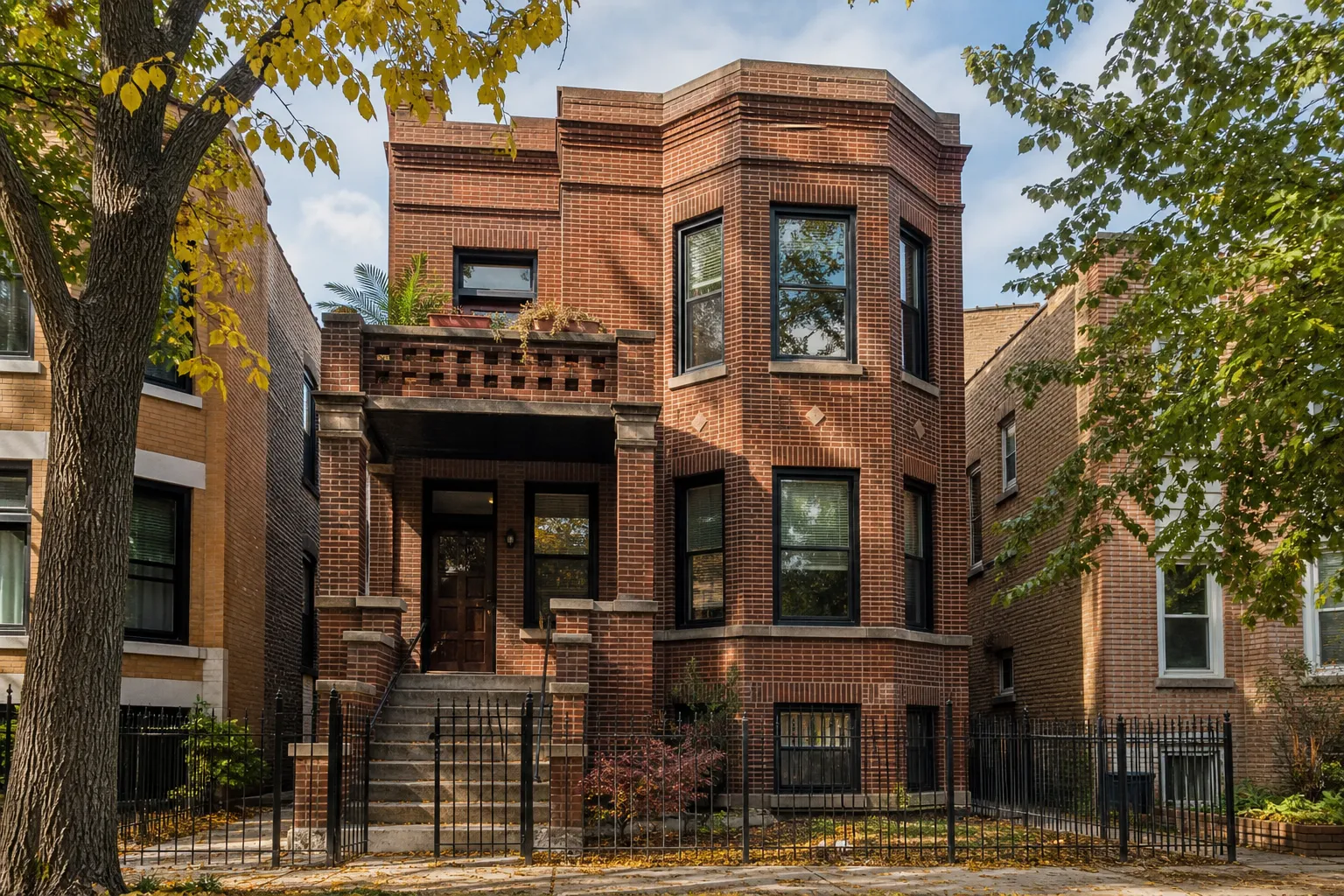
McKinley Park sits on Chicago’s southwest grid between Bridgeport to the east and Back of the Yards to the south — a 60609 neighborhood where Orange Line stations at 35th-Bronzeville/IIT and Ashland put downtown commutes within reach without North Side basis. McKinley Park field, the neighborhood’s namesake green space, anchors a residential pocket of brick two-flats, worker cottages, and Archer Avenue storefronts that still trade at a slightly lower acquisition basis than Bridgeport while sharing the same south-side brick DNA.
Hard money loans in McKinley Park matter because distressed inventory moves on 10–14 day timelines — estate heirs, tired landlords exiting before reassessment, and wholesalers flipping occupied two-flats to investors who cannot wait for conventional condition approvals. When a property sits half a block from industrial zoning on Pershing Road, banks get nervous; experienced hard money lenders in Chicago underwrite the sponsor and the exit, not the fear in a retail underwriter’s checklist.
McKinley Park vs. Bridgeport — same ward energy, different basis band
Investors often tour both neighborhoods in the same afternoon. The distinction is not architecture — both are pre-war brick — it is price entry, transit story, and comp geography.
| Factor | McKinley Park | Bridgeport (compare) |
|---|---|---|
| Two-flat buy (distressed, 2026) | $195K–$275K | $210K–$290K |
| Orange Line walk | 35th or Ashland stations | Sox-adjacent, 35th/IIT edge |
| Signature amenity | McKinley Park field, Archer retail | Guaranteed Rate Field |
| Industrial adjacency | Pershing, Stevenson, rail yards | River South Branch, I-55 |
| Stabilized two-flat gross rent | $2,300–$2,900/mo | $2,400–$3,100/mo |
The lower basis is not a quality discount — it reflects buyer pools that still anchor comps on Archer Avenue traffic and 60609 block reputation rather than Bridgeport’s long-running investor buzz. That gap is opportunity for sponsors who underwrite same-block ARV and resist importing Pilsen premiums from across the Stevenson.
Property types and 2026 McKinley Park pricing
McKinley Park inventory clusters on residential streets north and south of Archer Avenue, with occasional mixed-use corners feeding the commercial corridor toward Pilsen to the northwest.
| Property type | 2026 acquisition range | Rehab range | Stabilized rent (two-flat) |
|---|---|---|---|
| Two-flat (heavy rehab) | $195K–$265K | $65K–$110K | $2,300–$2,850/mo |
| Two-flat (one side occupied) | $220K–$285K | $55K–$95K | $2,450–$3,000/mo |
| Worker cottage (SFR flip) | $165K–$230K | $50K–$80K | N/A — resale exit |
| Small mixed-use (retail + 2 units) | $280K–$380K | $90K–$140K | Split retail + residential |
Rehab scopes mirror Bridgeport — basement waterproofing, boiler service, tuckpointing, kitchen and bath updates — but finish expectations track Archer Avenue renter profiles: durable materials, clean layouts, not Logan Square designer packages. Budget $70K–$110K for a heavy two-flat; shaving rehab to chase Bridgeport ARV on a McKinley Park block destroys flip margin.
Why hard money fits McKinley Park’s seller timeline
McKinley Park sellers frequently prioritize certainty and speed over the highest MLS offer. A buyer with fix and flip loans in Chicago proof of funds and a seven-day close beats a owner-occupant whose FHA file dies on knob-and-tube in week four.
Jaken Finance Group structures McKinley Park files with:
- Up to 90% LTC on acquisition for qualified sponsors
- 100% rehab holdback with milestone draws tied to inspection sign-offs
- 12–18 month interest-only terms at 9.0%–12.5%
- 7–10 business day closes when entity docs and scope are complete
Hold strategies exit through DSCR loans in Chicago once both units lease under RLTO-compliant leases. McKinley Park’s rent-to-price ratio often beats North Side corridors — the same metric that makes Chicago BRRRR operators recycle equity here instead of overpaying in Logan Square.
Worked example: 35th Street two-flat BRRRR
A sponsor with three prior Cook County closes acquired a $228,000 brick two-flat — vacant both sides, sold by an estate attorney who required a 10-day close and waived inspection beyond a five-day diligence window.
Rehab: $82,000 — panel upgrade, partial re-pipe, both kitchens and baths, hardwood refinish, rear porch stair rebuild, basement sump and waterproofing All-in: $310,000 Financing: 90% LTC — $205,200 acquisition, $82,000 rehab holdback at 10.25% IO Timeline: 5 months rehab (interior-heavy, exterior tuckpointing completed before November freeze) Lease-up: Upper $1,425/mo, lower $1,350/mo — gross $2,775/mo Appraisal: $338,000 stabilized DSCR refi at 73% LTV: $246,740 loan — pays off ~$238K hard money balance, returns modest cash, retains cash-flowing asset
The edge was Orange Line marketing in listing photos and Archer Avenue comp discipline — the appraiser used 60609 two-flat sales within six blocks, not Bridgeport’s Sox-adjacent premium band.
Archer Avenue corridor and industrial underwriting
Archer Avenue is McKinley Park’s commercial spine — taquerias, auto services, neighborhood retail, and bus lines connecting to the Orange Line. Mixed-use corners here can support ground-floor retail NOI layered on residential units above; see our mixed-use financing guide if your file includes commercial square footage.
Industrial adjacency requires block-level diligence:
- Pershing Road and Stevenson Expressway frontage — truck noise, overnight activity, particulate on some blocks
- Rail and warehouse zoning — confirm legal residential use and no active environmental flags on adjacent parcels
- Flood and basement — same south-side river basin scrutiny as Bridgeport; budget waterproofing on any property with prior seepage history
Run a Chicago DOB violations search before waiving inspection. McKinley Park has active enforcement on porch, stairwell, and rear yard deficiencies — open cases delay resale and kill DSCR refi timelines.
RLTO, taxes, and operating math
McKinley Park is City of Chicago — full RLTO compliance on residential rentals. Model landlord heat if a single boiler serves both units; it destroys DSCR when ignored. Our RLTO investor guide covers deposit handling and turnover costs that belong in every McKinley Park pro forma.
Cook County property taxes reassess on a triennial cycle — stress-test +15% on tax line items before you size a DSCR exit. Details in our Cook County property tax investor guide.
Neighborhood connections for portfolio builders
McKinley Park pairs naturally with adjacent south-side deployment:
- Bridgeport — slightly higher basis, Sox-adjacent resale demand
- Back of the Yards — emerging 60609 basis, industrial corridor employment
- Pilsen — higher basis, artist-renter mix, Orange Line overlap northwest
Collar-county hold alternatives without RLTO: DuPage County hard money · Will County DSCR.
Frequently asked questions
How does McKinley Park basis compare to Bridgeport?
McKinley Park two-flats often trade $15K–$40K below comparable Bridgeport stock on the same rehab scope — Orange Line access at 35th-Bronzeville/IIT and McKinley Park field add livability without Bridgeport’s Sox-adjacent premium.
Is the 60609 ZIP overlap a financing problem?
No — but appraisers and ARV comps must stay inside McKinley Park and adjacent 60609 blocks, not Bridgeport ballpark premiums or Back of the Yards industrial fringe pricing.
Can McKinley Park two-flats exit through DSCR refinance?
Yes. All-in projects in the $300K–$360K range with $2,400–$2,900/mo gross rent frequently clear 1.0+ DSCR at 70–75% LTV when RLTO expenses are modeled honestly.
Does industrial adjacency hurt McKinley Park rentals?
Blocks near Pershing Road and the Stevenson corridor need extra noise and truck-traffic diligence — but Archer Avenue retail and Orange Line commutes support stable working-family tenancy when units are code-compliant.
Underwriting a McKinley Park two-flat? Find your loan match in minutes or call (833) 264-7776 for proof of funds before your next southwest-side offer.
McKinley Park — industrial adjacency file gates (2026)
McKinley Park files fail when Bridgeport or Pilsen premiums price McKinley ranch ARV without block proof, or when I-55 noise blocks are modeled at interior-street rents. Lower basis than Pilsen — different buyer pool.
- All-in: $310K typical on two-flat value-add
- Asset mix: Ranch and worker cottage stock — not greystone three-flat math
- Comps: McKinley solds only — Pilsen imports fail appraisal
- Hold: BRRRR when flip spread thins — $2,400–$3,000/mo gross bands
Bridge 8.99%–13.5% IO · Chicago rankings · (833) 264-7776.
Underwriting anchor: All-in: $310,000 — knob-and-tube in week four on Mckinley Park Chicago before IO term.