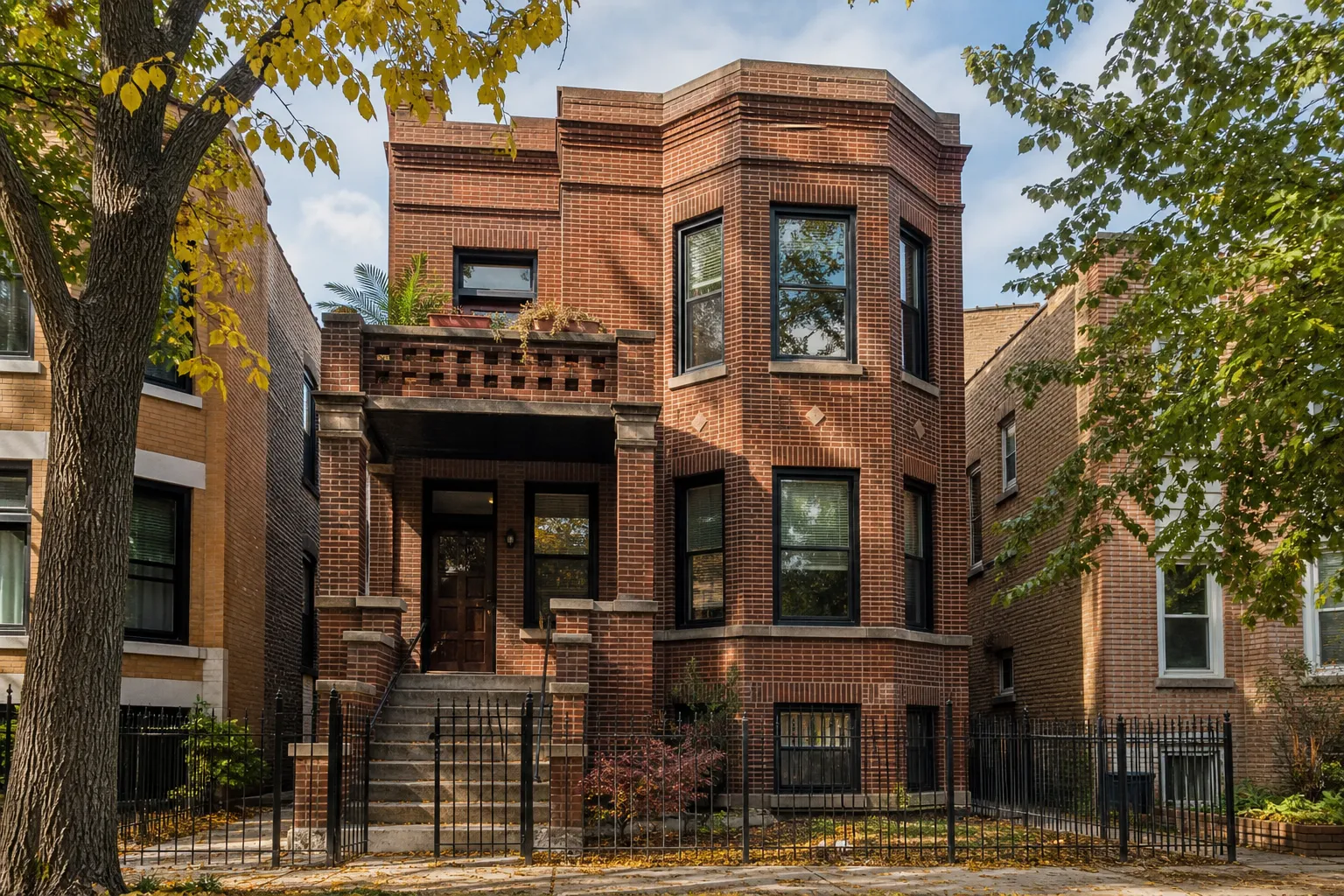
Back of the Yards is where Chicago yield hunters land when Logan Square spreads go thin — a 60609 pocket of brick worker cottages, two-flats, and small multifamily south of Pilsen and west of Bridgeport, with basis still below $300K on heavy-rehab acquisitions and ARV upside tied to South Side revitalization and industrial corridor employment.
Hard money loans in Back of the Yards exist because sellers and wholesalers move distressed stock fast — and conventional lenders will not fund knob-and-tube, open violations, or LLC buyers on a 14-day contract.
Back of the Yards investor thesis (2026)
| Factor | Back of the Yards | Pilsen (compare) |
|---|---|---|
| Two-flat buy (distressed) | $220K–$310K | $280K–$380K |
| Rehab (full) | $80K–$140K | $90K–$150K |
| Renter profile | Working families, industrial | Artist + professional mix |
| Yield-on-cost | Higher | Thinner post-rehab |
Neighboring hubs: Pilsen hard money · Bridgeport · city programs: hard money lenders Chicago.
Property inventory
| Type | 2026 buy | Rehab | Resale / rent |
|---|---|---|---|
| Worker cottage SFR | $165K–$235K | $55K–$95K | Flip or $1,600–$2,000/mo |
| Two-flat brick | $235K–$305K | $85K–$130K | $2,500–$3,200/mo gross |
| Small 3-flat | $290K–$380K | $110K–$170K | BRRRR hold |
Stockyards industrial corridor and Pershing Road logistics feed local employment — underwrite renter credit honestly, not North Side professional defaults.
Hard money terms
- Rates: 8.99%–13.5% interest-only
- Cost leverage: up to 100% on qualified files, capped at 75% of after-repair value
- Close: 7–10 business days
- Term: 6–12 months
Flip program: fix and flip loans Chicago · Hold: DSCR loans Chicago.
Worked example: Honore Street two-flat flip
Acquisition: $248,000 — vacant upper, occupied lower MTM Rehab: $96,000 — electrical, both units kitchen/bath, shared boiler, tuckpointing Loan: 89% LTC — $220,720 + $96,000 holdback Close: 7 business days Sell: $389,000 ARV-supported list — 52 DOM to investor landlord buyer
Margin discipline: Back of the Yards punishes over-improvement — granite in a $380K ARV block destroys flip spread.
Local risks
- Community alignment — long-term holders win with quality tenants, not slumlord optics
- RLTO — full Chicago compliance stack on rentals
- Violations & water cert — clear DOB before refi or resale
- Winter masonry — budget January contingency
Collar alternative for hold-focused sponsors: Will County fix and flip → Will County DSCR without RLTO.
Stockyards corridor and 47th Street micro-markets
Back of the Yards is not one uniform basis band. 47th Street retail and Pershing Road logistics create east-west spreads: blocks west of Ashland toward Western often trade $20K–$35K below east-of-Ashland comps with similar brick footprint because buyer pools anchor on Orange Line walk time to Ashland/47th versus bus-only access.
The Union Stock Yard industrial belt — now The Plant food incubator and Cold Storage redevelopment adjacency — feeds warehouse and food-production employment that supports $1,650–$2,100/mo renovated SFR rents without importing North Side professional tenant assumptions. Underwrite shift-worker credit honestly: stable employment, not 750+ FICO defaults.
60609 permit reality: Chicago DOB plan review for two-flat gut rehabs averages 6–10 weeks on shared-boiler conversions — longer than collar-county municipalities. Hard money draw schedules should front-load electrical rough-in and boiler replacement before drywall so inspection slots are not wasted on cosmetic passes.
| Block profile | Typical distressed buy | Rehab intensity | ARV ceiling (2026) |
|---|---|---|---|
| West of Western worker cottage | $165K–$210K | Moderate ($55K–$85K) | $265K–$310K flip |
| Ashland-adjacent two-flat | $235K–$285K | Full ($85K–$130K) | $360K–$410K |
| Near Stockyards industrial | $190K–$245K SFR | Heavy mechanical | BRRRR hold |
Worked carry example: $248K acquisition + $96K rehab at 89% LTC and 12% IO ≈ $2,850/mo debt service before taxes. Model 14-month hold if you miss spring listing window — Back of the Yards DOM runs 45–65 days on investor resale, not North Side 22-day averages.
Compare South Side thesis to Englewood (Green Line adjacency) and Pilsen (higher basis, stronger O-O competition). Collar hold alternative without RLTO: Will County fix and flip acquisition leg → Will County DSCR exit.
47th Street draw schedule and contractor sequencing
$96K Back of the Yards rehab — typical milestone draws:
- $19,200 (20%): Demo, electrical rough, boiler removal, permit sign-off
- $33,600 (35%): Plumbing rough, panel, shared heat install, framing
- $28,800 (30%): Both units kitchen/bath, drywall, flooring
- $14,400 (15%): Tuckpointing, water cert, final CO
Sequence boiler and electrical before November exterior tuckpointing moratorium — Chicago DOB inspectors backlog 2–3 weeks in spring. Sponsors who front-load cosmetic work pay $2,800+/mo IO while waiting for rough-in sign-off.
Wholesale vs. MLS: Back of the Yards deals often originate off-market through South Side wholesalers — verify title, water cert, and DOB violation stack before 10-day hard money close. MLS listings with “cash only” frequently mean shared heat or open violation — exactly where hard money wins if scope is documented day one.
Pre-qual checklist (60609)
- Contract ≤10-day close with POF
- Scope with boiler, electrical, tuckpointing line items
- Three 60609 comps within 0.5 mi — not Pilsen 60608
- DOB violation search before waiver
- Exit model — flip ARV under $410K or BRRRR at $2,500+ gross
- Liquidity — 6 months IO + 10% rehab contingency
- RLTO budget if hold exit via DSCR Chicago
Related
Back of the Yards — 60609 comp file gates (2026)
Back of the Yards files fail when Pilsen 60608 premiums price 60609 ARV, or yield is modeled without RLTO on hold pivot.
- Two-flat brick: $235K–$305K + $85K–$130K → $2,500–$3,200/mo gross
- Worker cottage: $165K–$235K + $55K–$95K — flip or $1,600–$2,000/mo
- Yield edge: Basis sub-$300K on heavy rehab when North Side spreads compress
- Hold pivot: Stabilized gross supports DSCR Chicago with RLTO opex
Underwriting anchor: | Two-flat buy (distressed) | $220K–$310K | $280K–$380K | — replay submarket basis and exit math from this page before locking hard money or DSCR term. Hard money up to 100% of cost on qualified files, capped at 75% of after-repair value · 7–10 day close · (833) 264-7776.
Pre-Qualify for Back of the Yards Hard Money · (833) 264-7776
Non-owner occupied investment property only.
60609 voucher rents next to Pilsen
HUD’s FY 2026 small-area table puts Back of the Yards below the Pilsen ZIP (schedule):
| ZIP | Neighborhood read | 2-bedroom | 3-bedroom |
|---|---|---|---|
| 60609 | Back of the Yards / New City | $1,290 | $1,660 |
| 60608 | Pilsen | $1,500 | $1,930 |
The metro fair market rent is higher still, at $1,781 for two bedrooms and $2,294 for three (FY 2026 FMR schedule). A renovated two-flat at $2,500 to $3,200 gross can work in 60609 if each unit’s rent is near these benchmarks, not near a Pilsen listing. Fair market rent is the voucher figure. Your comps are leased units on the same side of Ashland.
The FHFA index for Chicago-Naperville-Evanston rose from 278.91 to 296.21 between the second quarter of 2025 and the second quarter of 2026, about 6.2% (FRED). That is not a 60609 appreciation rate. Appraisers will use local solds. Unemployment in the Chicago metro was 5.2% in August 2026 (FRED). Stockyards and Pershing Road jobs can fill a unit. They are not a 750-score assumption. Underwrite the rent roll you can actually sign.
Transfer tax on the $248,000 purchase
Chicago charges $5.25 per $500 of transfer price, or fraction thereof. The buyer generally pays the $3.75 city portion. The seller generally pays the $1.50 CTA portion (Chicago transfer tax).
Illustration: $248,000 is 496 units of $500. Buyer: 496 × $3.75 = $1,860. Seller: 496 × $1.50 = $744. Combined city tax: $2,604. Foreclosure and government transfers can be exempt. A “cash only” MLS note is not an exemption. Add Cook County and Illinois stamps when title quotes them. If you are the buyer, the $1,860 is cash, not a rehab draw.
The occupied unit and the 75% cap
The Honore illustration has a month-to-month tenant in the lower unit. Illinois allows a written demand that gives at least five days after service to pay past-due rent before the lease ends (735 ILCS 5/9-209). Paying the tenant to leave can be faster than the court path. Either choice belongs in the budget before the 7-day close. Chicago’s landlord ordinance adds deposit and notice rules on top of the state statute. The Chicago landlord guide is the checklist. Pilsen is the higher-basis neighbor, not the comp set.
Example: $248,000 plus $96,000 of rehab is $344,000 all-in. The list value cited above is $389,000. Seventy-five percent of that figure is $291,750. One hundred percent of cost is $344,000. Jaken Finance Group funds the lower number on a qualified file, $291,750. At 12% interest-only, monthly interest is $2,917.50. A 14-month hold, if you miss the spring list window, is about $40,845 of interest before taxes. That is why a thin flip should pivot to a leased hold early, not in month 12.
Program pricing is 8.99%–13.5% for 6–12 months, with closes in 7–10 business days. There is no minimum FICO on select programs. A refinance into Chicago DSCR is 5.75%–10.5%. Cash-out on that loan is up to 80% in select markets for qualified borrowers. Rate-and-term can go to 85% on the same terms. Insurance, vacancy, and the landlord-ordinance costs decide whether you can use the top of that range.
What 60609 reviewers ask for
Three sold comps inside 60609, within a half mile, with the same bed count. A shared-boiler scope with the replacement in draw one. A violation printout from the city. A water certificate plan. Six months of interest in the liquidity statement. At $2,917 a month, six months is about $17,505, plus 10% of the $96,000 rehab as contingency, about $9,600.
Over-improving a worker cottage to granite when the after-repair value is under $310,000 fails the 75% test. Spend the rehab on the boiler, the panel, the roof, and clean kitchens. Then call (833) 264-7776 with the violation list attached.
Hold or sell after the first draw
Decide the exit when the boiler is ordered, not when the paint is dry. If three 60609 sales will not support a list price that clears interest, taxes, stamps, and a selling cost, switch the plan to a lease and a Chicago DSCR refinance. Waiting until month 12 to “see the market” is how a $2,917 interest bill becomes a $40,000 surprise.
Winter masonry is the other clock. Tuckpointing after a freeze wastes a draw and a month. Put exterior work in the schedule before November, and keep interior rough-in moving if the weather slips. Chicago plan review on a gut two-flat is often measured in weeks. The interest reserve has to cover that review, not just the days the crew is on site.
Chicago hard money explains the city program. Back of the Yards still needs 60609 evidence. Call (833) 264-7776 with the boiler bid and the violation printout.