Blog
BOXABL vs ADU vs Manufactured Home Guide
By Jaken Finance Group · Principal, Jaken Finance Group
BOXABL Casita vs site-built ADU vs HUD manufactured home for investors — code class, comp rules, FHA and DSCR exit paths. Jaken Finance Group.
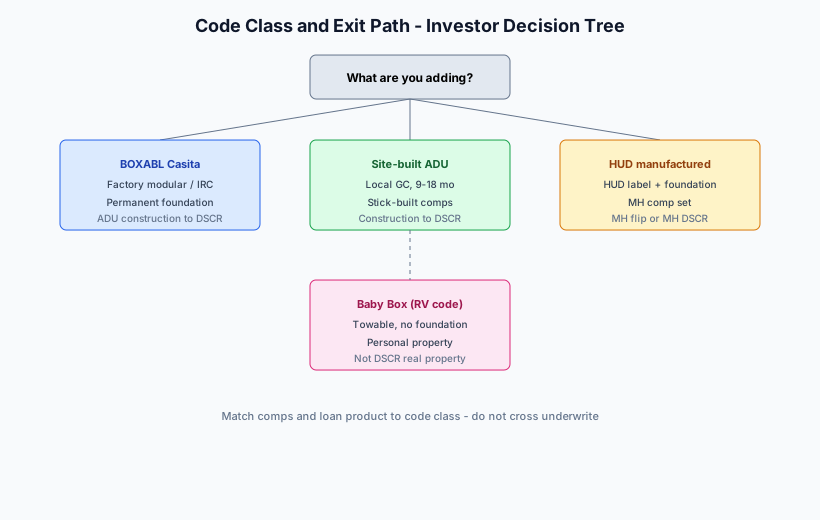
Real estate investors lose money when they pick the wrong housing product class for the lot. A BOXABL Casita is not a HUD manufactured home. A site-built ADU is not a Baby Box RV. Each path carries different zoning, title, comp, FHA, and DSCR rules — and the wrong label at acquisition is the fastest way to a declined appraisal or a leverage cap at 75% as-completed value.
This guide compares four investor-relevant options side by side: BOXABL modular Casita (factory IRC modular), site-built ADU, HUD-code manufactured home on owned land, and Baby Box (RV-coded). Jaken Finance Group finances non-owner-occupied investment property only — owner-occupied backyard units are consumer loans and sit outside this desk.
Disclosure: Jaken Finance Group may earn a commission if you order a BOXABL Casita through our referral link. We still underwrite to collateral and exit — not marketing claims.
Related guides in this series: Jaken Finance Group partners with BOXABL · BOXABL Casita models investor guide · BOXABL Casita cost and rental income · How to finance a BOXABL Casita
Why product class matters more than brand
Lenders and appraisers underwrite collateral type, not Instagram aesthetics. The four products in this comparison differ on:
| Dimension | What changes by class |
|---|---|
| Building code | IRC modular vs local site-built vs HUD Code vs RV |
| Title | Real property deed vs certificate of title (chattel/RV) |
| Comp set | Modular ADU sales vs stick-built SFR vs manufactured real property |
| FHA exit | Foundation + CO + eligible construction type |
| DSCR exit | Combined rent on legal units; chattel excluded |
| Timeline | Factory queue + set vs 9–18 month GC build vs HUD set day |
Get the class wrong and you may overpay for basis, import the wrong ARV comps, or fund a unit zoning will never CO. The rest of this guide walks each path with investor math — not homeowner brochure copy.
BOXABL Casita — factory modular (IRC path)
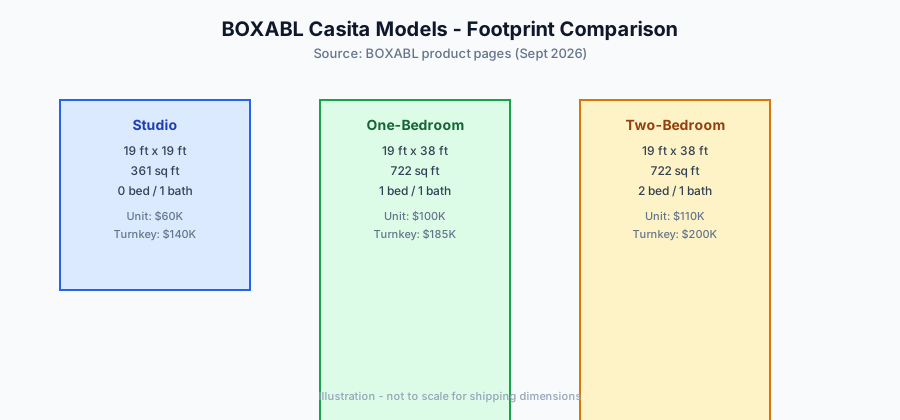
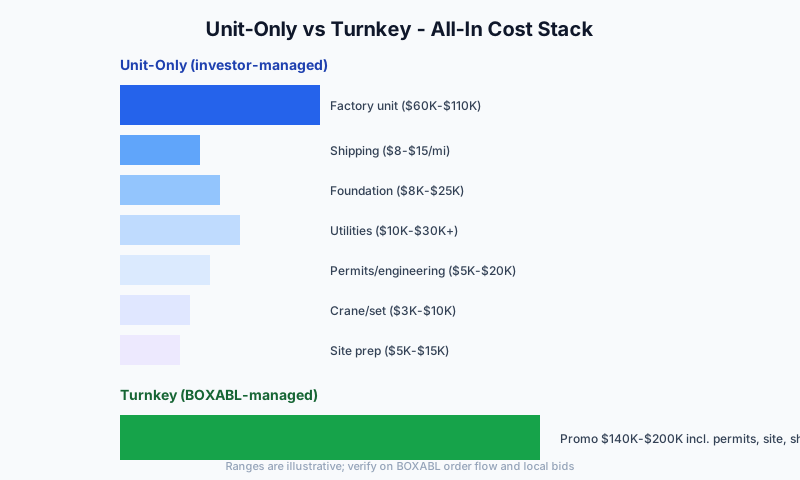
The BOXABL Casita line — Studio (361 sq ft), One-Bedroom (722 sq ft), and Two-Bedroom (722 sq ft) — is a factory-built, folding modular unit set on a permitted foundation. BOXABL markets unit-only pricing (buyer handles shipping, foundation, utilities, permits) and turnkey packages that bundle site work. As of September 2026, BOXABL lists unit-only from $60,000 (Studio) to $110,000 (Two-Bedroom), with promotional turnkey packages from $140,000 to $200,000 — re-verify on BOXABL model pages before you order.
Code classification: Casitas are built as modular housing under state factory programs and local IRC/IBC acceptance — not HUD Manufactured Home Construction and Safety Standards (HUD Code). That distinction drives everything downstream: comp selection, FHA eligibility framing, and whether your appraiser pairs you with stick-built SFR or manufactured sales.
Investor fit: Casitas shine when zoning allows a detached ADU on an investment lot, you want factory QA and a shorter on-site build window than stick framing, and your market has modular or ADU sold comps (or stick-built SFR comps your lender will accept for similar size/quality). They struggle when the jurisdiction treats folding modules as non-standard, HOA CC&Rs ban detached units, or your submarket only has manufactured-home sales — importing stick-built comps overstates value.
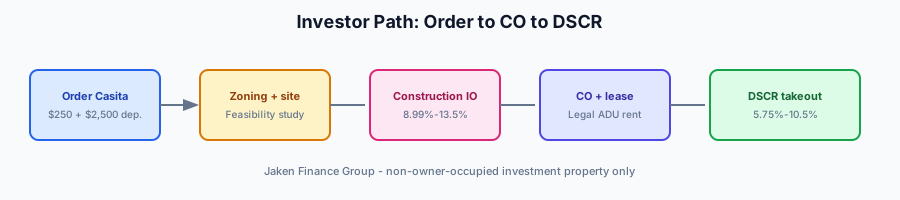
Order flow: $250 order fee → feasibility → $2,500 production deposit per BOXABL’s published process. That is not the full investor budget — foundation, crane, utility taps, permits, and hold during CO still sit on your spreadsheet. Full cost rebuild: BOXABL Casita cost and rental income.
Site-built ADU — local GC, local code
A site-built ADU is stick-framed or block-built on site by a general contractor under local building department plan check and inspection — detached cottage, garage conversion, basement legalization, or attached addition the city records as an accessory dwelling.
Typical investor timeline: 9–18 months from zoning confirmation to certificate of occupancy in most metros — longer when historic review, utility upsizing, or neighbor appeals intervene. Cost bands vary widely by market: $80,000–$350,000+ all-in depending on ADU type, per ADU construction loans desk ranges.
Code classification: Pure local IRC construction. No HUD label. No RV title. When permitted and affixed, the ADU is real property on the same deed as the primary — the comp set usually tracks detached ADUs, modular ADUs, or small stick-built SFR in the submarket.
Investor fit: Site-built wins when you need custom footprint (tight urban lot, odd setback), your city’s ADU ordinance is mature and by-right, and local appraisers routinely credit legal second units on the rent roll. Examples on this site: Chicago ADU ordinance investor guide · ADU zoning basics — Chicago edition · DC ADU rules investor guide · Los Angeles ADU zoning basics · Miami ADU zoning concerns.
Financing path: Qualified investor ADU construction at 8.99%–13.5% interest-only during build, sized to the lower of cost and 75% of as-completed value on the combined primary + ADU when the unit is real. After CO and lease, combined rent exits to construction-to-DSCR rental takeout at 5.75%–10.5%. Unpermitted basement income does not count — ever.
HUD manufactured home — different animal
A HUD-code manufactured home (often called a mobile or manufactured home when post-1976) is factory-built under the HUD Manufactured Home Construction and Safety Standards. It carries a HUD certification label on the data plate. On owned land with permanent foundation and real property title, it can be financed, flipped, and held like other residential collateral — but only within the manufactured comp universe.
Typical pricing: New double-wides on land packages in many Sun Belt and Midwest markets run $80,000–$180,000 all-in for the home + set + foundation — often lower per square foot than modular ADU or site-built cottage in rural submarkets. Used double-wides on acreage can trade at $40,000–$120,000 before rehab.
Code classification: HUD Code — not IRC modular. Appraisers must use manufactured-specific real-property sold comps. Stick-built SFR comps overstate ARV 15%–25% and fail hard money underwriting. Full comp rules: Manufactured home ARV and comps.
Investor fit: HUD double-wide on owned land wins on basis when:
- The submarket has deep manufactured comp depth (rural counties, exurban corridors)
- You need maximum square footage per dollar (1,200–1,800 sf double-wide vs 361–722 sf Casita)
- Your exit is FHA/VA retail or DSCR hold on real property collateral — not a luxury stick-built buyer pool
- Zoning allows manufactured housing as primary or ADU-class dwelling (verify — some cities ban manufactured ADUs entirely)
Financing path: Fix-and-flip hard money at 8.99%–13.5% IO with 75% ARV cap on real property manufactured. Hold path: DSCR loans for manufactured homes at 5.75%–10.5% when titled real property, 1976+, permanent foundation, and rent supports DSCR. Chattel and park-pad deals are a different product — see chattel vs real property for mobile home flippers.
Baby Box — RV-coded, not a dwelling investment
BOXABL Baby Box (~120 sq ft) is marketed as a towable, RV-coded unit — no foundation pitch, personal-property classification. BOXABL positions it for camping, office, or short-stay use — not as a permitted second dwelling on a deed.
Investor reality check:
| Factor | Baby Box | Casita / site ADU / HUD on land |
|---|---|---|
| Title | RV / personal property | Real property when permitted + affixed |
| Zoning | Often prohibited as ADU | ADU or SFR path when by-right |
| DSCR | No | Yes when CO + lease + owned land |
| FHA | No | Possible on qualifying real property |
| ARV comps | None as real estate | Product-specific sold comps |
| Depreciation | RV asset rules | Real property schedule |
Do not underwrite Baby Box as a rental collateral class. If your strategy requires debt on real estate, stay in Casita, site-built, or HUD-on-land lanes. Catalog detail: BOXABL Casita models investor guide.
Side-by-side comparison for investors
| BOXABL Casita | Site-built ADU | HUD manufactured (on land) | Baby Box | |
|---|---|---|---|---|
| Code | IRC modular (factory) | Local IRC (site) | HUD Code | RV |
| Typical sf | 361–722 | 400–1,200 | 1,000–1,800 (double-wide) | ~120 |
| Unit-only / base cost | $60K–$110K + site | GC bid $80K–$350K+ | $45K–$120K+ home | Lower unit, no equity path |
| Timeline to CO | Factory queue + 2–6 mo site* | 9–18 months | 2–8 weeks set + foundation | N/A — not CO path |
| Comp set | Modular ADU / small SFR | ADU / stick-built SFR | Manufactured only | None |
| FHA potential | Market-dependent modular | Strong when CO clean | Strong with engineer letter | No |
| DSCR (investor) | Yes — permitted ADU | Yes — permitted ADU | Yes — real property HUD | No |
| Jaken Finance Group construction desk | Yes — investor ADU | Yes — investor ADU | Flip/hold MH products | No |
*Timeline excludes permitting variance, utility upgrades, and production backlog — BOXABL’s consumer “two months” messaging is not an investor underwriting timeline.
Comp rules — the mistake that kills leverage
Appraisers and hard money lenders cap at the lower of cost and 75% as-completed value on ADU and new construction files. Manufactured flips cap at 75% ARV against product-specific sold comps. Three comp rules investors miss:
Rule 1: Match the product class
| Subject type | Acceptable sold comps | Do not use |
|---|---|---|
| IRC modular Casita ADU | Modular ADU, prefab ADU, similar small SFR if lender allows | HUD manufactured-only grid |
| Site-built ADU | Detached ADU, stick-built SFR ±10% sf | Park chattel, RV sales |
| HUD double-wide on land | Manufactured real property, same county | Stick-built ranch comps |
| Baby Box | — | Any real property comp |
Importing stick-built SFR comps for a HUD home overstates ARV and triggers leverage reduction at origination — documented in Manufactured home ARV and comps.
Rule 2: Real property only for DSCR and FHA exits
Park-lot homes with certificate of title (chattel) use a different comp set and do not qualify for standard residential DSCR on the home-as-real-estate model. Conversion checklist: Chattel vs real property.
Rule 3: Combined value on ADU deals
When the Casita or site-built ADU sits behind an existing rental SFR, lenders appraise as-completed combined value — primary plus legal ADU — not the ADU in isolation. Unpermitted square footage adds zero to the rent roll and zero to value.
Adjustment grid (illustrative — document in your comp spreadsheet):
| Comp vs subject | Direction |
|---|---|
| +300 sf larger | Subtract $8–$15/sf from comp |
| Stick-built vs modular build | Verify lender policy — some subtract 5%–10% |
| Inferior foundation (HUD) | Subtract $10K–$25K |
| No garage vs garage | Add $5K–$12K to comp |
| Legal ADU vs illegal basement | Illegal comp excluded |
FHA implications by product class
FHA cares about construction type, foundation, and property eligibility — not factory branding.
BOXABL Casita (modular ADU)
FHA may finance a modular ADU on owned land when:
- The unit is permitted and affixed to a permanent foundation
- Local jurisdiction and FHA appraiser accept modular/IRC as eligible
- The ADU is legally classified — not an RV or temporary structure
- Minimum property standards pass (utilities, egress, safety)
Confirm before you underwrite to an FHA retail exit. Some appraisers in manufactured-heavy rural markets struggle with modular ADU pairing — submit your zoning letter and BOXABL spec package early.
Site-built ADU
Cleanest FHA path when CO, egress, and separate utilities meet local code. English basement and garage conversions need fire separation and ceiling height documented — see DC ADU rules for urban conversion standards.
HUD manufactured home
FHA is well-trodden on 1976+ HUD-labeled homes with:
- Permanent foundation and engineer certification
- HUD labels / data plate intact (HUD installation program)
- No ineligible additions
Order the engineer letter before final rehab draw if FHA exit is planned — mid-rehab letters expire.
Baby Box
Not FHA collateral as a dwelling. Do not model FHA retail exit.
DSCR implications — hold and BRRRR exits
DSCR loans qualify on rent covering debt service — not W-2 income. Product class determines whether the unit counts.
| Product | DSCR on investor file? | Notes |
|---|---|---|
| Casita ADU (CO + lease) | Yes | Combined rent — primary + ADU |
| Site-built ADU | Yes | Same combined rent roll |
| HUD on owned land | Yes | Manufactured home DSCR — often 1.20–1.25 DSCR, lower LTV |
| Baby Box | No | Not real property rental collateral |
| Park chattel | No (standard DSCR) | Commercial park programs differ |
Construction bridge during ADU build: 8.99%–13.5% IO via ADU construction loans. Stabilized takeout: 5.75%–10.5% when CO and lease support combined DSCR. Financing detail: How to finance a BOXABL Casita.
When a HUD double-wide wins on basis
Modular Casitas and site-built cottages dominate headlines in California and Pacific Northwest ADU policy debates. HUD double-wide on owned land still wins the spreadsheet in many investor markets:
Scenario A — Rural basis play
Market: Exurban county with 12+ manufactured real-property sales per year, weak modular ADU comp depth.
| Line | HUD double-wide | BOXABL One-Bedroom turnkey |
|---|---|---|
| All-in basis | $115,000 (used home + foundation + set) | $185,000 (promo turnkey, Sept 2026) |
| Square footage | ~1,456 sf | 722 sf |
| Basis per sf | ~$79/sf | ~$256/sf |
| Comp support | Strong manufactured grid | Thin modular ADU grid |
| DSCR rent (illustrative) | $1,400–$1,700/mo | $1,200–$1,600/mo |
Lower basis + more sf + deeper comps → better LTC and DSCR headroom even if per-door rent is similar.
Scenario B — Flip in manufactured-heavy MSA collar
Investor buys distressed double-wide on 0.35 acres real property, rehabs kitchen/bath/skirting, exits FHA retail. Hard money at 75% ARV against manufactured sold comps — stick-built ARV imports fail underwriting. Case patterns: Manufactured home ARV and comps.
Scenario C — When Casita wins instead
- Urban infill where zoning caps ADU at 800 sf and manufactured housing is banned
- HOA suburb allowing detached ADU but prohibiting HUD homes visible from street
- Speed-to-rent on a lot with utilities stubbed and by-right modular ADU acceptance
- Design constraint — Casita footprint fits a 19×38 pad where double-wide transport fails
Run both spreadsheets. Basis alone does not win — exit comp support binds leverage.
Zoning and geography — same product, different city
Product class is national; entitlement is local.
| Market | Investor note for this comparison |
|---|---|
| California | Strong ADU preemption — Casita and site-built ADU paths common; verify HCD ADU statutes. Manufactured ADU rules vary by city. |
| Chicago | Coach house and conversion paths — Chicago ADU ordinance guide. Modular set still needs zoning letter. |
| Washington DC | English basement ADU vs rear cottage — DC ADU rules. Row home lots may reject Casita footprint. |
| Los Angeles | ADU by-right culture — LA ADU zoning basics. |
| Miami / South Florida | Flood, wind, and condo/HOA friction — Miami ADU zoning. |
| Rural Midwest / South | Manufactured on land often default product — verify county allows ADU-class use vs primary-only. |
Top cities to build ADUs lists demand hotspots; your zoning letter still governs whether Casita, site-built, or HUD is legal on the parcel.
Decision matrix — pick a lane before you order
| Your situation | Lean toward |
|---|---|
| Investment lot, by-right detached ADU, want factory QA | BOXABL Casita — order through referral after zoning check |
| Urban lot, custom dimensions, mature ADU ordinance | Site-built ADU + ADU construction loan |
| Rural acreage, manufactured comps deep, need max sf/$ | HUD double-wide on owned land |
| Airbnb fantasy, no foundation, towable | Baby Box — not a DSCR asset |
| Existing rental + second legal door for DSCR | Casita or site-built with combined as-completed appraisal |
| Flip with FHA exit in manufactured county | HUD real property — engineer letter path |
Pull zoning confirmation and utility capacity before any deposit — BOXABL feasibility step aligns with this, but your lender needs the same letter for construction sizing.
Financing stack — how the classes map to Jaken Finance Group products
Jaken Finance Group does not originate BOXABL consumer order financing or RV loans. We finance the investment-property capital stack around the unit:
| Phase | Product | Rate band (2026) |
|---|---|---|
| ADU / modular set | ADU construction or fix-and-flip | 8.99%–13.5% IO |
| Manufactured flip | Hard money on real property MH | 8.99%–13.5% IO, 75% ARV |
| Stabilized hold | DSCR on combined or single-unit rent | 5.75%–10.5% |
File checklist for modular ADU files:
- Zoning letter — ADU permitted, size caps, setbacks
- BOXABL order/feasibility documentation or modular spec
- Foundation and utility plan with GC/install bid
- As-completed rent pro forma — primary + ADU market rents
- Exit lender criteria — DSCR threshold, max LTV on combined value
Submit: new construction application · submit a scenario · (833) 264-7776
Partnership context and referral disclosure: Jaken Finance Group partners with BOXABL.
Worked comparison — one lot, three budgets
Subject: Non-owner-occupied SFR on 0.25-acre lot, by-right detached ADU, Midwest county with manufactured comp depth.
| Path | All-in cost (illustrative) | Indicated rent add | Comp risk | Construction IO |
|---|---|---|---|---|
| Casita One-Bedroom turnkey | $185,000 | +$1,350/mo | Modular ADU comps thin — verify | $185K × 75% = $138,750 cap |
| Site-built 600 sf cottage | $210,000 | +$1,450/mo | ADU/stick comps available | $210K × 75% = $157,500 cap |
| New double-wide on pad (primary use) | $130,000 | N/A — replaces primary | Manufactured comps strong | Flip file — 75% ARV manufactured grid |
Numbers are composite illustrations — not quotes or guarantees. Your county’s sold data and lender comp policy bind leverage.
Common investor mistakes
- Calling a Casita a “manufactured home” in the loan application — wrong comp set, wrong FHA path.
- Using stick-built ARV on HUD collateral — overstates value 15%–25%; see manufactured ARV guide.
- Counting unpermitted ADU rent for DSCR — zero underwriter credit until CO.
- Ordering Baby Box for a “rental unit” — personal property dead end.
- Ignoring HOA CC&Rs — modular ADU banned despite city by-right zoning.
- Skipping combined as-completed appraisal on ADU behind existing rental — sizes wrong loan amount.
- Owner-occupied assumption — Jaken Finance Group files require non-owner-occupied collateral.
Phase 2 and catalog noise — stay in investable SKUs
BOXABL’s Phase 2 developer catalog (larger box sizes, community-scale claims) is beta — availability depends on manufacturing and approvals per BOXABL’s public filings and June 2026 product announcement. Underwrite orderable Casitas today, not press-release price-per-square-foot on unshipped SKUs.
Order a Casita — referral link
If zoning, utility, and comp homework point to a BOXABL Casita on your investment lot:
Order a BOXABL Casita (referral link — Jaken Finance Group may earn a commission)
Then line up construction or cash for set, CO, and lease before DSCR takeout. Step-by-step: How to finance a BOXABL Casita · BOXABL Casita cost and rental income.
For ADU construction term sheets on qualified investor property nationwide: ADU construction loans · (833) 264-7776 · submit a scenario
Sources
- BOXABL Casita Studio — specifications and pricing (verified September 2026)
- BOXABL Casita One-Bedroom — specifications and pricing
- BOXABL Casita Two-Bedroom — specifications and pricing
- BOXABL Baby Box — RV product classification
- HUD Manufactured Home Construction and Safety Standards — HUD Code and installation
- California HCD — Accessory Dwelling Units — state ADU policy
- American Planning Association — ADU knowledge base — zoning trend overview
- BOXABL Phase 2 product announcement, June 2, 2026 — beta catalog context
- Jaken Finance Group loan parameters — fix-and-flip 8.99%–13.5% IO, DSCR 5.75%–10.5%, manufactured ARV cap 75%, ADU as-completed cap 75% (September 2026)