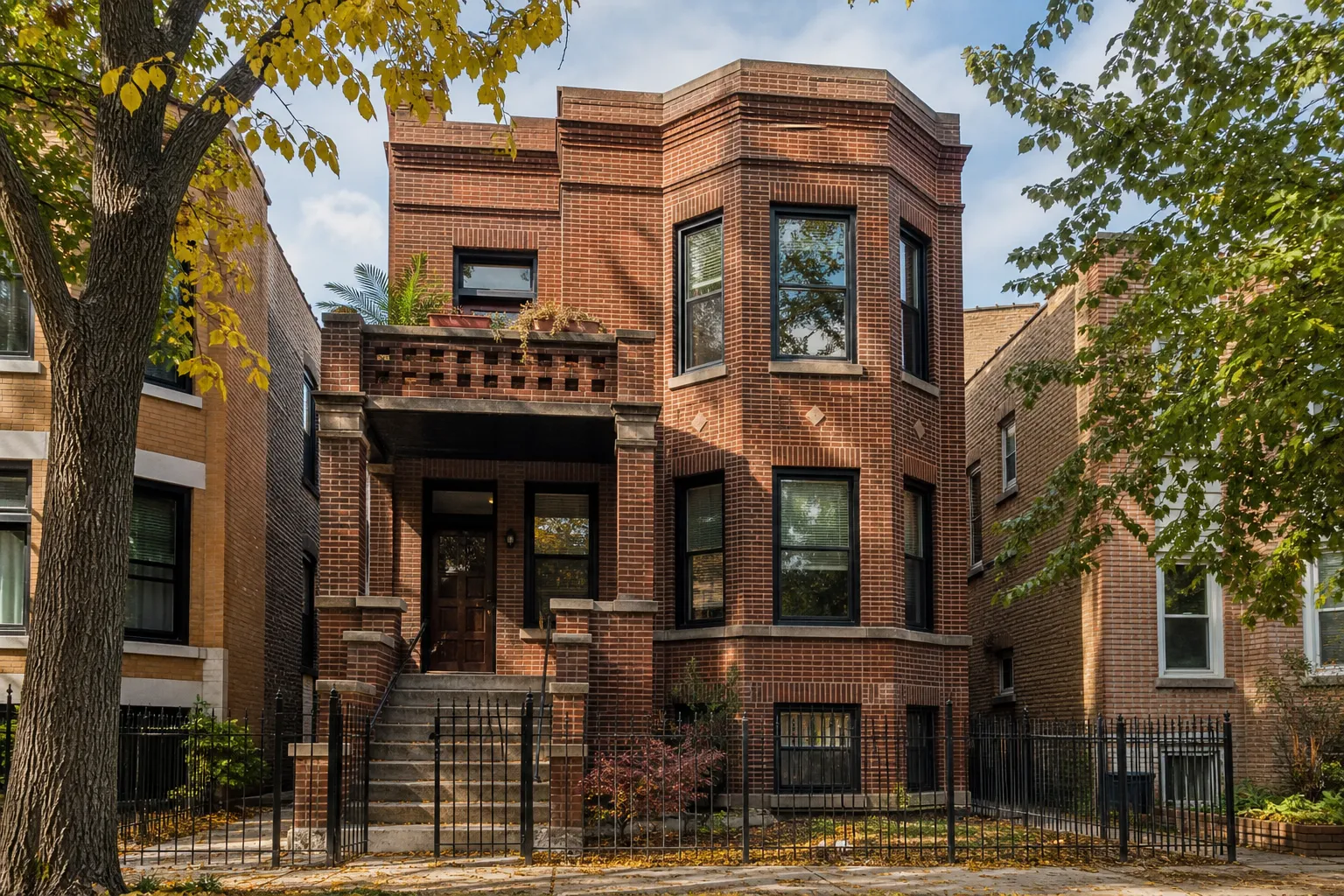
Uptown is vintage Chicago at full volume — 1920s courtyard buildings, the Argyle Asian district, Wilson Red Line density, and rehab complexity that sends conventional lenders running. Hard money loans in Uptown fund the deals where as-is condition fails habitability tests but after-repair value on a renovated two-flat or stabilized rent on a refreshed courtyard unit stack justifies 90% LTC private capital.
The 60640 ZIP (and 60613 edges) spans Graceland cemetery west to Lake Michigan east — a neighborhood in long transition where experienced operators extract margin from systems-heavy rehabs others avoid.
Uptown vs. adjacent north-side markets
| Area | Vintage complexity | Typical two-flat buy |
|---|---|---|
| Uptown | High (courtyards, SRO history) | $290K–$420K |
| Andersonville | Moderate | $320K–$440K |
| Rogers Park | Moderate-high | $265K–$380K |
| Lakeview | Lower distress inventory | $450K+ |
Compare: Rogers Park hard money · hard money lenders Chicago.
Uptown property archetypes
| Asset | Buy (2026) | Rehab | Stabilized gross |
|---|---|---|---|
| Two-flat (systems-heavy) | $305K–$395K | $95K–$155K | $3,100–$4,000/mo |
| Three-flat courtyard | $380K–$520K | $140K–$220K | $5,000–$6,500/mo |
| Small mixed-use (Argyle) | $450K–$650K | $120K–$250K | Retail + res split |
Uptown Theatre district landmark context — verify LPC and aldermanic sensitivity on facade work before you lock ARV.
Hard money structure for Uptown vintage
- Rates: 8.99%–13.5% interest-only
- Leverage: up to 100% of cost on qualified files, capped at 75% of after-repair value
- Term: 6–12 months on a flip; bridge can run 12–24 months
- Draws: Milestone-based — common areas may require phased releases
- Close: 7–10 business days
Programs: fix and flip loans Chicago · exit DSCR loans Chicago · two-flat guide.
Worked example: Magnolia Avenue three-flat
Buy: $445,000 — partial vacancy, shared boiler, dated common hallway Scope: $168,000 — boiler, electrical subpanels, 2 gut units + 1 refresh, common area, tuckpointing Financing: 86% LTC — $382,700 + $168,000 holdback Timeline: 10-day close; 8-month rehab (winter masonry contingency) Stabilize: $5,850/mo gross — three market leases Hold exit: DSCR at 70% LTV on $720K appraised — or list flip if spread supports
Courtyard deals fail when sponsors underestimate common-area scope — budget hallways, stairs, and rear porches in year-one capital.
Uptown-specific risks
- SRO / occupancy history — title and zoning clarity before close
- RLTO — Chicago landlord compliance on all residential units
- Parking & alley access — affects tenant pool and resale
- Over-rent pro forma — underwrite to achieved rent, not Argyle STR hype
RLTO-free hold alternative: DuPage DSCR or Skokie case study.
Related Uptown resources
Wilson Yards TIF and Broadway retail adjacency
Uptown sits at the intersection of Wilson Red Line, Broadway retail, and lakefront-adjacent vintage high-rises — three different hard money lanes. Wilson Yards TIF and Montrose Harbor proximity support long-term demand narrative, but 2026 underwriting must stay on current 60640 comps, not pro forma Penguin Random House or Uptown Theatre restoration premiums.
Affordable housing overlay: Portions of Uptown carry SRO and affordable set-aside history — verify zoning and occupancy class before modeling luxury ARV on a distressed six-flat. Mixed-income buildings may require affordable unit preservation that caps investor exit to market-rate conversion plays.
| Asset lane | 2026 buy band | Rehab note | Exit |
|---|---|---|---|
| Pre-war six-flat (distressed) | $420K–$580K | Shared boiler, tuckpointing | BRRRR or condo conversion (legal review) |
| Two-flat near Wilson | $295K–$385K | Standard gut | Flip to house-hacker |
| Vintage high-rise condo (rare) | Varies | HOA rental caps | Case-by-case |
Broadway corridor noise and retail: Ground-floor commercial on Broadway and Argyle can boost rent narrative but adds RLTO commercial-residential compliance layers — separate leases, separate meters, certificate of occupancy for mixed use.
Worked example: $335K two-flat acquisition on Magnolia with $105K full gut. 90% LTC at 11.5% IO → $3,450/mo carry. Stabilized $3,200/mo gross requires both units leased by November 1 to avoid winter vacancy drag. ARV $485K supported only with 0.3-mile comps on similar vintage — do not comp Andersonville premiums.
Link: Chicago two-flat guide · RLTO compliance · Albany Park for lower-basis northside alternative.
Wilson Yard station adjacency and six-flat carry modeling
Uptown six-flat value-add at $480K–$580K acquisition runs $4,800–$6,200/mo IO on 85% LTC at 12% — model 14-month hold when mixed-use ground floor delays CO. Wilson Red Line walk under 6 minutes supports $25K–$40K ARV premium on renovated upper units vs. Magnolia interior six-flats.
Affordable set-aside diligence: Pull zoning and CHA history on any six-flat marketed as “conversion opportunity” — legal fees $8K–$20K when affordable units must remain cloud title.
Link Chicago BRRRR guide for six-flat hold math vs. fix and flip Chicago resale lane.
Pre-qual checklist (60640)
- Zoning/occupancy class on six-flat and mixed-use
- Affordable set-aside title search on conversion listings
- Wilson Red Line walk time documented for ARV premium claims
- Separate commercial/resi draw schedule on mixed-use
- 14-month carry model on six-flat at 85% LTC
- CHA/affordable legal review budget when applicable
Montrose Harbor adjacency and vintage high-rise caution
Montrose-adjacent vintage buildings carry special assessment and reserve study risk — pull HOA/condo docs before bridge on any high-rise conversion file. Argyle Asian market retail foot traffic supports mixed-use narrative but adds commercial CO timeline on ground-floor tenant improvements.
What Chicago prices did, and what they do not prove on Wilson
The S&P Cotality Case-Shiller index for Chicago, not seasonally adjusted, was 223.30 in July 2025 and 238.61 in July 2026. That is about 6.9% (FRED series CHXRNSA). The FHFA all-transactions index for the Chicago-Naperville-Evanston division moved from 278.91 to 296.21 over the same four quarters, about 6.2% (FRED series ATNHPIUS16984Q). Both series cover a wide metro. Neither one is a Magnolia Avenue sold. A courtyard with a shared boiler does not inherit the metro gain. Use 60640 sales within a short walk, on buildings with the same unit count.
Freddie Mac’s 30-year fixed averaged 7.28% on October 1, 2026, versus 6.34% a year earlier (Primary Mortgage Market Survey). Illustration: a house-hacker who finances $436,500 (10% down on a $485,000 two-flat) pays about $2,987 a month in principal and interest at 7.28%. At 6.34% the payment is about $2,713. The gap is about $273. That buyer still has to live in one unit. Price the resale to the payment, not to the Case-Shiller print.
Security deposits under the city ordinance
For rental agreements governed by Chicago’s Residential Landlord and Tenant Ordinance, the security-deposit interest rate for January 1, 2026, through December 31, 2026, is 0.01%. The city sets that rate from the average of selected Chase Bank account rates as of December 31, 2025. A landlord must pay interest each year on deposits and prepaid rent held more than six months. Damages must be itemized within 30 days after move-out. The deposit and required interest must be returned within 45 days, minus unpaid rent and damage costs (City of Chicago).
Illustration: on a $2,000 deposit held a full year, 0.01% is $0.20. The dollar is small. The 45-day clock is not. Get the seller’s deposit ledger, receipts, and interest history in the purchase contract before you inherit the tenancy. Our RLTO compliance guide walks the rest of the ordinance. This paragraph describes the city’s published rule. It is not legal advice for one lease.
How Cook County assesses a two-flat and a storefront
On a split-use building, the Cook County Assessor assesses the residential portion at 10% of market value and the commercial portion at 25% of market value (classification page). A plain two-flat stays in the residential class. A Broadway or Argyle building with a real storefront can split. The commercial share at 25% changes the tax bill even when the apartments stay at 10%. Read the class code on the PIN before you model the refinance. The seller’s homeowner exemption does not describe an LLC bill. Pull the actual bill and the class, then read the Cook County property tax guide.
Lead paint in courtyard plaster
EPA’s Renovation, Repair and Painting rule applies to paid work that disturbs paint in pre-1978 housing, including people who buy, renovate, and sell for profit. Illinois is not an authorized state for this program, so EPA runs it (EPA RRP program). A 1920s courtyard is inside the window. Common halls, stairs, and rear porches disturb a lot of paint. Name a certified firm in the scope before the first draw. If one unit stays occupied, the crew has to control dust around that household. Do not treat an occupied unit as vacant in the lead plan.
Term, leverage, and the refinance clock
Fix-and-flip notes from Jaken Finance Group run 8.99%–13.5% interest-only, for 6–12 months, and close in 7–10 business days on a complete file. Qualified files can reach 100% of cost, and the loan is still capped at 75% of after-repair value. A bridge can run 12–24 months when a courtyard needs a longer exit. A Chicago DSCR loan after stabilization closes in about 14 business days. Do not schedule the refinance on the hard-money close time.
Call (833) 264-7776 before you bid a courtyard with a shared boiler. Bring the class code, the deposit ledger, and a common-area budget that includes the halls.
Violation search and common-area draws
Courtyard files stall when the first draw tries to pay for three kitchens and the rear porch at once. Split the budget.
| Draw | What has to be done before the next release |
|---|---|
| First | Violation printout, boiler or subpanel contract, lead-safe plan |
| Second | Common halls, stairs, and rear porches weather-tight |
| Third | Unit guts, one unit at a time, with photos |
| Last | Final leases or the listing package |
Search building violations and the zoning class before you waive a financing contingency. An open porch violation can sit under a fresh paint job. Affordable-housing or SRO history belongs in that same search. If the record is unclear, budget legal review before you model a market-rate conversion. The two-flat and three-flat guide is the product walk-through when the building is smaller than a courtyard.
A Wilson Red Line walk under a few minutes can support a rent story. It does not replace a sold comp on a similar vintage building. Write the walk time in the file if you are claiming it. Leave Lakeview sales out.
Uptown — courtyard systems file gates (2026)
Uptown files fail when SRO/courtyard complexity is budgeted like Andersonville SFR — systems-heavy rehabs run $95K–$220K.
- Basis band: Distressed two-flat $290K–$420K — between Rogers Park and Lakeview
- Courtyard three-flat: $380K–$520K + $140K–$220K → $5,000–$6,500/mo
- Wilson Red Line: Professional renter demand supports hold after systems-heavy scope
- Comp discipline: 60640 micro-market — Lakeview $450K+ does not set Uptown ARV
Underwriting anchor: | Two-flat (systems-heavy) | $305K–$395K | $95K–$155K | $3,100–$4,000/mo | — replay submarket basis and exit math from this page before locking hard money or DSCR term. Hard money 90% LTC · 7–10 day close on complete file · (833) 264-7776.
Pre-Qualify for Uptown Hard Money · (833) 264-7776
Non-owner occupied investment property only.