Texas sells itself to investors on no state income tax, landlord-friendly courts, and population growth that keeps filling units. What the pitch leaves out is that the state also leads the country in hail claims, carries one of the longest hurricane coastlines in the Gulf, and has watched property insurance premiums climb faster than rents in most metros. For a rental investor, landlord insurance cost in Texas is a line item that can quietly erase the advantage of a low purchase price.
This page breaks the state into the markets that actually behave differently — North Texas hail country, Houston’s wind and flood overlay, the TWIA coastal counties, and the central and western metros that price more gently — and then shows how the premium flows through a DSCR approval. If you want the national framework first, read our investment property insurance guide; if you want numbers for a specific address, open the landlord insurance cost calculator.
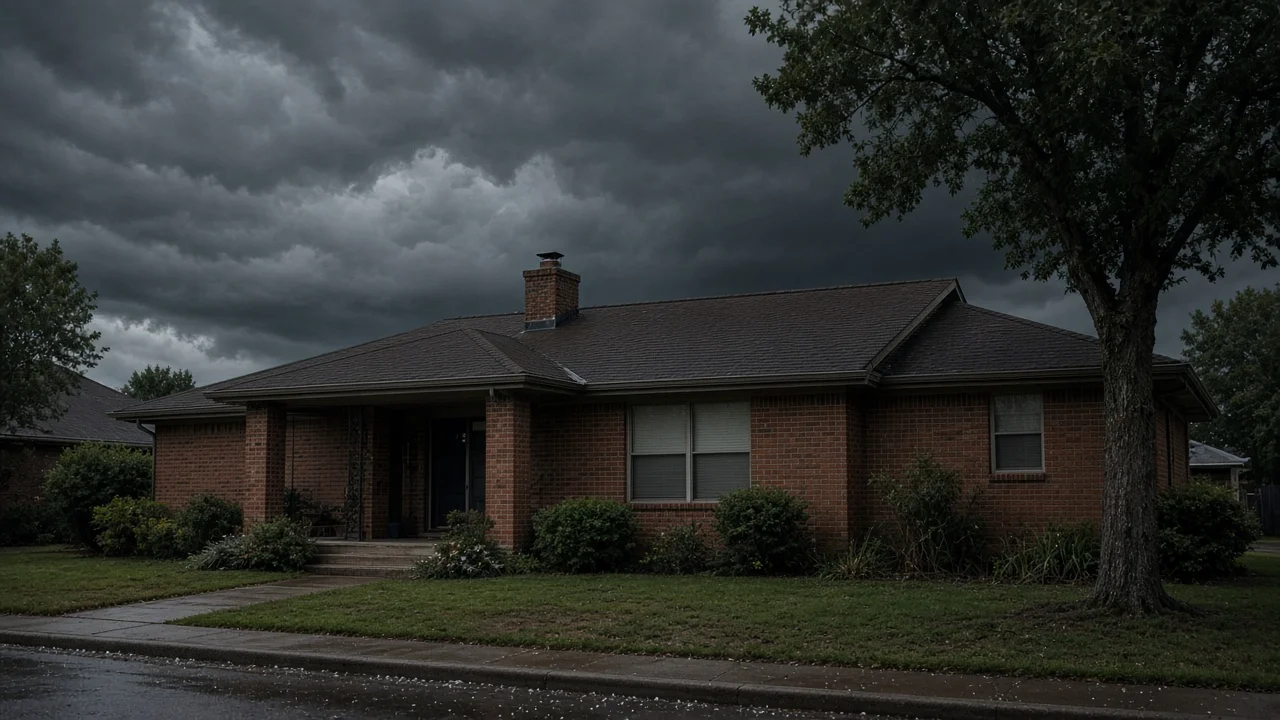
The Texas premium problem in one paragraph
Texas homeowners pay some of the highest average premiums in the nation according to data compiled by the National Association of Insurance Commissioners and the Insurance Information Institute. Landlord dwelling-fire policies follow the same loss experience with a surcharge for tenant occupancy. The three drivers are hail frequency across the I-35 corridor and the Panhandle, Gulf hurricane and flood exposure from Beaumont to Brownsville, and a reinsurance market that has repriced catastrophe risk upward since 2022. Add brisk home-price appreciation that raised replacement costs, and the result is a state where the insurance quote deserves as much scrutiny as the rent comp.
Planning ranges by Texas market
Our calculator uses a statewide illustrative band of $400 to $720 per $100,000 of replacement cost per year for a tenant-occupied single-family rental on a DP-3 form. Within that band, markets separate sharply:
| Market | Dominant peril | Where the quote tends to land | Extra policies commonly needed |
|---|---|---|---|
| Dallas–Fort Worth | Hail, straight-line wind | Middle to upper half of band | None; expect 1–2% wind-hail deductible |
| Houston (inland Harris, Fort Bend, Montgomery) | Hurricane wind, flood, hail | Upper half of band | Flood (NFIP or private) in many ZIP codes |
| Houston east of Hwy 146, Galveston, Brazoria | Hurricane wind, surge | Top of band with wind excluded | TWIA windstorm plus flood |
| Austin and Round Rock | Hail, wildfire on western fringe | Lower to middle of band | None typically |
| San Antonio | Hail, flash flood | Lower to middle of band | Flood near creeks and the River Walk basin |
| Corpus Christi, Rio Grande Valley coast | Hurricane wind | Top of band with wind excluded | TWIA windstorm, flood |
| El Paso, Lubbock, Amarillo | Hail, wind, dust | Lower half of band (Panhandle hail pushes it up) | None typically |
A concrete translation: a $250,000 replacement-cost rental in Round Rock might quote near $1,100 to $1,400 a year. The same dollar value in a Plano neighborhood with a 2009 roof could run $1,500 to $1,800 with a 1 percent hail deductible. On Galveston Island, the dwelling-fire policy might be $1,300 with wind excluded, then TWIA adds $2,000 to $3,500, and flood adds another $1,000 to $3,000. These are planning figures from carrier filings and investor binders, not quotes.
Hail country: Dallas–Fort Worth and the I-35 corridor
North Texas sits squarely inside the national hail core. The NOAA Storm Prediction Center logs more severe hail reports in Texas than in any other state most years, and the Dallas–Fort Worth metroplex has produced multiple billion-dollar hail events in the past decade. Carriers have adjusted in three ways that matter to a landlord:
Percentage wind-hail deductibles are now standard. Most Texas dwelling policies carry a separate wind-hail deductible of 1 or 2 percent of the dwelling limit. On a $300,000 rental in Arlington, a 2 percent deductible means the first $6,000 of a hail roof claim is yours. Price that into reserves.
Roof age controls the quote. Many carriers write replacement-cost roof coverage only on roofs under 10 to 15 years old. Past that, they shift to actual cash value, which depreciates the payout, or they decline. A 2008 three-tab roof in Garland can add 20 to 40 percent to the premium versus a 2022 impact-resistant roof on the same house.
Impact-resistant shingles earn real discounts. Class 4 impact-rated roofing qualifies for premium credits with most Texas carriers. On a rental you plan to hold for a decade, the upgrade cost at the next re-roof typically pays back through premium savings and fewer deductible events.
Fort Worth, Denton, McKinney, and Frisco behave like Dallas on insurance. Rents are strong and property taxes are high, so a $150-a-month insurance surprise matters more here than in a lower-tax state.
Houston: wind, flood, and the Highway 146 line
Harris County is the most complicated insurance territory in Texas because it straddles three risk profiles. West and north Houston — Katy, Cypress, Spring, The Woodlands — face hurricane wind at reduced intensity, hail, and flood from bayous and poor drainage. Private carriers still write wind here, but at a price. Inner-loop neighborhoods add older housing stock and higher replacement costs. East of State Highway 146 — La Porte, Seabrook, parts of Baytown — the territory falls under TWIA eligibility because private wind coverage largely disappears.
Flood is the Houston-specific issue. Hurricane Harvey in 2017 flooded tens of thousands of homes outside mapped Special Flood Hazard Areas, and lenders and carriers remember it. Practical rules for a Houston rental:
- Check the FEMA Flood Map Service Center for the official zone, then check the Harris County Flood Control District maps, because many lots in zone X have flooded.
- If the property is in zone AE or VE, the lender requires flood insurance and it enters PITIA. Budget $1,000 to $3,500 a year depending on elevation.
- If the property is in zone X, flood is optional for the lender but strongly advisable for the investor. A Preferred Risk Policy through the National Flood Insurance Program is modest in cost relative to the exposure.
- Elevation certificates matter. A slab 18 inches above base flood elevation prices very differently from one at or below it.
Fort Bend and Montgomery County suburbs offer slightly gentler wind rates than Harris County proper, which partly explains investor interest in Richmond, Rosenberg, and Conroe.
The coast: how TWIA works for a rental
The Texas Windstorm Insurance Association is the residual-market wind and hail insurer for 14 first-tier coastal counties — Aransas, Brazoria, Calhoun, Cameron, Chambers, Galveston, Jefferson, Kenedy, Kleberg, Matagorda, Nueces, Refugio, San Patricio, and Willacy — plus portions of Harris County east of Highway 146. When a private carrier will not cover wind on your rental in those areas, the policy is split:
- Dwelling-fire policy from a private carrier, with wind and hail excluded, covering fire, theft, liability, and loss of rents.
- TWIA windstorm and hail policy on the same dwelling and contents limits.
- Flood policy from the NFIP or a private flood carrier where the FEMA zone requires it, or where good sense does.
TWIA has specific requirements an investor must plan around. New construction, additions, re-roofs, and structural repairs completed after 1988 need a WPI-8 certificate of compliance from the Texas Department of Insurance showing the work meets windstorm building code. Buying a Galveston cottage with an uncertified re-roof means either obtaining a certificate retroactively through an engineer or facing a TWIA declination on the roof. TWIA coverage limits also cap residential dwelling coverage, so high-value beach houses often need excess wind coverage from the surplus-lines market.
TWIA rates have moved upward in recent years as the association rebuilt reserves after Hurricane Harvey and faced higher reinsurance costs; the board has approved residential rate increases that take effect at renewal. Expect a TWIA premium to rise faster than the inland market and plan renewal budgets accordingly. TDI’s HelpInsure comparison tool lets you check which private carriers still write in a coastal ZIP code before you default to TWIA.
Worked example: Fort Worth rental vs. League City rental on a DSCR loan
Both properties are 3-bedroom, 2-bath single-family homes purchased for $320,000 and rented for $2,500 a month. Both finance at 75 percent loan-to-value through a DSCR loan in Texas at 7.25 percent, a rate inside our 5.75% to 10.5% DSCR range, on a 30-year schedule. Texas property taxes are modeled at an estimated 2.0 percent effective rate, which is typical across many metro school districts.
| Monthly line | Fort Worth (Tarrant County) | League City (Galveston County, west of Hwy 146) |
|---|---|---|
| Principal and interest on $240,000 | $1,637 | $1,637 |
| Property tax | $533 | $533 |
| Dwelling-fire policy | $150 | $130 (wind excluded) |
| Windstorm (private or TWIA) | included | $210 |
| Flood | $0 (zone X) | $95 (zone X, elective PRP) |
| PITIA | $2,320 | $2,605 |
| Rent | $2,500 | $2,500 |
| DSCR | 1.08 | 0.96 |
The Fort Worth file qualifies, though at a thin ratio that argues for a larger down payment or a lower price. The League City file falls below 1.0 on the same rent, which means the lender either reduces leverage or requires a rate buydown. The entire gap is insurance. Rerun the numbers at your own rent and tax figures in the DSCR calculator, and use the DSCR reserves calculator to size the cash cushion a 2 percent hail deductible demands.
What Texas lenders require on the binder
A DSCR lender funding a long-term rental in Texas will ask for a DP-3 or equivalent landlord policy with replacement-cost dwelling coverage at or above the loan amount, at least six months of loss-of-rents coverage, premises liability of $300,000 or more, and a mortgagee clause naming the lender and loan number. If the property is in a Special Flood Hazard Area, a flood declarations page with the same mortgagee is required at closing. Our breakdown of rental insurance lenders require lists every field an underwriter checks.
A rehab lender funding a Texas flip through hard money lenders in Texas or fix-and-flip loans in Texas needs a builders risk or vacant dwelling policy for the construction period. Coastal rehabs face a thinner builders-risk market during hurricane season, and TWIA will not bind new policies once a storm enters the Gulf. Submit the fix-and-flip insurance request form when you go under contract, not the week before closing.
Texas landlord law in brief, and why it touches insurance
Texas is widely considered a landlord-friendly state. The Texas Property Code sets out a relatively quick eviction process through justice courts, state law preempts local rent control, and 2025 legislation tightened procedures for removing unauthorized occupants, a response to high-profile squatter cases in Houston and Dallas. Verify current rules with the Texas Property Code and the Texas Department of Insurance consumer resources since statutes change.
The insurance connection is vacancy. A unit sitting empty during an eviction or a squatter removal can exceed the 30- to 60-day vacancy limit in a standard landlord policy, which suspends coverage for vandalism, theft, and sometimes water damage. If a Texas unit will be vacant longer than your policy allows, request a vacancy permit endorsement or a vacant-dwelling policy, and keep loss-of-rents coverage active so the lender’s PITIA remains supported.
Ways to cut landlord insurance cost in Texas
- Re-roof with Class 4 impact-resistant shingles at the next cycle and send the invoice to the carrier for the discount.
- Choose the 1 percent wind-hail deductible where reserves allow; the premium difference versus a flat $2,500 deductible is often small, and the 2 percent option is a reserve trap on larger homes.
- Document roof age at purchase with a dated inspection report; carriers price unknown roofs as old roofs.
- Favor west-of-146 Houston suburbs and inland DFW over first-tier coastal counties when cash flow is the goal.
- Obtain an elevation certificate on any Houston or coastal property near a flood zone boundary.
- Shop through HelpInsure and an independent agent rather than a single captive carrier; Texas has a wide carrier spread.
- Install leak sensors and a smart water shutoff, since non-weather water claims are common on slab homes with aging PEX or copper.
- Ask about a portfolio or commercial package once you own five or more Texas doors; blanket limits and shared deductibles can lower cost per door.
- Require renters insurance in every lease to keep tenant liability off your loss runs.
- Quote before the offer. A TWIA or flood surprise during the loan process is the most common reason Texas DSCR files get repriced.
Where to verify Texas insurance facts
- Texas Department of Insurance — rate filings, WPI-8 certificates, complaint data, and consumer guides.
- Texas Windstorm Insurance Association — eligibility, coverage limits, rate history, and certificate requirements.
- HelpInsure.com — TDI’s carrier comparison tool by ZIP code.
- FEMA Flood Map Service Center and FloodSmart — flood zones and NFIP pricing.
- NOAA Storm Prediction Center — hail and severe wind climatology.
Financing the Texas rental once the quote is in hand
Texas rewards investors who know their carrying costs before they negotiate. Get the binder quote, add the property tax estimate from the appraisal district, and confirm the DSCR still works at your target leverage. Jaken Finance Group funds non-owner-occupied residential across Texas: DSCR rental loans from 5.75% to 10.5% on 30-year terms, and fix-and-flip, bridge, and new-construction loans from 8.99% to 13.5% interest-only. One Texas-specific note on our investment property HELOC — second-lien positions are not available in Texas and the acreage cap is 10 acres, so plan cash-out needs through a DSCR refinance instead.
Need coverage placed as well? Use the rental property insurance request form and the flood insurance request form, and our team will coordinate the binder with the loan file. Call (833) 264-7776 or email info@jakenfinancegroup.com with the address and your target rent, and we will show you what the premium does to the approval before you commit.