If you own or are buying a rental in Illinois, insurance is probably the line in your budget you looked at last and understood least. That is backwards. On a Chicago two-flat or a Peoria single-family rental, the landlord policy is the second-largest recurring cost after property taxes, and it is the one your lender will inspect most closely before funding. This guide covers what Illinois landlord insurance actually costs, why the state’s weather pushes premiums higher than many investors expect, what a DSCR lender needs to see on the declarations page, and how the premium flows through a real debt-service calculation.
For the national overview of coverage types, see our investment property insurance guide. To run your own numbers, use the landlord insurance cost calculator. To request a quote on a specific Illinois rental, submit the rental property insurance request or call (833) 264-7776.
Why Illinois rentals cost more to insure than the sticker suggests
Illinois does not have hurricanes or wildfires, so new investors often assume insurance will be cheap. Carriers see it differently. The state sits in one of the most active hail corridors in the country, and the Insurance Information Institute consistently lists Illinois among the top states for hail claims by count. A spring storm that tracks across DuPage, Kane, and Cook counties can generate thousands of roof claims in a single afternoon.
The second peril is freeze. Illinois winters produce extended stretches below zero, and a rental with a tenant who turned the heat down to save money, or a vacant unit between leases, is the classic burst-pipe loss. Water damage from freeze is expensive because it ruins drywall, flooring, and often the unit below. Carriers writing Illinois dwelling policies price this in, and many now require a minimum thermostat setting or a vacancy endorsement to keep coverage active.
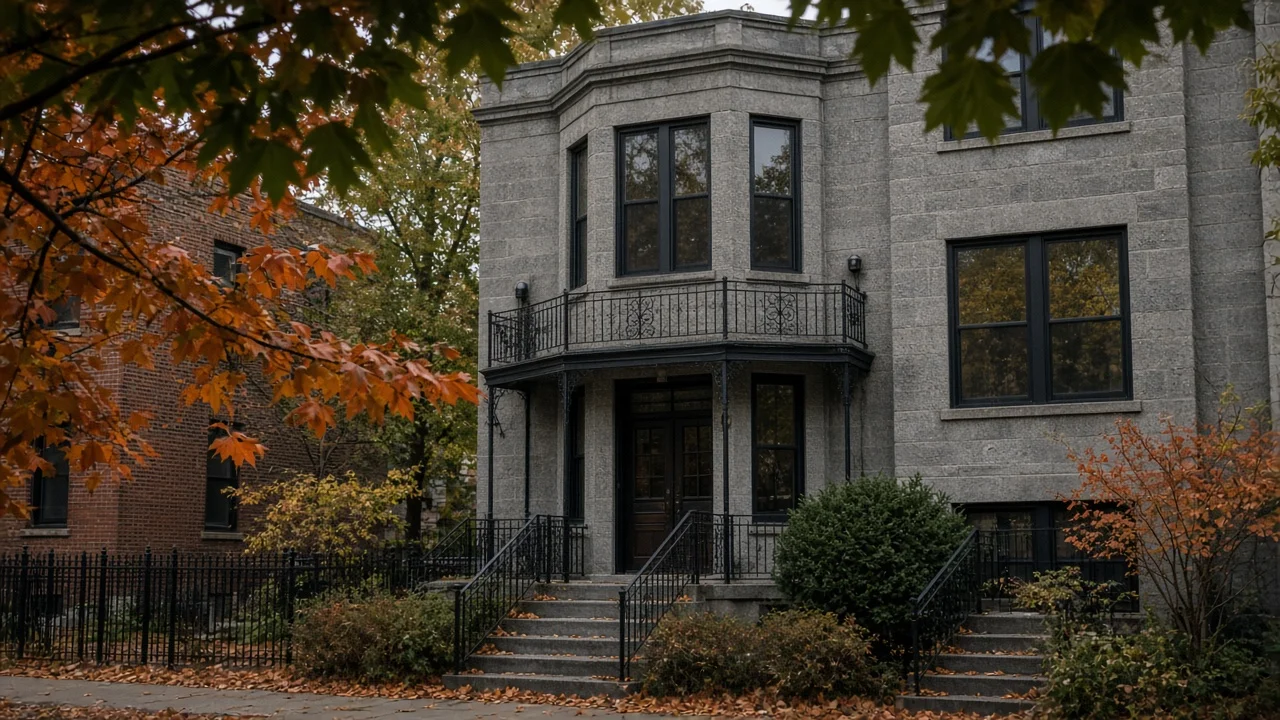
Chicago adds its own layer. A classic Chicago two-flat is typically brick, built between 1900 and 1930, with a flat or low-slope roof, galvanized plumbing, and knob-and-tube or early BX wiring unless it has been updated. Each of those features raises the replacement-cost estimate or the loss probability. Masonry construction helps on fire rating, but a 100-year-old roof deck and original electrical offset that benefit on the underwriter’s worksheet.
Finally, Illinois liability exposure matters. Tenant and guest injury claims are a real cost driver in dense urban rentals with exterior stairs, shared gangways, and winter ice. Most carriers quote $300,000 or $500,000 in liability on a landlord policy, and lenders usually accept either, but the premium difference is small enough that $500,000 is the better buy on a two-flat.
Typical Illinois landlord insurance premium ranges
Landlord insurance is written on a dwelling fire form, most commonly DP-3, rather than a homeowners HO-3. The Insurance Information Institute notes that landlord policies generally cost about 15 to 25 percent more than a comparable homeowners policy because of the added liability, loss-of-rent coverage, and tenant-occupied risk.
The NAIC Dwelling Fire, Homeowners Owner-Occupied, and Homeowners Tenant and Condominium/Cooperative Unit Owner’s Insurance Report publishes state-level average premiums and exposure data for dwelling fire policies, which is the closest public benchmark for landlord coverage. Combining that data with current Illinois quotes we see on investor files, here is what the market looks like:
| Property type | Location | Typical annual premium | What moves it |
|---|---|---|---|
| Single-family rental, newer roof | Downstate (Springfield, Peoria, Bloomington) | $1,200 to $2,100 | Roof age, deductible, claims history |
| Single-family rental, 1950s to 1970s | Suburban Cook, DuPage, Will | $1,600 to $3,000 | Hail exposure, updated electrical, wind deductible |
| Chicago two-flat, brick, updated systems | Chicago neighborhoods | $2,200 to $3,600 | Two units, flat roof, liability limit |
| Chicago two-flat, original systems | Chicago neighborhoods | $3,000 to $4,800 | Knob-and-tube, galvanized plumbing, vacancy |
| Three-flat or four-unit | Chicago, Evanston, Oak Park | $3,500 to $6,500 | Unit count, sprinklers, ordinance-or-law coverage |
These ranges assume replacement-cost coverage, a $2,500 to $5,000 all-peril deductible, and a clean three-year loss history. A percentage wind-and-hail deductible (1 or 2 percent of dwelling coverage) can trim the premium but shifts more of a roof claim to you.
Two Illinois-specific items push quotes to the top of each range. First, carriers have tightened on roof age since 2021; a roof past 15 years may be written on actual cash value for roof claims only, which means a hail loss pays depreciated value. Second, the Illinois Department of Insurance regulates rate filings and consumer complaints, and its complaint data shows water and hail claims as the most frequent dispute categories on property policies. Read the water-damage exclusions on any Illinois quote before you bind.
Flood coverage in Illinois
Flood is excluded from every landlord policy. Illinois has significant riverine flood exposure along the Illinois, Des Plaines, Fox, and Mississippi rivers, plus urban flooding in Chicago neighborhoods with aging combined sewers. Check the property on the FEMA Flood Map Service Center before you write an offer. If the structure is in Zone A or AE, your lender will require flood insurance as a condition of closing. If it is in Zone X, flood is optional but worth pricing; a preferred-risk NFIP policy on a low-risk two-flat is often modest. Start a quote through the flood insurance request.
What an Illinois DSCR lender requires on the policy
A DSCR lender funds based on the property’s cash flow rather than your W-2 income, so the insurance file is part of the collateral review. The full checklist is in our rental property insurance lender requirements guide. The Illinois-specific version looks like this:
- Dwelling coverage at full replacement cost or at least the loan amount, whichever the lender’s guideline specifies. On a Chicago two-flat, replacement cost often exceeds purchase price because masonry rebuild costs are high; the lender will usually accept a replacement-cost estimator from the carrier.
- Named perils vs. open perils. Most lenders want DP-3 open-perils coverage. A DP-1 named-perils policy will usually be rejected.
- Loss of rents for at least 6 months, often 12. This protects the lender’s payment stream if a hail or fire loss empties the units.
- Liability of $300,000 minimum; $500,000 or $1,000,000 preferred for 2 to 4 units.
- Mortgagee clause with the lender’s exact name and loan number, plus “ISAOA/ATIMA” language.
- Deductible cap, usually the lesser of 5 percent of dwelling coverage or $10,000. A 2 percent hail deductible on a $400,000 dwelling limit is $8,000 and typically passes; confirm before binding.
- Flood if the property is in a Special Flood Hazard Area.
- Vacancy endorsement or proof of occupancy if the property will sit empty during a rehab or lease-up.
Illinois lenders also look at escrow. Federal escrow rules administered by the Consumer Financial Protection Bureau govern how servicers collect and analyze insurance escrow, and many DSCR servicers escrow both taxes and insurance by default. If you plan to pay the premium directly, say so early so the closing disclosure matches.
Pair this with DSCR loans in Illinois at 5.75% to 10.5%, and for a two-flat you are gutting before you rent it, with fix and flip loans in Illinois at 8.99% to 13.5%, which require a builder’s risk or vacant dwelling policy instead; request that through the fix and flip insurance request.
Worked example: Chicago two-flat PITIA and DSCR
Here is how the insurance premium flows through a real Illinois file. Assume a brick two-flat in a North Side neighborhood.
| Line item | Figure |
|---|---|
| Purchase price | $425,000 |
| Loan amount at 75 percent LTV | $318,750 |
| Rate (30-year fixed DSCR) | 7.25 percent |
| Monthly principal and interest | $2,175 |
| Cook County property tax (annual $8,400) | $700 per month |
| Landlord insurance (annual $2,400) | $200 per month |
| Association dues | $0 |
| Total PITIA | $3,075 per month |
Cook County taxes deserve a note. The Cook County Assessor reassesses the city on a three-year cycle, and the tax bill on a two-flat purchased from a long-time owner can jump after the sale because the prior owner’s homeowner and senior exemptions fall off. Underwriters often use the current bill, but you should model the post-sale bill. On this property, $8,400 is a realistic post-exemption figure.
Now the rent side. Unit 1 (garden plus first floor, three bedrooms) leases at $1,900; Unit 2 (second floor, two bedrooms) at $1,750. Gross monthly rent is $3,650.
DSCR = $3,650 / $3,075 = 1.19
That clears a typical 1.15 minimum with a thin cushion. Now watch what insurance does. If you bind a $3,600 annual policy instead of $2,400, the insurance line becomes $300 per month, PITIA rises to $3,175, and DSCR drops to 1.15. One quote difference moved you to the edge. Had the premium come in at $4,200, DSCR would be 1.13 and the loan might reprice or require a lower LTV. Run this yourself in the DSCR calculator before you choose a policy.
How to lower an Illinois landlord premium without weakening the lender file
- Replace or document the roof. A roof under 10 years old is the single biggest lever on an Illinois quote. Keep the invoice and permit.
- Update electrical and plumbing on a two-flat. Carriers surcharge or decline knob-and-tube and galvanized supply lines. Documented copper or PEX plus a 200-amp panel often drops the premium to the lower band.
- Raise the all-peril deductible to $5,000. The savings are real, and lenders accept it.
- Bundle with an umbrella. A $1,000,000 personal or commercial umbrella over the landlord policy is cheap relative to raising liability on each dwelling policy and satisfies lenders who want higher limits.
- Install monitored water sensors and low-temperature alarms. Several Illinois carriers credit these because freeze and water losses dominate their claims.
- Avoid vacancy gaps. Thirty to 60 days vacant triggers exclusions on most forms. If a unit will be empty during a turn, call the carrier.
- Shop at least three carriers. Illinois has a competitive dwelling fire market; quotes on the same two-flat routinely vary by 30 percent.
Illinois landlord insurance checklist before closing
- Pull the FEMA flood zone and order flood coverage if required.
- Get three DP-3 quotes with replacement-cost dwelling coverage and 12 months loss of rents.
- Confirm the liability limit meets or exceeds the lender’s minimum.
- Check the roof-coverage basis (replacement cost vs. actual cash value) and the wind-and-hail deductible.
- Add the mortgagee clause exactly as the lender provides it.
- Model the post-sale Cook County or local tax bill, not the seller’s exempt bill.
- Plug taxes and insurance into PITIA and confirm DSCR holds above the lender’s floor.
- Send the binder to the closing agent at least 5 business days before funding.
If you need a quote or want us to review a declarations page against a loan, submit the rental property insurance request or call (833) 264-7776. We review Illinois files daily and can tell you quickly whether a policy will pass.