A duplex in Durham and a duplex in Nags Head can appraise within a few thousand dollars of each other and carry insurance bills that differ by $3,000 a year. That gap is the whole story of landlord insurance cost in North Carolina. The state has two insurance markets stapled together: a calm inland market where the Triangle, the Triad, and Charlotte price like the rest of the Southeast, and a coastal market where hurricane wind, storm surge, and the Beach Plan reshape every quote.
If you are underwriting a rental here, the premium is not a rounding error. On a DSCR loan the insurance line sits inside PITIA, so every $100 a month in extra premium reduces the rent available to cover debt service. This guide lays out what North Carolina landlords actually pay, why the coast is different, how the Beach Plan works, and how to run the numbers before you lock a rate with Jaken Finance Group. For the national picture on policy types and lender requirements, start with our investment property insurance guide and the landlord insurance cost calculator.
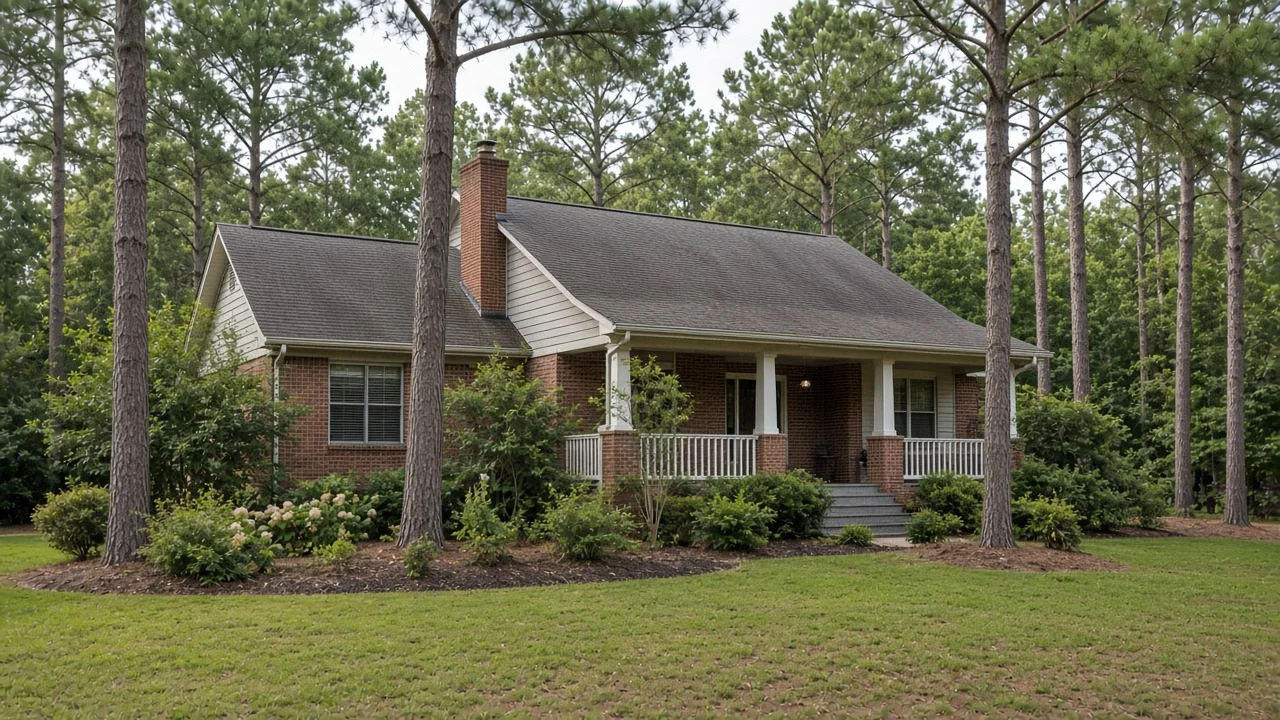
What North Carolina landlords pay: a working range
Insurance carriers do not publish landlord rates by state, so the honest answer is a range tied to replacement cost, not purchase price. Our calculator uses an illustrative inland band of $360 to $580 per $100,000 of dwelling replacement cost per year for a long-term single-family rental on a DP-3 form with a standard deductible. That band assumes a tenant in place, no short-term rental use, and a roof under 15 years old.
Translate that into real properties:
| Property | Replacement cost | Market | Estimated annual premium |
|---|---|---|---|
| 3-bed ranch, Garner (Wake County) | $240,000 | Triangle suburb | $860–$1,390 |
| 1950s bungalow, Plaza Midwood, Charlotte | $300,000 | Charlotte core | $1,080–$1,740 |
| Side-by-side duplex, Greensboro | $330,000 | Triad | $1,190–$1,910 plus 2–4 unit load |
| Elevated cottage, Carolina Beach | $320,000 | Coastal (wind excluded) | $1,150–$1,850 fire/liability plus $1,500–$3,500 Beach Plan wind |
| Oceanfront townhome, Outer Banks | $400,000 | Barrier island (VE zone) | $1,400–$2,300 base plus wind plus $1,500–$4,000 NFIP or private flood |
These are planning figures, not quotes. The inland rows sit inside the calculator band. The coastal rows stack three separate line items — a fire and liability policy, a wind policy, and often flood — which is why a beach rental can cost more to insure than to pay property tax on.
Statewide, premiums have been climbing. The North Carolina Rate Bureau, which files rates on behalf of carriers, requested a large statewide homeowners increase in 2024, and the North Carolina Department of Insurance negotiated a settlement that phased in a smaller average increase over two years, with coastal territories taking the largest share. Dwelling-fire forms used for rentals follow a separate filing, but they track the same loss trends. Expect renewal notices in 2026 to run higher than 2024, and budget a cushion of 5 to 10 percent a year rather than flat.
Triangle and Charlotte: why inland rentals price well
Raleigh, Durham, Chapel Hill, and Cary sit roughly 130 miles from the Atlantic. Hurricanes do reach the Triangle — Fran in 1996 and Florence in 2018 both caused inland damage — but by the time a storm reaches Wake County it has usually weakened to tropical-storm force. Carriers treat the territory as a convective-storm and tree-fall market, not a hurricane market. Three practical consequences follow:
- Wind is included. A standard DP-3 covers windstorm and hail with the same flat deductible as fire, typically $1,000 to $2,500. No separate wind policy, no percentage deductible.
- Flood is optional for most properties. Outside of creek-adjacent lots in zones AE, the Triangle is largely zone X. Lenders do not require flood coverage in zone X, though a Preferred Risk flood policy from the National Flood Insurance Program is cheap enough to consider on any slab-on-grade rental near a drainage path.
- Competition is healthy. Most national carriers and several regional mutuals write landlord forms in Wake, Durham, Orange, and Mecklenburg. That means independent agents can shop five or six markets, which is where the low end of the range comes from.
Charlotte behaves the same way. Mecklenburg County is an inland convective-storm territory with periodic hail, and the premium drivers there are roof age and claim history rather than geography. A 2004 roof on a Steele Creek rental will cost more to insure than a 2021 roof on an otherwise identical house in the same ZIP code, and some carriers will only write actual-cash-value roof coverage once the shingles pass 15 years.
The Triad — Greensboro, Winston-Salem, High Point — adds one wrinkle: lower replacement costs. A $200,000 rental in Greensboro produces a smaller absolute premium even at the same rate per $100,000, which is part of why Triad cash-on-cash returns compete with the Triangle despite lower rents.
The coast: wind, the Beach Plan, and percentage deductibles
East of Interstate 95 the market changes. North Carolina’s coast absorbs more hurricane landfalls than any state north of Florida, and carriers price for it. The 18 counties eligible for the Beach Plan run from Currituck in the north to Brunswick in the south, with the barrier islands designated as the “beach area” and the mainland portions as the “coastal area.”
How the Beach Plan works for a landlord
The North Carolina Insurance Underwriting Association, known as the Beach Plan or the Coastal Property Insurance Pool, is the state-created residual market for wind and hail. It exists because private carriers routinely exclude windstorm on coastal dwellings. The structure for a typical coastal rental looks like this:
- A private carrier writes the dwelling-fire policy covering fire, lightning, theft, liability, and loss of rents, with a windstorm and hail exclusion endorsement.
- The Beach Plan writes a separate wind and hail policy on the same dwelling limit.
- If the property sits in a Special Flood Hazard Area, a third policy from the NFIP or a private flood carrier covers rising water.
Each policy has its own deductible. Beach Plan wind policies carry percentage deductibles — commonly 1 to 5 percent of the dwelling limit — so a $400,000 Outer Banks rental with a 2 percent deductible leaves you holding the first $8,000 of any named-storm claim. Model that as a reserve, not an afterthought.
The Beach Plan also enforces construction and mitigation requirements. Properties that meet IBHS FORTIFIED roof standards earn wind premium credits, and Beach Plan policies in the beach area may require a wind mitigation inspection documenting roof shape, roof-deck attachment, and opening protection. For an investor buying an older cottage in Atlantic Beach or Topsail, a $150,000 roof-to-FORTIFIED upgrade is often cheaper over a ten-year hold than the premium differential it eliminates.
Flood on the coast
FEMA flood zones along the sounds and barrier islands are frequently AE or VE. Lenders require flood coverage in those zones for the lower of the loan balance or the replacement cost, and NFIP dwelling limits cap at $250,000 for the building. A $400,000 oceanfront rental therefore needs either an NFIP policy plus excess flood, or a private flood policy written to full value. Check the FEMA Flood Map Service Center by address before you write an offer; a zone change from X to AE adds $1,500 to $4,000 a year to PITIA on a coastal house.
Worked example: Durham duplex vs. Wrightsville Beach cottage on a DSCR loan
Assume both properties appraise at $420,000, both rent for $3,200 a month, and both finance at 75 percent loan-to-value through a DSCR loan in North Carolina at a 7.25 percent rate inside our 5.75% to 10.5% DSCR band on a 30-year fixed schedule.
| Line item | Durham duplex | Wrightsville Beach cottage |
|---|---|---|
| Loan amount (75% LTV) | $315,000 | $315,000 |
| Principal and interest | $2,149 | $2,149 |
| Property tax (estimated) | $350 | $280 |
| Dwelling-fire policy | $140 | $135 |
| Beach Plan wind | $0 | $220 |
| Flood (zone X vs. AE) | $0 | $210 |
| Total PITIA | $2,639 | $2,994 |
| Gross rent | $3,200 | $3,200 |
| DSCR | 1.21 | 1.07 |
Same purchase price, same rent, same rate — but the coastal cottage drops from a comfortable 1.21 DSCR to a 1.07 that many lenders will price up or decline. The $355 monthly insurance spread is the difference between a clean approval and a lower leverage offer. Run your own version in the DSCR calculator before you negotiate price, and remember that coastal short-term rentals need a different policy form entirely; see our guide to short-term rental insurance and permits.
What a North Carolina lender actually requires
Whether you are closing a 30-year DSCR loan or a 12-month rehab loan, the insurance binder has to satisfy the lender before funds move. The requirements differ by loan type.
For a DSCR rental loan you need a DP-3 or equivalent landlord form with replacement-cost dwelling coverage at or above the loan amount, loss-of-rents coverage for at least six months, premises liability of $300,000 or more, and a mortgagee clause naming the lender. If the property is in a flood zone, the flood declarations page must show the same mortgagee. Our post on rental insurance lenders require walks through each line.
For a fix-and-flip or bridge loan you need a builders risk or vacant-dwelling policy for the construction period, because a standard landlord form excludes vacancy beyond 30 to 60 days. Coastal rehab projects face a narrower carrier pool; several builders-risk markets will not write in Beach Plan counties during hurricane season (June through November). Line up the policy before you go under contract with hard money lenders in North Carolina, and request a quote through our fix-and-flip insurance request form early.
For any loan in a Special Flood Hazard Area federal rules require flood coverage, and private lenders follow the same practice. Submit the flood insurance request form at the same time as your purchase contract so the binder is ready at closing.
Twelve ways to lower landlord insurance cost in North Carolina
- Buy inland when the cash flow math is close. A Triangle or Charlotte rental avoids the Beach Plan entirely, and the premium savings often outweigh modest rent differences.
- Replace a 15-year-old roof before you refinance. Carriers price roof age aggressively statewide; a new architectural shingle roof can move a quote from the top of the band to the middle.
- Pursue a FORTIFIED Roof designation on coastal properties. The Beach Plan and several private carriers offer meaningful wind credits for documented IBHS standards.
- Raise the all-perils deductible to $2,500 or $5,000. On a $300,000 rental the premium savings usually cover the extra retained risk within three to four years.
- Choose a 2 percent rather than 5 percent wind deductible only if reserves support it. The cheaper policy is a trap if you cannot fund a $20,000 deductible after a storm.
- Get an elevation certificate on coastal flood-zone properties. A certificate showing the lowest floor above base flood elevation can cut NFIP premiums significantly.
- Bundle multiple rentals on one carrier or one commercial package. Portfolios of five or more doors can qualify for a commercial property program with better rates than stacked DP-3 policies.
- Require renters insurance in every lease. It does not lower your premium directly, but it shifts tenant-caused liability claims away from your loss history.
- Install water-leak sensors and automatic shutoff valves. Non-weather water damage is the most frequent landlord claim in inland North Carolina.
- Document tree maintenance. Tree-fall is the dominant wind claim in the Triangle and Triad; a trimmed canopy and dated photos help at renewal.
- Ask for a loss-run review before switching carriers. One small claim on a prior-owner record can follow the address; a clean three-year loss run supports better pricing.
- Quote before contract, not before closing. Coastal binders can take two weeks, and a late surprise on the wind premium can break a DSCR approval.
Market-by-market notes
Raleigh, Durham, Cary, Chapel Hill. The lowest premiums in the state for comparable construction. Watch for slab foundations near Crabtree Creek and Walnut Creek that fall into zone AE despite inland location.
Charlotte and Mecklenburg. Comparable to the Triangle. Hail frequency is slightly higher, and some carriers apply a wind-hail deductible of 1 percent on roofs past 15 years.
Greensboro, Winston-Salem, High Point. Lower replacement costs keep absolute premiums down. Older housing stock means more knob-and-tube or galvanized plumbing exclusions; plan rehab budgets accordingly.
Wilmington, Leland, Southport. Mainland coastal-area territory. Many standard carriers still write wind here, but Beach Plan placement becomes likely for properties within a mile of the water or with older roofs.
Outer Banks, Topsail, Emerald Isle. Beach-area territory. Assume Beach Plan wind, a separate flood policy, and percentage deductibles. Short-term rental use requires a commercial or STR-specific form.
Asheville and the mountains. Low wind and hurricane risk, but the 2024 flooding from Hurricane Helene reset how carriers view mountain flood exposure. Verify the flood zone on any creek-side property in Buncombe, Henderson, or Watauga counties.
Where to verify and shop
- North Carolina Department of Insurance — rate filings, consumer complaint data, and the Rate Bureau settlement history.
- North Carolina Insurance Underwriting Association — Beach Plan eligibility, coverage limits, and mitigation credits.
- FEMA Flood Map Service Center — flood zone lookup by address.
- Insurance Information Institute — national landlord and dwelling-fire cost context.
- IBHS FORTIFIED Home — roof and structure standards that earn wind credits.
Financing a North Carolina rental once the premium is known
Insurance cost belongs in your offer price, not in your closing-week surprises. Once you have a real binder number, plug it into PITIA and confirm the DSCR still clears 1.0 at your target leverage. Jaken Finance Group lends on non-owner-occupied residential across North Carolina — DSCR rental loans from 5.75% to 10.5%, and fix-and-flip or bridge loans from 8.99% to 13.5% interest-only for rehab and stabilization. We also connect borrowers with landlord, builders risk, and flood coverage through the rental property insurance request form.
Compare the Triangle, Charlotte, and coastal scenarios in the landlord insurance cost calculator, then call (833) 264-7776 or email info@jakenfinancegroup.com with the address and the binder quote. We will size the loan around the real carrying cost rather than a guess.