Your Florida rental does not have an insurance line. It has three: the wind-inclusive dwelling policy, the hurricane deductible you must fund yourself, and flood coverage the federal program sells separately. Price all three before you write an offer, because landlord insurance cost in Florida is the single expense most likely to break a DSCR refinance.
This page explains what moves a Florida landlord premium, how Citizens fits into an investor’s plan, what a wind mitigation inspection can save, and how the finished number flows into the DSCR loans Florida ratio. Jaken Finance Group’s investment property insurance program can quote the policy while the loan is in underwriting.
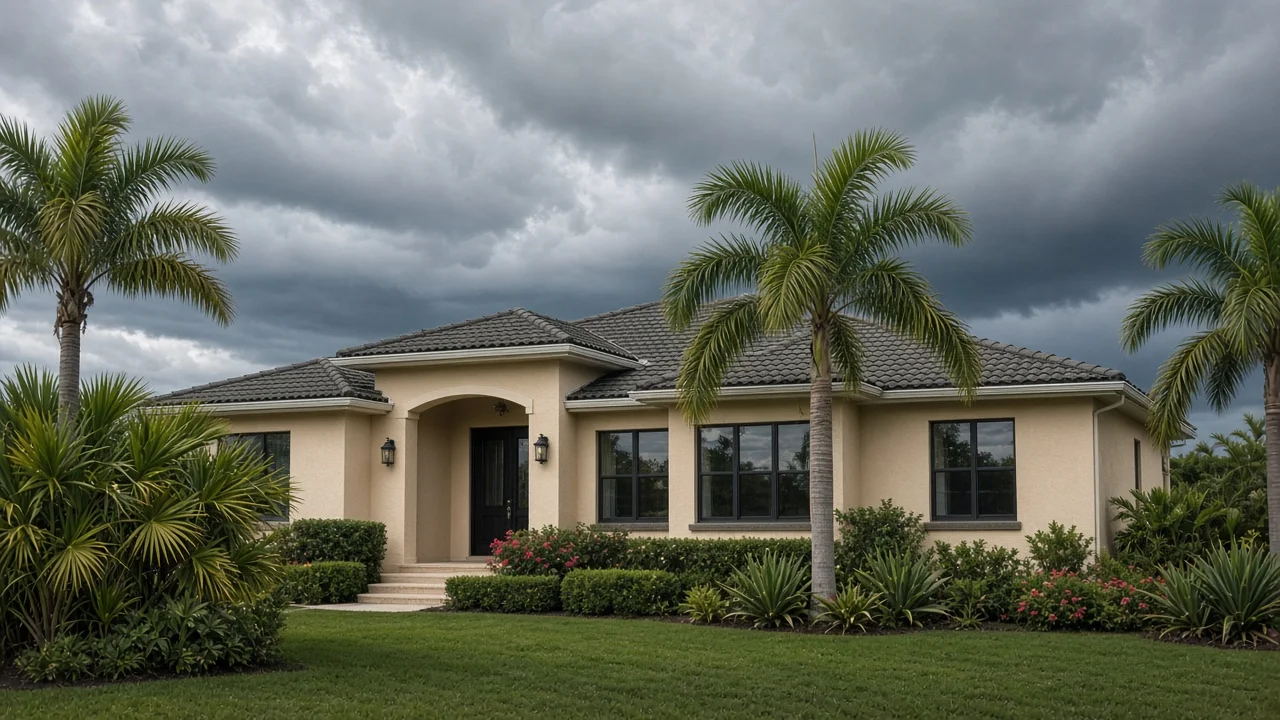
What a Florida landlord policy actually covers
A landlord policy in Florida is usually written on a dwelling fire form, often called a DP-3. It covers the structure, loss of rents, and premises liability. It does not cover the tenant’s belongings. It also does not cover flood, which is a separate policy.
Lenders care about three things on the declarations page:
- Replacement cost on the dwelling, not actual cash value.
- Loss of rents, typically 12 months of lease income.
- A hurricane deductible low enough that a storm does not wipe out your equity.
The rental property insurance lender requirements post walks through the declarations page line by line. Read it before you accept the cheapest quote.
The three cost drivers you cannot change
Florida premiums rest on reinsurance. Carriers buy catastrophe cover in the global market every June, and the price they pay flows into every landlord policy in the state. The Florida Office of Insurance Regulation publishes rate filings and market conduct data if you want to see how those costs reach the consumer.
Three property facts set the baseline before any discount applies:
- Distance to the coast. A house a mile from the Gulf and a house twenty miles inland in Polk County can carry very different wind rates on the same construction.
- Year built and building code. Homes permitted after the 2002 Florida Building Code carry better wind ratings by default.
- Roof age and shape. Carriers treat the roof as the single biggest claim driver. A hip roof under ten years old is the best case. A 20-year-old gable shingle roof may not be insurable in the private market at all.
Florida law now limits a carrier’s ability to refuse coverage solely because a roof is under 15 years old. A roof older than that may still need an inspection showing five or more years of remaining life.
Illustrative premium bands for Florida rentals
These bands are planning figures from investor quotes, not published state averages. Use them to model, then pull real quotes.
| Property profile | Annual dwelling policy | Monthly in the DSCR stack |
|---|---|---|
| 2010s block SFR, inland Orlando or Lakeland, hip roof | $2,400–$4,200 | $200–$350 |
| 1980s block SFR, Tampa Bay suburbs, roof under 10 years | $3,600–$6,500 | $300–$540 |
| 1960s frame or block SFR, coastal Pinellas or Broward | $6,000–$11,000 | $500–$920 |
| Coastal 2–4 unit, Miami-Dade, older roof | $9,000–$18,000 | $750–$1,500 |
Add flood where required. Add a wind deductible reserve on every row. The landlord insurance cost calculator lets you change roof age, coast distance, and deductible and watch the monthly number move.
For a metro-by-metro view of how the premium hits the ratio, the Florida DSCR insurance impact guide compares Miami-Dade, Tampa Bay, and inland files.
Citizens: what it is and when an investor lands there
Citizens Property Insurance Corporation is the state-created insurer of last resort. It writes non-owner-occupied dwellings, so a landlord can use it. Many coastal investors end up there when private carriers decline an older roof or a barrier-island address.
Four things to know before you plan on Citizens:
- Eligibility is conditional. If a private carrier offers comparable coverage within 20 percent of the Citizens premium, you generally cannot stay with Citizens. Expect takeout offers during depopulation rounds.
- Assessments are real. After a severe storm season, Citizens can levy a policyholder surcharge on its own accounts and emergency assessments on policies across the state. Model a bad year, not an average year.
- Flood is becoming mandatory. Citizens is phasing in a flood insurance requirement for its policyholders. Depending on dwelling value and zone, you may need an NFIP or private flood policy to keep the Citizens wind policy.
- Coverage limits are capped. High-value coastal rentals may exceed the Citizens dwelling cap and need a surplus lines carrier instead.
The Florida insurance-driven market selection post explains why some operators now pick submarkets based on whether a private carrier will write the house at all.
Wind mitigation: the one discount worth chasing
Florida Statute 627.0629 requires insurers to offer premium credits for construction features that reduce hurricane loss. A licensed inspector documents them on the Uniform Mitigation Verification Inspection Form, OIR-B1-1802. The inspection usually costs a few hundred dollars and stays valid for five years.
The features that move the quote the most:
| Feature | What the inspector looks for |
|---|---|
| Roof shape | Hip roof with no more than 10 percent non-hip perimeter |
| Roof-to-wall attachment | Single wraps, double wraps, or clips rather than toe nails |
| Roof deck attachment | 8d nails at 6 inch spacing or better |
| Secondary water resistance | Self-adhered underlayment or foam adhesive at deck seams |
| Opening protection | Impact-rated windows and doors, or code-approved shutters on every opening |
| Roof covering | Permitted and installed to the 2001 or later code |
On a fix-and-flip, the rehab budget is the moment to add these. Straps and a peel-and-stick underlayment cost little when the roof is already off. Price the upgrade against the annual premium saving over the hold period, then fold it into the fix and flip loans Florida scope.
The state’s My Safe Florida Home grant program funds mitigation upgrades, but it is limited to owner-occupied homesteads. Investors pay for their own mitigation and recover it through the premium.
Flood insurance: separate policy, separate math
Wind policies exclude flood. Storm surge is flood. Rain that pools and enters the house is flood. In Florida that distinction decides who pays after a hurricane.
When the lender requires it: any building touching a FEMA Special Flood Hazard Area, zones starting with A or V. Check the address on the FEMA Flood Map Service Center before you go under contract.
What the federal program covers: the National Flood Insurance Program caps residential building coverage at $250,000 and contents at $100,000. Buildings with five or more units are rated as non-residential with a $500,000 building cap. Pricing follows Risk Rating 2.0, which uses the specific property’s distance to water, elevation, and rebuild cost rather than the old zone-only tables.
Timing: a new NFIP policy generally carries a 30-day waiting period. The waiting period is waived when the policy is bought in connection with a loan closing. Order it early anyway. A flood insurance request through Jaken Finance Group insurance desk starts that clock while the appraisal is still out.
Private flood: for a $600,000 coastal duplex, a $250,000 federal cap leaves a gap. Private flood carriers and excess flood layers fill it. Lenders accept private flood when the policy meets the federal equivalency standard.
How the premium changes a DSCR loan
Underwriters subtract taxes, insurance, and HOA dues from rent before they compute the ratio. A Florida premium is often the largest of those three. Here is the same house, two insurance outcomes.
The house: 3/2 block SFR in Brandon, built 1996, bought for $335,000, renovated, and leased at $2,450 a month. Appraised at $390,000.
Scenario A — wind mitigation documented, roof replaced in rehab:
- Annual premium $3,900, or $325 a month
- Taxes $420 a month, no HOA
- Rent $2,450, less 5 percent vacancy, equals $2,328 effective
- Less insurance, taxes, 8 percent management, and $120 maintenance leaves about $1,267 of monthly net operating income
Scenario B — same house, old roof kept, no mitigation form:
- Annual premium $7,800, or $650 a month
- Everything else unchanged
- Monthly net operating income falls to about $942
At a 7.5 percent 30-year rate, a $270,000 DSCR loan carries a payment near $1,888. Neither scenario clears 1.0 at that loan size, which is the point. The ratio forces the loan down. In Scenario A, a 1.0 ratio supports roughly $181,000 of debt. In Scenario B it supports roughly $135,000. The $3,900 premium difference moved the proceeds by about $46,000.
Run your own file through the DSCR calculator with the real quote in the insurance field. Do not use a national average. Jaken Finance Group DSCR program prices from 5.75%–10.5% and allows up to 85 percent of purchase on qualified files, but the ratio decides how much of that ceiling you can reach.
The hurricane deductible is a reserve requirement
A Florida policy carries two deductibles: an all-other-perils deductible, often $2,500, and a hurricane deductible stated as a percentage of the dwelling limit. The options are usually 2, 5, or 10 percent. The hurricane deductible applies once per calendar year across named storms.
On $350,000 of dwelling coverage:
- 2 percent deductible: $7,000 out of pocket
- 5 percent deductible: $17,500 out of pocket
- 10 percent deductible: $35,000 out of pocket
A higher deductible lowers the premium, sometimes by 15 to 25 percent. It also means you need that cash on hand the morning after landfall. Many lenders cap the acceptable hurricane deductible at 5 percent. Confirm the cap before you buy the cheaper policy.
Builder’s risk and vacancy during the rehab
A standard landlord policy will not respond to a loss on a vacant house under construction. During a flip you need a builder’s risk or vacant dwelling policy with wind included. Coastal builder’s risk is priced per month and can rival the finished landlord premium.
Order it before the hard money closes. The fix-and-flip insurance request form collects the scope, the timeline, and the lender’s mortgagee clause so the binder arrives with the closing package. Switch to the landlord form the day the lease is signed. A gap between the two policies is a gap in coverage.
Where Florida sits against other states
The Insurance Information Institute tracks homeowners and dwelling premiums by state, and Florida has ranked at or near the top for years. The NAIC’s dwelling fire and homeowners report breaks out average premiums by policy form, which is the right comparison for landlord coverage rather than owner-occupied homeowners data.
Two points keep the comparison honest. First, the statewide average blends inland Ocala with coastal Naples, and your property is one or the other. Second, Florida’s 2022 and 2023 legal reforms removed one-way attorney fees and restricted assignment of benefits. Several carriers have re-entered the market since, and some rate filings have flattened. Pull quotes this year rather than relying on a figure from two years ago.
A pre-contract insurance checklist for Florida rentals
- Pull the FEMA flood zone and the base flood elevation for the parcel.
- Ask the seller for the current wind mitigation form and four-point inspection.
- Confirm the roof permit date in the county permitting portal.
- Get a written landlord quote with a 2 percent hurricane deductible and 12 months of loss of rents.
- Get a flood quote even if the zone is X.
- Put both monthly numbers into the DSCR model and recompute the loan size.
- Budget the hurricane deductible as a cash reserve on top of lender reserves.
If step 6 drops the ratio below 1.0, you have learned that before closing rather than at refinance.
Get the quote and the loan in one conversation
Jaken Finance Group lends in all 50 states and underwrites the property and exit plan, not W-2 income. The investment property insurance request form sends the address, roof year, and mitigation details to an insurance partner who writes Florida landlord policies, so the quote and the DSCR file move together.
Call (833) 264-7776, pre-qualify, or start with the landlord insurance cost calculator and bring the result to the loan conversation.
Pre-Qualify for Florida DSCR · Florida DSCR insurance impact guide · Fix and flip loans Florida · (833) 264-7776
Rates, terms and conditions offered only to qualified borrowers and are subject to change at any time without notice. All loans are subject to full underwriting. Jaken Finance Group only finances non-owner occupied investment properties. Insurance premiums shown are illustrations for planning, not quotes.