Georgia is where a lot of Southeast investors first learn that the landlord policy is not a rounding error. The premium on an intown Atlanta bungalow is modest next to Florida, but the roof clauses buried in that policy decide whether a hailstorm costs you $2,500 or $25,000. Landlord insurance cost in Georgia is as much about what the policy excludes as what it charges.
This page covers what a Georgia landlord policy costs on the properties investors actually buy, how hail and roof schedules work, what changes on the coast, and how the premium flows into a DSCR loans Georgia ratio. Jaken Finance Group’s investment property insurance program quotes the policy alongside the loan.
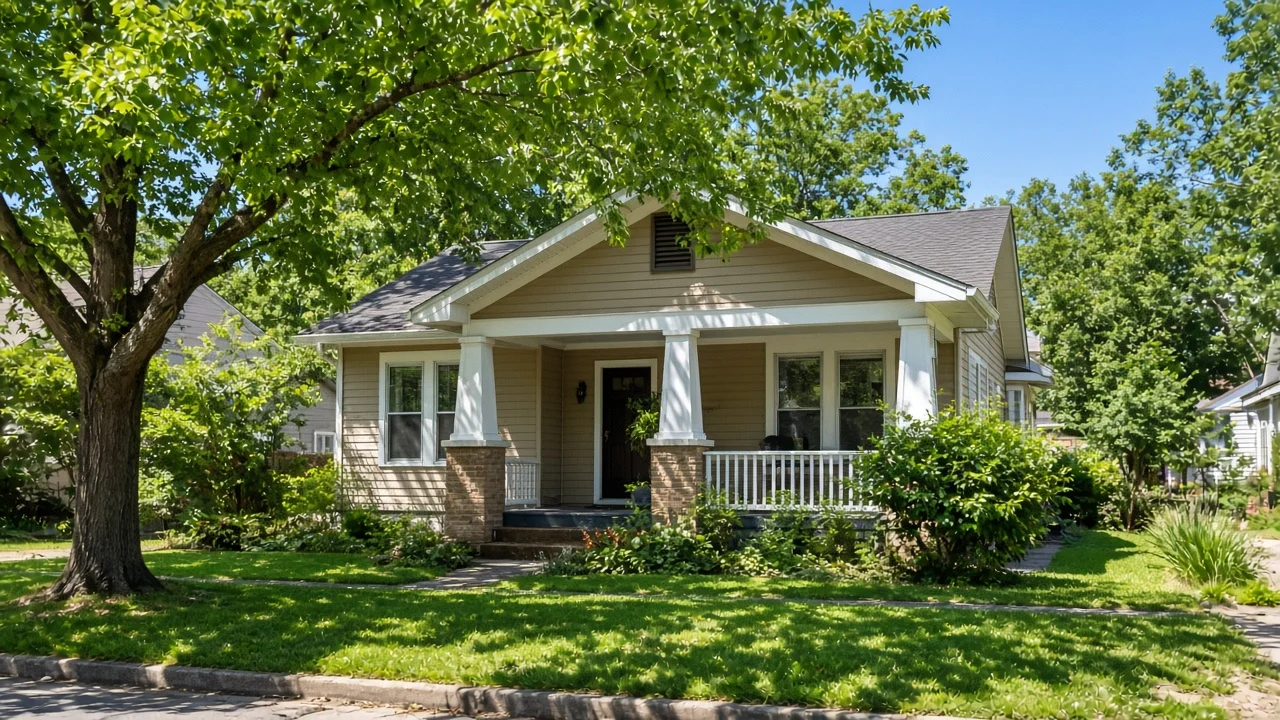
The property most Georgia investors are insuring
The core BRRRR lane in metro Atlanta is specific: 1920s to 1950s bungalows and small duplexes in West End, Adair Park, Capitol View, Pittsburgh, and the Eastside BeltLine neighborhoods. Those houses share a profile that insurers price carefully.
- Frame construction on pier or crawlspace foundations, sometimes with brick veneer.
- Older electrical and plumbing unless the rehab replaced them.
- Roofs that have been replaced two or three times, often with a new layer over an old one.
- Mature tree canopy that drops limbs in every summer storm.
A completed rehab fixes most of that. A finished bungalow with a new roof, updated panel, PEX supply lines, and permitted work is a clean file. The same house mid-rehab is a different policy entirely, covered later on this page.
Suburban Gwinnett, Cobb, and Henry County stock built in the 1990s and 2000s insures more cheaply per dollar of coverage. Newer code, brick or fiber cement siding, and HOA-maintained drainage all help. The trade is thinner rent-to-price, which is why the ratio matters more there.
Illustrative premium bands for Georgia rentals
These are planning bands drawn from investor quotes, not published averages from the state. Use them to model, then pull real quotes on the address.
| Property profile | Annual dwelling policy | Monthly in the DSCR stack |
|---|---|---|
| Renovated 1920s bungalow, West End or Adair Park, new roof | $1,800–$3,200 | $150–$270 |
| Same bungalow, 15-year-old roof, no electrical update | $2,800–$4,800 | $235–$400 |
| 2000s brick SFR, Gwinnett or Henry County, HOA | $1,400–$2,400 | $115–$200 |
| 1940s intown duplex, two leases, replacement cost | $3,000–$5,500 | $250–$460 |
| 1950s frame SFR, Savannah historic district, wind and flood | $4,500–$8,500 | $375–$710 |
The landlord insurance cost calculator lets you change roof age, construction, and county and see the monthly number move. Put the result in your DSCR model, not a national average.
Hail and the roof clauses that matter more than the premium
North Georgia sits in a reliable hail corridor. Spring storms produce quarter- to golf-ball-sized hail across Fulton, Cobb, Gwinnett, and Cherokee most years, and straight-line wind follows the same fronts. Carriers have adjusted their forms in three ways that landlords need to read before binding.
1. Roof age limits. Many carriers will not write a dwelling fire policy on a roof older than 15 to 20 years without an inspection. Some will not write it at all. A re-roof during the rehab removes the problem for a decade.
2. Actual cash value roof schedules. Instead of paying replacement cost on the roof, the policy pays a depreciated amount that drops each year. On a 12-year-old architectural shingle roof, that can mean the carrier pays 40 to 60 percent of the replacement bill. Read the endorsement. Ask for a replacement cost roof if the age qualifies, even if the premium is higher.
3. Cosmetic damage exclusions. Hail that dents a metal roof or marks shingles without creating a leak may be excluded as cosmetic. On a hold you plan to sell in five years, a cosmetic exclusion can cost you at the inspection table.
The Georgia Office of the Commissioner of Insurance and Safety Fire publishes consumer guidance on roof endorsements and handles complaints when a claim is denied under one. Keep your roof invoice, permit, and photos in a file the day the rehab closes.
Wind and hail deductibles
Georgia landlord policies increasingly split the deductible. The all-perils figure is a flat dollar amount, often $1,000 to $2,500. Wind and hail carries a separate percentage of the dwelling limit, typically 1 or 2 percent.
On $300,000 of dwelling coverage:
- 1 percent wind and hail deductible: $3,000 per claim
- 2 percent wind and hail deductible: $6,000 per claim
A higher percentage lowers the premium. It also means a hailstorm that shreds a $14,000 roof nets you $8,000 after a 2 percent deductible, and less if the roof is on an actual cash value schedule. Most lenders accept a 2 percent wind and hail deductible on a Georgia rental. Confirm before you bind.
What changes on the Georgia coast
Chatham, Bryan, Liberty, McIntosh, Glynn, and Camden counties carry named-storm exposure that inland Georgia does not. A Savannah rental, especially in the historic district or on Tybee Island, moves into a different pricing tier.
- Named-storm deductibles of 2 to 5 percent of the dwelling limit are common.
- Flood is often required. Large parts of the Savannah peninsula and the islands sit in FEMA Special Flood Hazard Areas.
- The Georgia Underwriting Association is the state’s residual market for property that private carriers decline. Investors can land there on older coastal frame houses. Expect higher premiums and tighter coverage than a standard carrier.
- Short-term rental use changes the form. A long-term tenant on a 12-month lease and a nightly rental on the same block are insured differently, and the DSCR lender needs the long-term policy.
The coastal premium is the main reason the Savannah rows on Georgia DSCR comparison tables show a tighter ratio at the same rent. Model wind and flood before you compare a Savannah cap rate to an Atlanta one.
Flood insurance in Georgia: more common than buyers assume
Intown Atlanta has creeks. Peachtree Creek, Nancy Creek, Proctor Creek, Utoy Creek, and the South River all carry mapped floodplains through residential blocks. A bungalow on a low lot near one of them can sit in an A zone even though it is 250 miles from the ocean.
Check the parcel on the FEMA Flood Map Service Center before you go under contract. If any part of the building touches an A or V zone, a federally regulated or federally backed loan will require flood coverage at closing. Most DSCR lenders apply the same rule.
The National Flood Insurance Program caps residential building coverage at $250,000. Pricing under Risk Rating 2.0 reflects the parcel’s elevation, distance to water, and rebuild cost rather than the zone alone, so two houses on the same street can quote differently. A new policy generally has a 30-day waiting period, waived when purchased in connection with a loan closing. Start the flood insurance request early so the binder is ready with the closing package.
Outside the mapped zones, a preferred-risk flood policy on an intown lot is often inexpensive. It covers the basement water intrusion a landlord policy excludes, which is a real risk on a crawlspace bungalow in a Georgia summer.
How the premium flows into a Georgia DSCR loan
Underwriters subtract taxes, insurance, and HOA dues from rent before they compute the ratio. On an intown Atlanta file the insurance line is smaller than in Florida, but it still moves the loan size. Here is the same bungalow with two insurance outcomes.
The house: 3/2 bungalow in Adair Park, 1,350 square feet, bought for $225,000, renovated for $70,000, appraised at $335,000, and leased at $2,050 a month.
Scenario A — new roof in the rehab, replacement cost roof endorsement:
- Annual premium $2,400, or $200 a month
- Taxes $310 a month, no HOA
- Rent $2,050, less 5 percent vacancy, equals about $1,948 effective
- Less insurance, taxes, 8 percent management at $164, and $120 maintenance leaves about $1,154 of monthly net operating income
Scenario B — old roof kept, actual cash value schedule, 2 percent wind and hail deductible:
- Annual premium $3,900, or $325 a month
- Everything else unchanged
- Monthly net operating income falls to about $1,029
At a 7.5 percent 30-year rate, a 1.0 ratio supports roughly $165,000 of debt in Scenario A and roughly $147,000 in Scenario B. The $1,500 annual premium difference moved loan proceeds by about $18,000. The old roof also carries the actual cash value schedule, so the first hailstorm costs more out of pocket on top of the smaller loan.
Run your file through the DSCR calculator with the real quote. The Jaken Finance Group DSCR program prices from 5.75%–10.5% and allows up to 85 percent of purchase on qualified files, but the ratio sets how much of that ceiling you can reach on a given rent.
Builder’s risk during the rehab
A landlord policy does not cover a vacant house with the roof off and the electrical panel on the porch. During a flip you need a builder’s risk or vacant dwelling policy. In Georgia it is usually priced per month on the completed value, and carriers want to know the scope, the contractor, and whether the house is secured.
Order it before the hard money funds. The fix-and-flip insurance request form collects the scope, timeline, and lender mortgagee clause so the binder arrives with the closing package for your fix and flip loans Georgia file. Switch to the landlord form when the lease is signed, and send the new declarations page to the DSCR lender before the refinance appraisal.
Liability, loss of rents, and what lenders check
Three coverage lines matter beyond the dwelling limit.
Liability. A $300,000 per occurrence limit is the common floor. Many Atlanta landlords carry $500,000 or add a small umbrella because tenant-injury claims on old porches and steps are frequent.
Loss of rents. Lenders want 12 months of lease income covered. If a kitchen fire takes the house offline for five months, this is the line that keeps the DSCR payment current.
Ordinance or law. Rebuilding a 1925 house to current Atlanta code after a loss costs more than the original structure. This endorsement pays the upgrade. It is cheap on a bungalow and expensive to skip.
The rental property insurance lender requirements post walks through the declarations page the underwriter reads. Send it with the lease, not after the appraisal comes back.
Where Georgia sits against other states
The Insurance Information Institute and the NAIC dwelling fire and homeowners report both place Georgia above the national median for property insurance cost, driven by hail frequency and the Atlanta metro’s share of state exposure. Georgia is still far below Florida, Louisiana, and Texas. For a landlord, the gap between Atlanta and the coast is bigger than the gap between Georgia and the national average.
A pre-contract insurance checklist for Georgia rentals
- Pull the roof permit date from the city or county permitting portal.
- Confirm the FEMA flood zone, especially near any creek.
- Get a written landlord quote with a replacement cost roof, 12 months of loss of rents, and ordinance or law coverage.
- Ask whether the quote carries a cosmetic damage exclusion.
- Choose a wind and hail deductible you can fund from reserves, then confirm the lender’s cap.
- If the rehab includes a re-roof, get a second quote based on the finished roof and use that in the DSCR model.
- For Savannah or the islands, add named-storm and flood quotes before comparing to an Atlanta deal.
Get the quote and the loan together
Jaken Finance Group lends in all 50 states and underwrites the property and exit plan, not W-2 income. The investment property insurance request form sends the address, roof year, and construction details to an insurance partner who writes Georgia landlord policies, so the quote and the loan file move on the same timeline.
Call (833) 264-7776, pre-qualify, or start with the landlord insurance cost calculator and bring the result to the loan conversation.
Pre-Qualify for Georgia DSCR · DSCR loans Georgia · Fix and flip loans Georgia · (833) 264-7776
Rates, terms and conditions offered only to qualified borrowers and are subject to change at any time without notice. All loans are subject to full underwriting. Jaken Finance Group only finances non-owner occupied investment properties. Insurance premiums shown are illustrations for planning, not quotes.