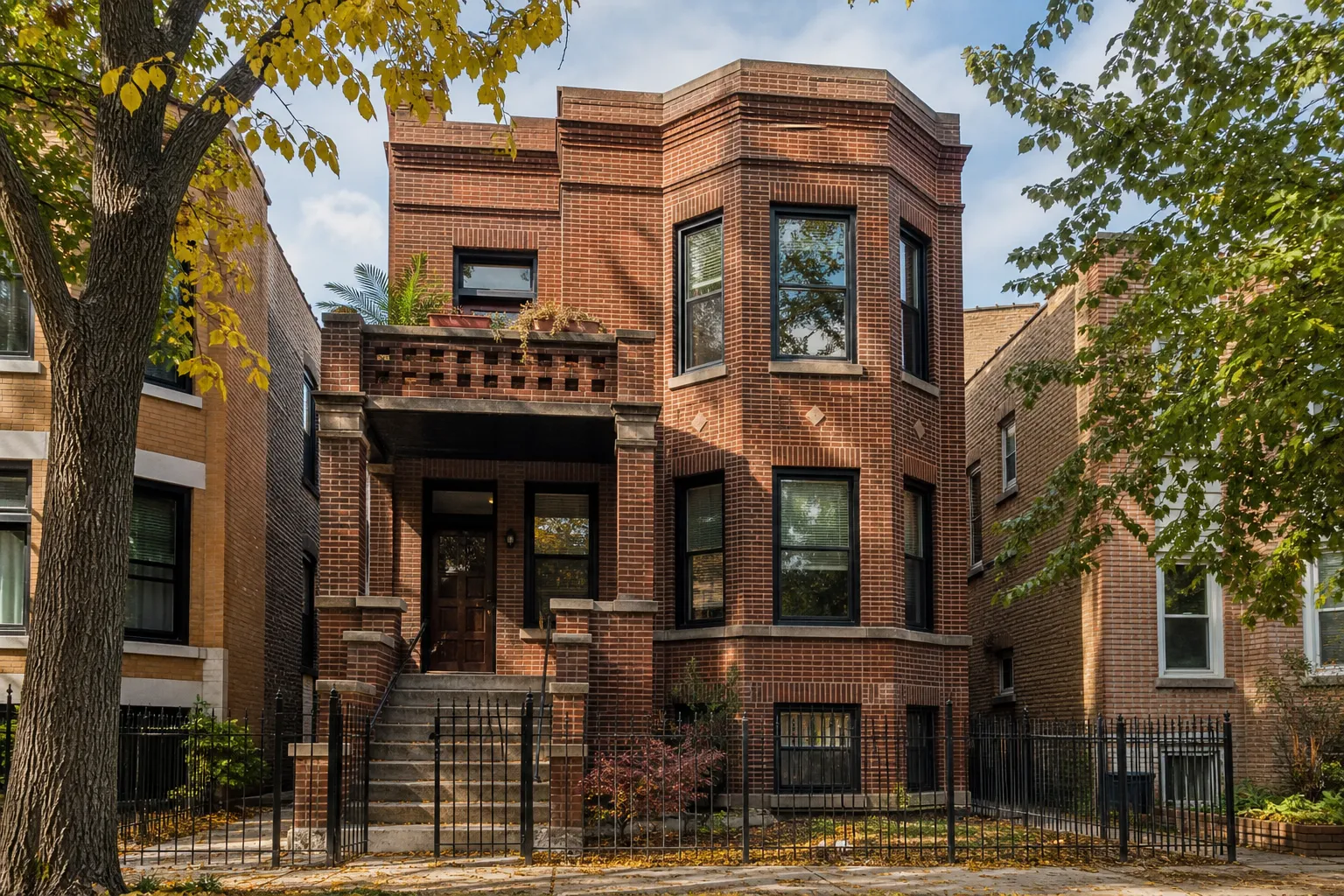
Portage Park is the heart of Chicago’s Bungalow Belt — a Northwest Side community of wide lots, brick bungalows, and classic two-flats built for the city’s working and middle class in the 1920s and 30s. Anchored by the Six Corners commercial district where Milwaukee, Irving Park, and Cicero meet, the neighborhood pairs stable owner-occupant demand with a steady supply of properties that need mechanical and cosmetic updates. Hard money loans in Portage Park exist for investors who can act on a dated bungalow or a tired two-flat before it clears the MLS at retail.
Unlike the speculative churn of some North Side markets, Portage Park rewards discipline. Buyers here are often families trading up from denser neighborhoods, and they scrutinize finish quality, school access, and parking. An investor who over-improves to Lincoln Square tastes will not recover the premium; one who executes a clean, code-correct rehab on a well-located bungalow finds a deep, motivated buyer pool.
The Portage Park investor profile
Portage Park draws a distinct sponsor mix from the trendier neighborhoods to the east:
- Bungalow rehabbers buying single-family brick bungalows for cosmetic-to-moderate updates and resale to owner-occupants.
- House-hackers acquiring two-flats to live in one unit while renting the other — a durable strategy in an owner-occupant market.
- Six Corners TOD investors targeting buildings near the redeveloping commercial core and the Blue Line at Irving Park and Jefferson Park.
- Buy-and-hold landlords who value the neighborhood’s low vacancy and stable, credit-worthy renter base over aggressive appreciation bets.
The common thread is finish-to-the-block discipline. Portage Park is not where you chase 20% rehab-year appreciation; it is where a correctly executed bungalow flip or a stabilized two-flat performs reliably because demand is real and rooted.
What Portage Park properties look like in 2026
The neighborhood’s inventory is dominated by 1920s–30s brick bungalows and solid masonry two-flats, many with original layouts, unfinished attics and basements offering expansion potential, and deferred mechanicals. The median home price sits in the mid-$430Ks, with listings pushing toward $475K for updated stock.
| Property type | 2026 buy range | Typical rehab | Notes |
|---|---|---|---|
| Brick bungalow (cosmetic+) | $380K–$450K | $45K–$90K | Kitchen, baths, refinishing, mechanicals |
| Brick bungalow (heavy / attic-basement finish) | $360K–$430K | $90K–$150K | Dormer or legal basement adds value |
| Two-flat | $400K–$525K | $70K–$140K | House-hack or dual-unit rental exit |
Rehab costs track citywide Chicago norms: roughly $75K–$150K for a full bungalow or two-flat gut including electrical, plumbing, kitchens, baths, and masonry work, with the low end reserved for cosmetic refreshes. The value-creation lever unique to the Bungalow Belt is expansion — a properly permitted attic dormer or basement finish can add livable square footage that appraises, provided you underwrite the added scope honestly.
Financing Portage Park deals with hard money
Community banks hesitate on a non-owner-occupant buyer proposing an $80K-plus rehab on a bungalow with open permits. Chicago hard money lenders underwrite the asset — purchase price, after-repair value, comps, and your exit — not a W-2.
Jaken Finance Group offers Portage Park investors:
- Up to 100% of cost on qualified files, never above 75% of after-repair value. Fund the lower figure.
- Rehab draws inside that cap, released on contractor and inspection milestones
- Interest-only pricing of 8.99%–13.5%. Fix-and-flip terms are 6–12 months. Bridge terms are 12–24 months.
- 7–10 business day closes when diligence is complete. That speed matters on estate sales and off-market bungalows.
Flip exits route through our fix and flip loans in Chicago guidelines; hold exits pivot to DSCR loans in Chicago once units are leased. For current rate and price context across the metro, see the Illinois hard money and Chicagoland rate report.
Worked example: a Six Corners-adjacent bungalow flip
A sponsor with prior Cook County rehabs acquired a $395,000 brick bungalow six blocks from Six Corners — dated kitchen and baths, original knob-and-tube in the attic, a serviceable roof, and an unfinished basement.
Rehab budget: $92,000 — full electrical, new kitchen and two baths, refinished oak floors, a permitted basement recreation room, and mechanical replacement All-in cost: $487,000 Hard money structure: 75% of the $519,000 sale is $389,250. That is the fundable balance, because it is lower than the $487,000 all-in cost. The example rate is 10.5%, inside the 8.99%–13.5% band. Hold period: 6 months, including a permit delay on the basement finish Sale price: $519,000 to an owner-occupant family Net outcome: Interest is about $3,406 a month, or $20,436 over six months. The $32,000 price gap leaves about $11,600 before a 5% commission of $25,950. Selling costs can erase the spread. This is not a mid-five-figure profit once the 75% cap and a normal commission are both in the file.
The deal worked because the sponsor finished to the block — durable, family-friendly finishes rather than luxury tile — and delivered the added basement square footage buyers on the Northwest Side actually pay for.
Portage Park-specific diligence
Before you waive inspection, pull a violations search through Chicago’s 311 system and confirm the status of any prior notices — bungalows with unpermitted attic or basement conversions are common here. Verify that any finished lower level meets ceiling-height and egress requirements before you market it as living space. Confirm parking and gangway access, which Northwest Side buyers value. If you plan to hold, underwrite to current leased comps and follow our Chicago RLTO compliance resources; Portage Park’s renter base is stable, but the ordinance still governs deposits, notice, and repairs.
Frequently asked questions
Are Portage Park bungalows good hard money rehab candidates in 2026?
Yes. The Bungalow Belt stock here trades in a $380K–$475K band for rehab candidates, and buyers reward correct-to-code updates — new mechanicals, refinished oak, a legal basement or attic finish. Because the neighborhood is owner-occupant heavy, resale demand is deep when you finish to the block, not above it.
How does the Six Corners redevelopment affect Portage Park deals?
The Six Corners district (Milwaukee, Irving Park, and Cicero) has drawn new residential and retail investment, which supports resale and rent comps within roughly a half-mile. Underwrite to leased comps, not to speculative uplift — but the corridor’s momentum is a real tailwind for well-located two-flats and bungalows.
Can hard money finance a Portage Park two-flat with a tenant in place?
Yes, with proper RLTO notice and a rehab sequence that limits disruption. Budget for relocation and longer timelines as borrower costs, and confirm any open DOB violations are cleared before you list or refinance.
Running numbers on a Portage Park bungalow or two-flat? Get matched to the right loan program or call (833) 264-7776 for a same-day proof of funds when the file is complete.
Chicago’s 2024 count and the FY 2027 rent
The Census Bureau Vintage 2024 file lists Chicago city at 2,721,308 in the 2024 estimate. The 2020 estimate in that same file is 2,745,196. The city is down 23,888 residents between those two figures. Source: the Vintage 2024 city file. Portage Park does not get its own city row. Underwrite the block, not a citywide growth story.
HUD’s FY 2027 fair market rent for the Chicago-Joliet-Naperville area, which includes Cook County, is $2,011 for two bedrooms and $2,586 for three bedrooms. Those rents took effect October 1, 2026. See the FY 2027 FMR schedule and the Federal Register notice. A two-flat gross of $3,200 a month is above that two-bedroom benchmark because it is two units, not one. Split the rent by unit before you compare it with the fair market rent.
East North Central prices and lead-safe rehab
FHFA’s purchase-only index for the East North Central division, which includes Illinois, rose 4.5% from July 2025 to July 2026. The one-month change from June 2026 to July 2026 was 0.1%. Data run through July 2026. The report was released September 29, 2026. Read the FHFA monthly report. A 4.5% year does not pay for a luxury kitchen on a brick bungalow. Buyers on this belt pay for code-correct mechanicals and a legal basement.
These bungalows were built in the 1920s and 1930s, so they are pre-1978 stock. EPA’s Renovation, Repair and Painting Rule requires paid contractors who disturb paint in pre-1978 homes to be certified, and their workers trained, when the home is rented. The rule also covers a home you rent out. See the EPA RRP page. Put the certified-firm line in the scope before the first draw. Do not discover it after demo.
Example: Six Corners bungalow inside the cap
Example only. Keep the purchase at $395,000, the rehab at $92,000, and the sale at $519,000. All-in cost is $487,000. Seventy-five percent of $519,000 is $389,250. Jaken Finance Group stops there even though 100% of cost would be higher.
| Item | Figure |
|---|---|
| Monthly interest at 10.5% on $389,250 | $3,406 |
| Six months of interest | $20,436 |
| Price gap after interest | about $11,600 |
| 5% commission on $519,000 | $25,950 |
The commission is larger than the gap left after interest. The deal needs a lower basis, a higher sale, or a cheaper scope. It does not need a loan above 75% of after-repair value. Chicago fix and flip files should show this table before the offer.
Northwest Side checks that are easy to skip
Portage Park buyers compare parking, a dry basement, and school access. They do not pay Lincoln Square tile prices.
- Confirm ceiling height and egress before you call a basement living area. An illegal finish does not appraise as square footage.
- Search violations before you waive inspection. Open permits stall both the resale and a later Chicago DSCR refinance.
- If a tenant is in place, budget RLTO notice and any relocation as a borrower cost. Do not hide it in the interest reserve.
- Match finishes to the block. A $150,000 gut on a $400,000 bungalow can miss the buyer who wanted a clean kitchen and a new furnace.
- Call (833) 264-7776 when the Six Corners contract and the basement scope are both in the folder.
City transfer tax on a $519,000 bungalow sale
Chicago taxes the privilege of transferring title to real property in the city. The rate is $5.25 per $500 of the transfer price, or any fraction of $500. Municipal Code 3-33 splits that into a city portion of $3.75 per $500 and a CTA portion of $1.50 per $500. In general the buyer pays the $3.75 and the seller pays the $1.50. The city posts the split on its real property transfer tax page.
The bungalow example sells for $519,000. That price is 1,038 units of $500. The seller’s share is $1,557. The buyer’s share is $3,892.50. The combined tax is $5,449.50.
The worked example already puts a 5% commission of $25,950 against a price gap of about $11,600 after interest. The seller’s $1,557 is another cost on that same side of the sheet. A contract can move who pays. The ordinance default still belongs on the seller’s net sheet before you waive inspection.
Jaken Finance Group does not collect this tax. It is a city charge on the deed. Ask for proof of funds after the closing statement shows the seller’s CTA portion.